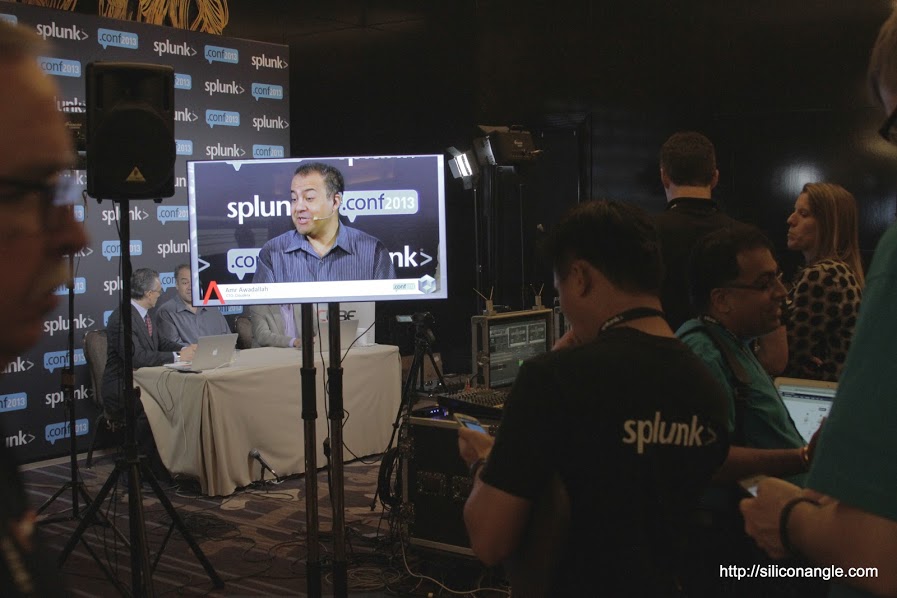
In their ongoing coverage of Splunk Conference 2013, John Furrier and Dave Vellante spoke with Bill Gaylord, Senior Vice President of Business Development for Splunk. In this short chat the three discuss the new benefits of search options and Splunk's emphasis on user experience.
Gaylord explains that Splunk is not constrained by data storage. While he finds it "trite" to use the term big data, he says we have nearly witnessed a "Copernican shift" in how commonplace the management of massive amounts of data has become. Large and chaotic data makes it natural for customers to default to the search bar. And, Splunk, he suggests, "is a very intuitive easy way to interact with that data." Vellante notes that initially, "search was like a blunt instrument, [but] now it's a fundamental component of applications." From a tech standpoint, he believes, "we're reaching a renaissance."
Gaylord says the company's aim has been to make it so "people [would] be able to get this thing up and running without having to be able to touch it." Splunk has a growing eco-system of technology partners that are helping it advance. He explains, "For them to be able to expose that data inside Splunk makes their product all the more valuable to the end-user." Given the attention to understanding and explaining technological needs and requirements, he adds "Customers get value before they pay us a dime in a lot of instances." Furrier quips, "It's like ROI pays for itself day one."
@thecube
#theCUBE #Splunk #SplunkConf #SiliconANGLE
Forgot Password
Almost there!
We just sent you a verification email. Please verify your account to gain access to
Splunk.conf 2013. If you don’t think you received an email check your
spam folder.
In order to sign in, enter the email address you used to registered for the event. Once completed, you will receive an email with a verification link. Open this link to automatically sign into the site.
Register For Splunk.conf 2013
Please fill out the information below. You will recieve an email with a verification link confirming your registration. Click the link to automatically sign into the site.
You’re almost there!
We just sent you a verification email. Please click the verification button in the email. Once your email address is verified, you will have full access to all event content for Splunk.conf 2013.
I want my badge and interests to be visible to all attendees.
Checking this box will display your presense on the attendees list, view your profile and allow other attendees to contact you via 1-1 chat. Read the Privacy Policy. At any time, you can choose to disable this preference.
Select your Interests!
add
Upload your photo
Uploading..
OR
Connect via Twitter
Connect via Linkedin
EDIT PASSWORD
Share
Forgot Password
Almost there!
We just sent you a verification email. Please verify your account to gain access to
Splunk.conf 2013. If you don’t think you received an email check your
spam folder.
In order to sign in, enter the email address you used to registered for the event. Once completed, you will receive an email with a verification link. Open this link to automatically sign into the site.
Sign in to gain access to Splunk.conf 2013
Please sign in with LinkedIn to continue to Splunk.conf 2013. Signing in with LinkedIn ensures a professional environment.
Are you sure you want to remove access rights for this user?
Details
Manage Access
email address
Community Invitation
Bill Gaylord, Splunk | Splunk .conf2013
In their ongoing coverage of Splunk Conference 2013, John Furrier and Dave Vellante spoke with Bill Gaylord, Senior Vice President of Business Development for Splunk. In this short chat the three discuss the new benefits of search options and Splunk's emphasis on user experience.
Gaylord explains that Splunk is not constrained by data storage. While he finds it "trite" to use the term big data, he says we have nearly witnessed a "Copernican shift" in how commonplace the management of massive amounts of data has become. Large and chaotic data makes it natural for customers to default to the search bar. And, Splunk, he suggests, "is a very intuitive easy way to interact with that data." Vellante notes that initially, "search was like a blunt instrument, [but] now it's a fundamental component of applications." From a tech standpoint, he believes, "we're reaching a renaissance."
Gaylord says the company's aim has been to make it so "people [would] be able to get this thing up and running without having to be able to touch it." Splunk has a growing eco-system of technology partners that are helping it advance. He explains, "For them to be able to expose that data inside Splunk makes their product all the more valuable to the end-user." Given the attention to understanding and explaining technological needs and requirements, he adds "Customers get value before they pay us a dime in a lot of instances." Furrier quips, "It's like ROI pays for itself day one."
@thecube
#theCUBE #Splunk #SplunkConf #SiliconANGLE