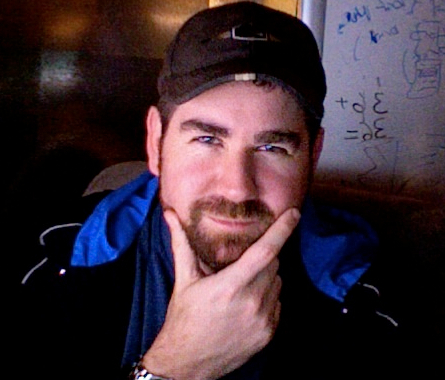
TheCube - Splunk .conf 2012 David Carasso, Principal Scientist R&D and Chief Mind, Splunk, with Jeff Kelly and Jeff Frick
https://siliconangle.com/2012/09/13/david-carasso-discusses-company-culture-and-the-future-of-splunk-conf-2012/
David Carasso Discusses Company Culture and the Future of Splunk .conf 2012
At Splunk .conf 2012 today, theCube’s Jeff Kelly and Jeff Frick finally got a chance to sit down with David Carasso, Principal Scientist R&D and ‘Chief Mind’ of Splunk. David discussed the origins of Splunk and how its ‘culture of fun’ played an integral part in the company’s success, whilst hinting at what the company has in store for the next six to twelve months.
It was no accident that Splunk came about, revealed Carasso. He told how Splunk’s founders spent more than two years trying to identify a suitable niche in the IT industry, before finding one that was completely untapped – the field of data analytics.
“There really was no good tool available for this kind of analytics. When you had a problem with a machine or even hundreds of machines, there were no tools for diagnosing things. It was very primitive, people spent hours on this kind of thing,” he explained.
Surprisingly, Carasso revealed that joining up with Splunk was a call he “didn’t want to take”, only dedicating himself to the company after becoming intrigued by the problems presented by big data – AI (Artificial Intelligence), scalability, understanding data etc.
“Small problems are boring, big problems are what I find interesting,” he added.
Carasso touched upon the internal ‘culture’ at Splunk, which he insisted was crucial to the company’s success. Splunk, he said, would spend almost as much time fostering a friendly, relaxed atmosphere inside the company as they would on actually developing products and solutions.
“Just like your products and your niche is not an afterthought, the culture of your company should not be an afterthought, it should be engineered so that it’s place where you want to come to work, where the people you work with are friends, and where you can freely criticize them,” stressed Carasso.
Carasso explained that constructive criticism was an integral part of Splunk’s – and any company’s – continued success:
“Criticism is how companies evolve, its how their products get better, how features get better. It allows features and products to improve. You can criticize your friends, but that can’t be done in a cold, professional environment.”
Turning to the future, Carasso was tight-lipped about what Splunk had in store for the next twelve months, saying only that they hoped to roll out several new improvements and speed up their current products. However, Carasso was more open about one particular area that Splunk was working on – applications.
Jeff Kelly pointed out how there was a relative scarcity of big data applications at this point, and Carasso was quick to point out that he and Splunk are working to address this:
“Predictive analytics is one area that interests me. Building an app to find anomalies is almost an art form, and we’re not quite there yet but it’s something we’re working on. It’s growing.”
#theCUBE @Splunk #Splunk #SiliconANGLE @Splunk @SiliconANGLE theCUBE @SiliconANGLE theCUBE @theCUBE #theCUBE @Splunk
Forgot Password
Almost there!
We just sent you a verification email. Please verify your account to gain access to
Splunk.conf 2012 | Las Vegas. If you don’t think you received an email check your
spam folder.
In order to sign in, enter the email address you used to registered for the event. Once completed, you will receive an email with a verification link. Open this link to automatically sign into the site.
Register For Splunk.conf 2012 | Las Vegas
Please fill out the information below. You will recieve an email with a verification link confirming your registration. Click the link to automatically sign into the site.
You’re almost there!
We just sent you a verification email. Please click the verification button in the email. Once your email address is verified, you will have full access to all event content for Splunk.conf 2012 | Las Vegas.
I want my badge and interests to be visible to all attendees.
Checking this box will display your presense on the attendees list, view your profile and allow other attendees to contact you via 1-1 chat. Read the Privacy Policy. At any time, you can choose to disable this preference.
Select your Interests!
add
Upload your photo
Uploading..
OR
Connect via Twitter
Connect via Linkedin
EDIT PASSWORD
Share
Forgot Password
Almost there!
We just sent you a verification email. Please verify your account to gain access to
Splunk.conf 2012 | Las Vegas. If you don’t think you received an email check your
spam folder.
In order to sign in, enter the email address you used to registered for the event. Once completed, you will receive an email with a verification link. Open this link to automatically sign into the site.
Sign in to gain access to Splunk.conf 2012 | Las Vegas
Please sign in with LinkedIn to continue to Splunk.conf 2012 | Las Vegas. Signing in with LinkedIn ensures a professional environment.
Are you sure you want to remove access rights for this user?
Details
Manage Access
email address
Community Invitation
David Carasso, Splunk | Splunk .conf2012
TheCube - Splunk .conf 2012 David Carasso, Principal Scientist R&D and Chief Mind, Splunk, with Jeff Kelly and Jeff Frick
https://siliconangle.com/2012/09/13/david-carasso-discusses-company-culture-and-the-future-of-splunk-conf-2012/
David Carasso Discusses Company Culture and the Future of Splunk .conf 2012
At Splunk .conf 2012 today, theCube’s Jeff Kelly and Jeff Frick finally got a chance to sit down with David Carasso, Principal Scientist R&D and ‘Chief Mind’ of Splunk. David discussed the origins of Splunk and how its ‘culture of fun’ played an integral part in the company’s success, whilst hinting at what the company has in store for the next six to twelve months.
It was no accident that Splunk came about, revealed Carasso. He told how Splunk’s founders spent more than two years trying to identify a suitable niche in the IT industry, before finding one that was completely untapped – the field of data analytics.
“There really was no good tool available for this kind of analytics. When you had a problem with a machine or even hundreds of machines, there were no tools for diagnosing things. It was very primitive, people spent hours on this kind of thing,” he explained.
Surprisingly, Carasso revealed that joining up with Splunk was a call he “didn’t want to take”, only dedicating himself to the company after becoming intrigued by the problems presented by big data – AI (Artificial Intelligence), scalability, understanding data etc.
“Small problems are boring, big problems are what I find interesting,” he added.
Carasso touched upon the internal ‘culture’ at Splunk, which he insisted was crucial to the company’s success. Splunk, he said, would spend almost as much time fostering a friendly, relaxed atmosphere inside the company as they would on actually developing products and solutions.
“Just like your products and your niche is not an afterthought, the culture of your company should not be an afterthought, it should be engineered so that it’s place where you want to come to work, where the people you work with are friends, and where you can freely criticize them,” stressed Carasso.
Carasso explained that constructive criticism was an integral part of Splunk’s – and any company’s – continued success:
“Criticism is how companies evolve, its how their products get better, how features get better. It allows features and products to improve. You can criticize your friends, but that can’t be done in a cold, professional environment.”
Turning to the future, Carasso was tight-lipped about what Splunk had in store for the next twelve months, saying only that they hoped to roll out several new improvements and speed up their current products. However, Carasso was more open about one particular area that Splunk was working on – applications.
Jeff Kelly pointed out how there was a relative scarcity of big data applications at this point, and Carasso was quick to point out that he and Splunk are working to address this:
“Predictive analytics is one area that interests me. Building an app to find anomalies is almost an art form, and we’re not quite there yet but it’s something we’re working on. It’s growing.”
#theCUBE @Splunk #Splunk #SiliconANGLE @Splunk @SiliconANGLE theCUBE @SiliconANGLE theCUBE @theCUBE #theCUBE @Splunk