Enhanced video at http://vinja.tv/5Czfq1Qx
01. Snehal Antani, Splunk, visits #theCUBE!. (00:19)
02. First Week on the Job as CTO of Splunk. (01:05)
03. Technologies on Splunk's Radar. (02:04)
04. The Broad Appeal of Splunk. (04:45)
05. Finding an Open Data Environment. (07:24)
06. The Value Proposition in Data Sharing. (10:40)
07. The New Fabric of Social Business. (12:41)
08. Data as a Development Resource. (15:43)
Track List created with http://www.vinjavideo.com.
https://siliconangle.com/2015/09/23/versatility-and-shared-data-as-ops-converge-splunkconf/
--- ---
Versatility and shared data as ops converge | #splunkconf
by Gabriel Pesek | Sep 23, 2015
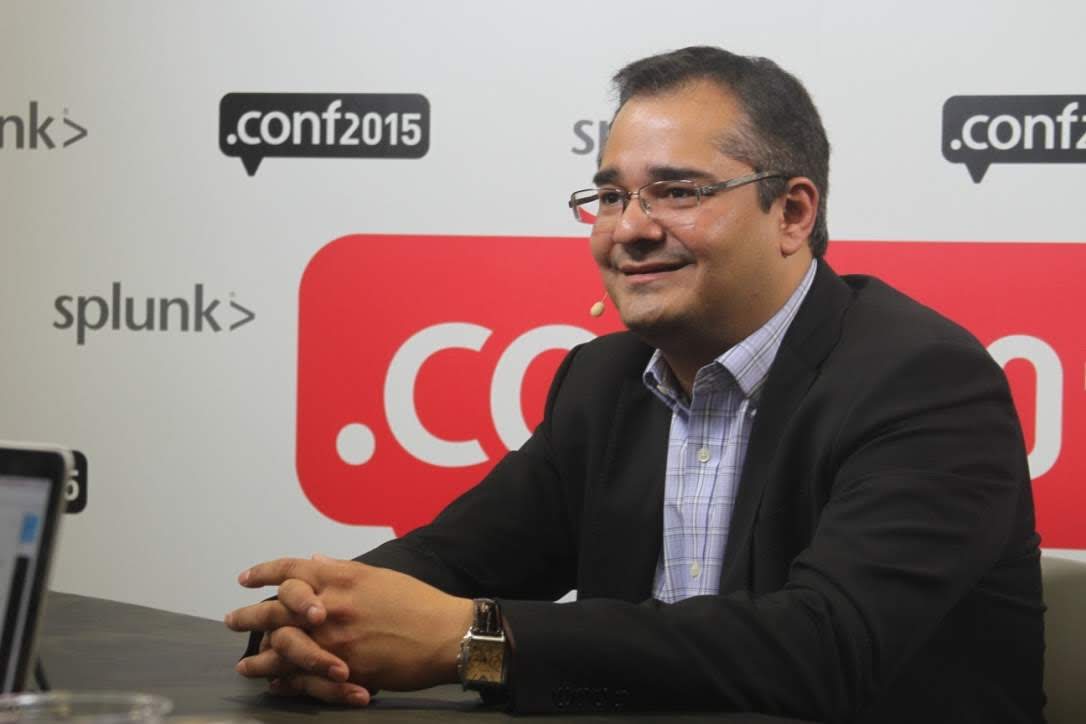
Serving as the newest CTO of Splunk, Inc., Snehal Antani took some time to speak with John Furrier and Jeff Frick, cohosts of theCUBE, from the SiliconANGLE Media team, during Splunk’s .conf2015 about some of the challenges and developments he’s encountered, as well as future possibilities open to Splunk and its users.
One of the most exciting aspects for Antani is the wide range of customers Splunk has garnered, as well as the wide spectrum of uses on which these customers are putting their data-management and analysis tools to work. “Same exact product, completely different use cases,” Antani said, adding that government agencies, security operations, transportation services and others were calling for his attention within his first week at Splunk.
Many lenses
For Antani, the power to approach “completely diverse problems [with a] completely versatile technology” is a prospect that has both Splunk and its customers looking for new ways to handle and recombine the data they receive.
“All the magic and power of Splunk just plays to our strengths,” he said. With the data results leading to fresh convergences, such as unified efforts by ITOps and DevOps, Antani felt that the days of “walled gardens,” such as Twitter, where the massive amounts of data are only usable by those who already have a direct line of access, are more than likely on the way out in terms of common usage.
Learning from data
Another point identified as a central theme was that “the key thing here is transparency.” With increasingly optimized handling of incoming data, developers and business operations are finding themselves with the ability to recognize trends and performance indicators in real time. Wanting to “push the model as close to real-time as you can” while still being able to pose “historical” questions to the data correlations, along with simplified delivery of conclusions to the end user, Splunk is fast approaching the point of being able to use the data to “tell stories.”
@theCUBE
#splunkconf
Forgot Password
Almost there!
We just sent you a verification email. Please verify your account to gain access to
Splunk.conf 2015 | Las Vegas. If you don’t think you received an email check your
spam folder.
In order to sign in, enter the email address you used to registered for the event. Once completed, you will receive an email with a verification link. Open this link to automatically sign into the site.
Register For Splunk.conf 2015 | Las Vegas
Please fill out the information below. You will recieve an email with a verification link confirming your registration. Click the link to automatically sign into the site.
You’re almost there!
We just sent you a verification email. Please click the verification button in the email. Once your email address is verified, you will have full access to all event content for Splunk.conf 2015 | Las Vegas.
I want my badge and interests to be visible to all attendees.
Checking this box will display your presense on the attendees list, view your profile and allow other attendees to contact you via 1-1 chat. Read the Privacy Policy. At any time, you can choose to disable this preference.
Select your Interests!
add
Upload your photo
Uploading..
OR
Connect via Twitter
Connect via Linkedin
EDIT PASSWORD
Share
Forgot Password
Almost there!
We just sent you a verification email. Please verify your account to gain access to
Splunk.conf 2015 | Las Vegas. If you don’t think you received an email check your
spam folder.
In order to sign in, enter the email address you used to registered for the event. Once completed, you will receive an email with a verification link. Open this link to automatically sign into the site.
Sign in to gain access to Splunk.conf 2015 | Las Vegas
Please sign in with LinkedIn to continue to Splunk.conf 2015 | Las Vegas. Signing in with LinkedIn ensures a professional environment.
Are you sure you want to remove access rights for this user?
Details
Manage Access
email address
Community Invitation
Snehal Antani, Splunk | Splunk .conf2015
Enhanced video at http://vinja.tv/5Czfq1Qx
01. Snehal Antani, Splunk, visits #theCUBE!. (00:19)
02. First Week on the Job as CTO of Splunk. (01:05)
03. Technologies on Splunk's Radar. (02:04)
04. The Broad Appeal of Splunk. (04:45)
05. Finding an Open Data Environment. (07:24)
06. The Value Proposition in Data Sharing. (10:40)
07. The New Fabric of Social Business. (12:41)
08. Data as a Development Resource. (15:43)
Track List created with http://www.vinjavideo.com.
https://siliconangle.com/2015/09/23/versatility-and-shared-data-as-ops-converge-splunkconf/
--- ---
Versatility and shared data as ops converge | #splunkconf
by Gabriel Pesek | Sep 23, 2015
Serving as the newest CTO of Splunk, Inc., Snehal Antani took some time to speak with John Furrier and Jeff Frick, cohosts of theCUBE, from the SiliconANGLE Media team, during Splunk’s .conf2015 about some of the challenges and developments he’s encountered, as well as future possibilities open to Splunk and its users.
One of the most exciting aspects for Antani is the wide range of customers Splunk has garnered, as well as the wide spectrum of uses on which these customers are putting their data-management and analysis tools to work. “Same exact product, completely different use cases,” Antani said, adding that government agencies, security operations, transportation services and others were calling for his attention within his first week at Splunk.
Many lenses
For Antani, the power to approach “completely diverse problems [with a] completely versatile technology” is a prospect that has both Splunk and its customers looking for new ways to handle and recombine the data they receive.
“All the magic and power of Splunk just plays to our strengths,” he said. With the data results leading to fresh convergences, such as unified efforts by ITOps and DevOps, Antani felt that the days of “walled gardens,” such as Twitter, where the massive amounts of data are only usable by those who already have a direct line of access, are more than likely on the way out in terms of common usage.
Learning from data
Another point identified as a central theme was that “the key thing here is transparency.” With increasingly optimized handling of incoming data, developers and business operations are finding themselves with the ability to recognize trends and performance indicators in real time. Wanting to “push the model as close to real-time as you can” while still being able to pose “historical” questions to the data correlations, along with simplified delivery of conclusions to the end user, Splunk is fast approaching the point of being able to use the data to “tell stories.”
@theCUBE
#splunkconf