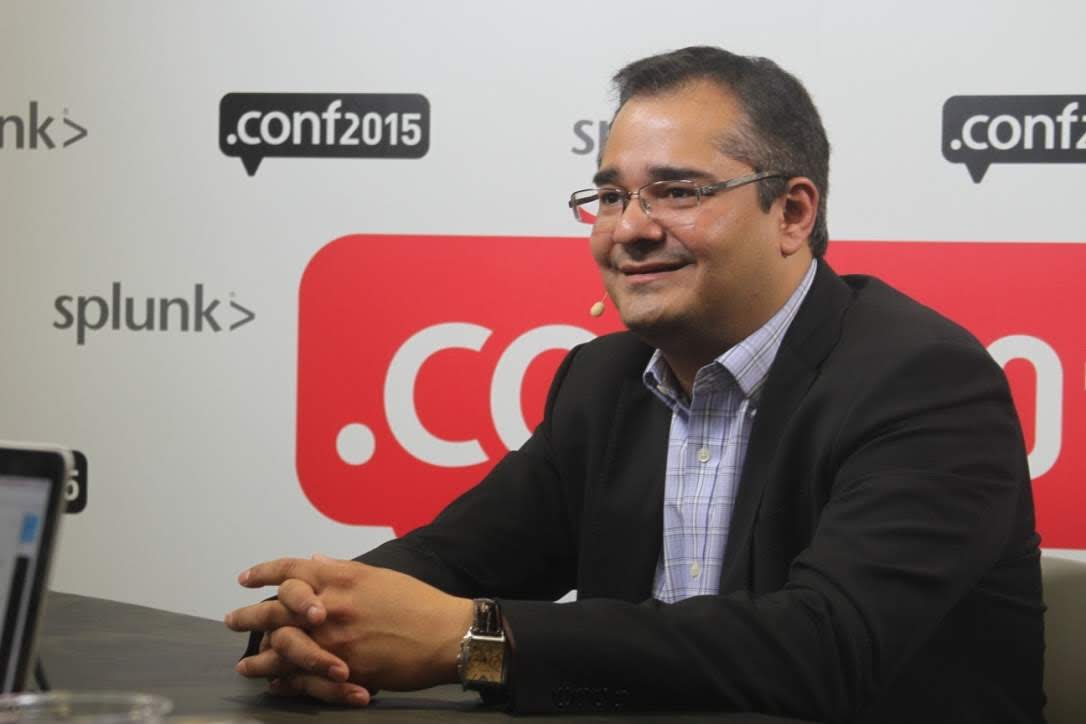
01. Chad Kinzelberg, Palo Alto Networks, Stopped by theCUBE at Splunk .conf 2015!. (00:37)
02. Gorka Sadowski, Splunk, Stopped by theCUBE at Splunk .conf 2015!. (00:46)
03. What is Splunk's Approach to Security?. (01:56)
04. What are the Threats or Breaches of Security?. (03:11)
05. The Problem with the Old Paradigm of Firewalls. (04:49)
06. Knowing When there has Been a Breach within Splunk. (06:18)
07. Helping Splunk Better Identify Security Threats. (07:38)
08. Selling Against the Competition. (09:27)
09. What's the Implementation Cycle from Start to Finish?. (11:35)
Track List created with http://www.vinjavideo.com.
--- ---
The future of enterprise security | #splunkconf
by Andrew Ruggiero | Sep 23, 2015
IPs, protocols and the “old paradigm” are becoming things of the past. But what does that mean for the future of enterprise security? George Gilbert, cohost of theCUBE, from the SiliconANGLE Media team, sat down with Chad Kinzelberg, senior VP of business and corporate development for Palo Alto Networks, Inc., and Gorka Sadowski, director of business development for Splunk, Inc., to discuss their partnership and the benefits it provides their customers.
The old paradigm
Kinzelberg explained that firewall functionality as it stands today as a control of ports, IPs, etc., is going by the wayside. Instead, it’s important to be able to look at what’s actually traversing those ports and get a clear image of the traffic. This is where Splunk comes in.
Palo Alto Networks feeds information into Splunk, which then analyzes that data and provides analytics allowing the company to modify its firewall. This entire process can be automated so that simple threats to security are thwarted without a thought. As Sadowski said, it acts as the “nerve center,” where Palo Alto Networks sends in the information, Splunk processes it and Palo Alto Networks subsequently deploys a new rule or protocol.
IPs, protocols and the “old paradigm” are becoming things of the past. But what does that mean for the future of enterprise security? George Gilbert, cohost of theCUBE, from the SiliconANGLE Media team, sat down with Chad Kinzelberg, senior VP of business and corporate development for Palo Alto Networks, Inc., and Gorka Sadowski, director of business development for Splunk, Inc., to discuss their partnership and the benefits it provides their customers.
The old paradigm
Kinzelberg explained that firewall functionality as it stands today as a control of ports, IPs, etc., is going by the wayside. Instead, it’s important to be able to look at what’s actually traversing those ports and get a clear image of the traffic. This is where Splunk comes in.
Palo Alto Networks feeds information into Splunk, which then analyzes that data and provides analytics allowing the company to modify its firewall. This entire process can be automated so that simple threats to security are thwarted without a thought. As Sadowski said, it acts as the “nerve center,” where Palo Alto Networks sends in the information, Splunk processes it and Palo Alto Networks subsequently deploys a new rule or protocol.
For the customer
Enterprise users would benefit wholly from this type of firewalled system. It takes much of the complexity out of security management through automation. These new rules created from the analytics allow companies to be smart about the traffic they allow and disallow so that information can reach the end user while cyber-attacks can be stopped. This partnership and the end result, as Sadowski best explains it, is a “one plus one equals three” equation for the end customer.
@theCUBE
#splunkconf
Forgot Password
Almost there!
We just sent you a verification email. Please verify your account to gain access to
Splunk.conf 2015 | Las Vegas. If you don’t think you received an email check your
spam folder.
In order to sign in, enter the email address you used to registered for the event. Once completed, you will receive an email with a verification link. Open this link to automatically sign into the site.
Register For Splunk.conf 2015 | Las Vegas
Please fill out the information below. You will recieve an email with a verification link confirming your registration. Click the link to automatically sign into the site.
You’re almost there!
We just sent you a verification email. Please click the verification button in the email. Once your email address is verified, you will have full access to all event content for Splunk.conf 2015 | Las Vegas.
I want my badge and interests to be visible to all attendees.
Checking this box will display your presense on the attendees list, view your profile and allow other attendees to contact you via 1-1 chat. Read the Privacy Policy. At any time, you can choose to disable this preference.
Select your Interests!
add
Upload your photo
Uploading..
OR
Connect via Twitter
Connect via Linkedin
EDIT PASSWORD
Share
Forgot Password
Almost there!
We just sent you a verification email. Please verify your account to gain access to
Splunk.conf 2015 | Las Vegas. If you don’t think you received an email check your
spam folder.
In order to sign in, enter the email address you used to registered for the event. Once completed, you will receive an email with a verification link. Open this link to automatically sign into the site.
Sign in to gain access to Splunk.conf 2015 | Las Vegas
Please sign in with LinkedIn to continue to Splunk.conf 2015 | Las Vegas. Signing in with LinkedIn ensures a professional environment.
Are you sure you want to remove access rights for this user?
Details
Manage Access
email address
Community Invitation
Chad Kinzelberg & Gorka Sadowski | Splunk .conf2015
01. Chad Kinzelberg, Palo Alto Networks, Stopped by theCUBE at Splunk .conf 2015!. (00:37)
02. Gorka Sadowski, Splunk, Stopped by theCUBE at Splunk .conf 2015!. (00:46)
03. What is Splunk's Approach to Security?. (01:56)
04. What are the Threats or Breaches of Security?. (03:11)
05. The Problem with the Old Paradigm of Firewalls. (04:49)
06. Knowing When there has Been a Breach within Splunk. (06:18)
07. Helping Splunk Better Identify Security Threats. (07:38)
08. Selling Against the Competition. (09:27)
09. What's the Implementation Cycle from Start to Finish?. (11:35)
Track List created with http://www.vinjavideo.com.
--- ---
The future of enterprise security | #splunkconf
by Andrew Ruggiero | Sep 23, 2015
IPs, protocols and the “old paradigm” are becoming things of the past. But what does that mean for the future of enterprise security? George Gilbert, cohost of theCUBE, from the SiliconANGLE Media team, sat down with Chad Kinzelberg, senior VP of business and corporate development for Palo Alto Networks, Inc., and Gorka Sadowski, director of business development for Splunk, Inc., to discuss their partnership and the benefits it provides their customers.
The old paradigm
Kinzelberg explained that firewall functionality as it stands today as a control of ports, IPs, etc., is going by the wayside. Instead, it’s important to be able to look at what’s actually traversing those ports and get a clear image of the traffic. This is where Splunk comes in.
Palo Alto Networks feeds information into Splunk, which then analyzes that data and provides analytics allowing the company to modify its firewall. This entire process can be automated so that simple threats to security are thwarted without a thought. As Sadowski said, it acts as the “nerve center,” where Palo Alto Networks sends in the information, Splunk processes it and Palo Alto Networks subsequently deploys a new rule or protocol.
IPs, protocols and the “old paradigm” are becoming things of the past. But what does that mean for the future of enterprise security? George Gilbert, cohost of theCUBE, from the SiliconANGLE Media team, sat down with Chad Kinzelberg, senior VP of business and corporate development for Palo Alto Networks, Inc., and Gorka Sadowski, director of business development for Splunk, Inc., to discuss their partnership and the benefits it provides their customers.
The old paradigm
Kinzelberg explained that firewall functionality as it stands today as a control of ports, IPs, etc., is going by the wayside. Instead, it’s important to be able to look at what’s actually traversing those ports and get a clear image of the traffic. This is where Splunk comes in.
Palo Alto Networks feeds information into Splunk, which then analyzes that data and provides analytics allowing the company to modify its firewall. This entire process can be automated so that simple threats to security are thwarted without a thought. As Sadowski said, it acts as the “nerve center,” where Palo Alto Networks sends in the information, Splunk processes it and Palo Alto Networks subsequently deploys a new rule or protocol.
For the customer
Enterprise users would benefit wholly from this type of firewalled system. It takes much of the complexity out of security management through automation. These new rules created from the analytics allow companies to be smart about the traffic they allow and disallow so that information can reach the end user while cyber-attacks can be stopped. This partnership and the end result, as Sadowski best explains it, is a “one plus one equals three” equation for the end customer.
@theCUBE
#splunkconf