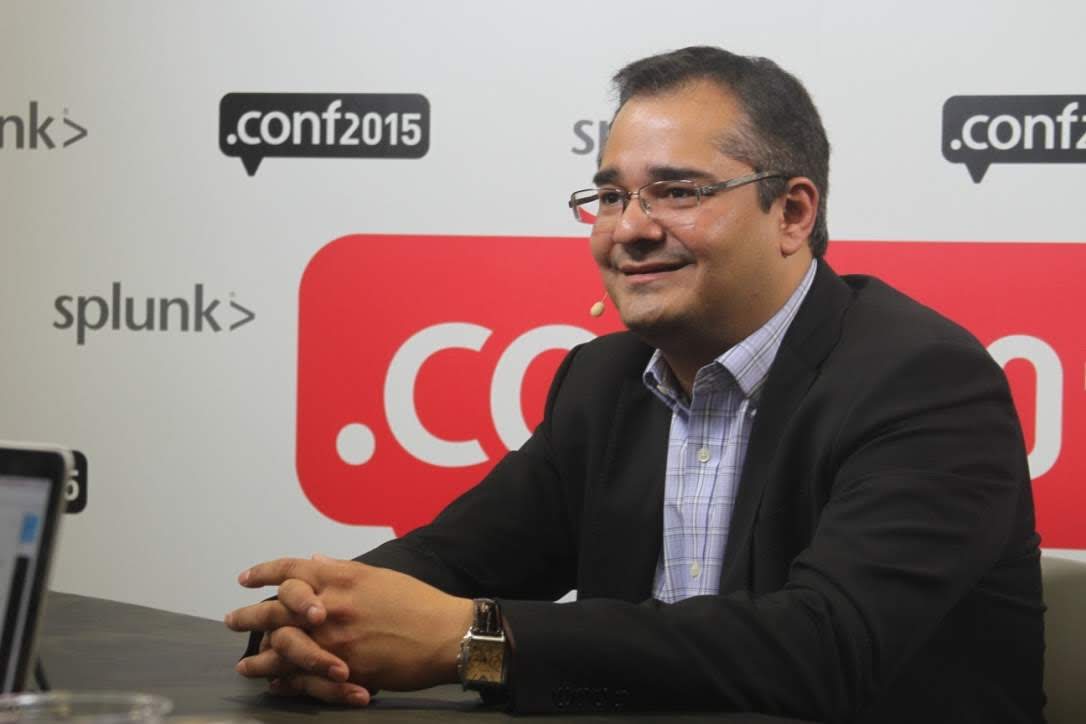
01. Myron Davis, Alaska.gov, visits theCUBE!. (00:19)
02. How Splunk fits in to Alaska.gov Operations. (01:26)
03. The Flexibility of the Splunk Tool. (02:14)
04. Performance Issues with Splunk Speed. (03:15)
05. How DevOps is Working for Alaska.gov. (04:14)
06. Security Attacks and Issues. (05:10)
07. Applying Regular Expressions to ACLs. (08:34)
08. The "Vibe" at Splunk.conf 2015. (09:38)
https://siliconangle.com/2015/09/24/how-alaska-is-beefing-up-data-security-with-splunk-splunkconf/ #theCUBE #Splunk #SplunkConf #SiliconANGLE
--- ---
How Alaska is beefing up data security with Splunk | #splunkconf
by Marlene Den Bleyker | Sep 24, 2015
Secure and share data is a critical element for all enterprises, including government entities. Myron Davis, analyst/programmer for the State of Alaska, joined John Furrier and Jeff Frick, cohosts of theCUBE, from the SiliconANGLE’s Media team, at Splunk.conf 2015 at the MGM Grand in Las Vegas to talk about how the State of Alaska is using Splunk Inc. to optimize its data.
Splunking it
Davis manages Alaska.gov, and he and his team apply Splunk to several different targeted projects. The site runs multiple Intrusion Detection Systems (IDS) and firewall systems under a SIM model, and Splunk’s Enterprise Security manages those systems. Davis also uses Splunk to retrieve what is now up to 200 million phone record requests.
While originally brought in for security, the flexibility of tool also allows Davis to redeploy Splunk to provide access to 15 different subagencies that share an infrastructure. Davis explained, “We need to spread out our information so that we can have shared access to the data, and that is what Splunk is doing for us right now.”
A hostage situation
When discussing security threats he has encountered, Davis discussed CryptoWall, one of the latest ransomware viruses. According to Davis, “CryptoWall runs through and encrypts all the local machine hardware and then it decides to crawl over the network and encrypt everything on the network.”
The virus essentially holds your data hostage, and then the ransom appears and advises you to pay in bitcoins to retrieve your data. Davis said that certain organizations have paid to get the data back. He goes on to say that the virus usually comes through email requests and that it is hard to train staff not to trust people.
‘Pre-munch’ talk
Davis also gave a talk at the conference regarding applying regular expressions to ACLs. “With Splunk, you don’t have the controls to do complex regular expressions on access control lists, and if you do it takes uses a lot of CPU power. My talk is about how to pre-munch your data so that it is ready for search filters in Splunk by using complex regular expressions,” said Davis.
@theCUBE @Splunk @SiliconANGLE theCUBE
#splunkconf
Forgot Password
Almost there!
We just sent you a verification email. Please verify your account to gain access to
Splunk.conf 2015 | Las Vegas. If you don’t think you received an email check your
spam folder.
In order to sign in, enter the email address you used to registered for the event. Once completed, you will receive an email with a verification link. Open this link to automatically sign into the site.
Register For Splunk.conf 2015 | Las Vegas
Please fill out the information below. You will recieve an email with a verification link confirming your registration. Click the link to automatically sign into the site.
You’re almost there!
We just sent you a verification email. Please click the verification button in the email. Once your email address is verified, you will have full access to all event content for Splunk.conf 2015 | Las Vegas.
I want my badge and interests to be visible to all attendees.
Checking this box will display your presense on the attendees list, view your profile and allow other attendees to contact you via 1-1 chat. Read the Privacy Policy. At any time, you can choose to disable this preference.
Select your Interests!
add
Upload your photo
Uploading..
OR
Connect via Twitter
Connect via Linkedin
EDIT PASSWORD
Share
Forgot Password
Almost there!
We just sent you a verification email. Please verify your account to gain access to
Splunk.conf 2015 | Las Vegas. If you don’t think you received an email check your
spam folder.
In order to sign in, enter the email address you used to registered for the event. Once completed, you will receive an email with a verification link. Open this link to automatically sign into the site.
Sign in to gain access to Splunk.conf 2015 | Las Vegas
Please sign in with LinkedIn to continue to Splunk.conf 2015 | Las Vegas. Signing in with LinkedIn ensures a professional environment.
Are you sure you want to remove access rights for this user?
Details
Manage Access
email address
Community Invitation
Myron Davis, Alaska.gov | Splunk .conf2015
01. Myron Davis, Alaska.gov, visits theCUBE!. (00:19)
02. How Splunk fits in to Alaska.gov Operations. (01:26)
03. The Flexibility of the Splunk Tool. (02:14)
04. Performance Issues with Splunk Speed. (03:15)
05. How DevOps is Working for Alaska.gov. (04:14)
06. Security Attacks and Issues. (05:10)
07. Applying Regular Expressions to ACLs. (08:34)
08. The "Vibe" at Splunk.conf 2015. (09:38)
https://siliconangle.com/2015/09/24/how-alaska-is-beefing-up-data-security-with-splunk-splunkconf/ #theCUBE #Splunk #SplunkConf #SiliconANGLE
--- ---
How Alaska is beefing up data security with Splunk | #splunkconf
by Marlene Den Bleyker | Sep 24, 2015
Secure and share data is a critical element for all enterprises, including government entities. Myron Davis, analyst/programmer for the State of Alaska, joined John Furrier and Jeff Frick, cohosts of theCUBE, from the SiliconANGLE’s Media team, at Splunk.conf 2015 at the MGM Grand in Las Vegas to talk about how the State of Alaska is using Splunk Inc. to optimize its data.
Splunking it
Davis manages Alaska.gov, and he and his team apply Splunk to several different targeted projects. The site runs multiple Intrusion Detection Systems (IDS) and firewall systems under a SIM model, and Splunk’s Enterprise Security manages those systems. Davis also uses Splunk to retrieve what is now up to 200 million phone record requests.
While originally brought in for security, the flexibility of tool also allows Davis to redeploy Splunk to provide access to 15 different subagencies that share an infrastructure. Davis explained, “We need to spread out our information so that we can have shared access to the data, and that is what Splunk is doing for us right now.”
A hostage situation
When discussing security threats he has encountered, Davis discussed CryptoWall, one of the latest ransomware viruses. According to Davis, “CryptoWall runs through and encrypts all the local machine hardware and then it decides to crawl over the network and encrypt everything on the network.”
The virus essentially holds your data hostage, and then the ransom appears and advises you to pay in bitcoins to retrieve your data. Davis said that certain organizations have paid to get the data back. He goes on to say that the virus usually comes through email requests and that it is hard to train staff not to trust people.
‘Pre-munch’ talk
Davis also gave a talk at the conference regarding applying regular expressions to ACLs. “With Splunk, you don’t have the controls to do complex regular expressions on access control lists, and if you do it takes uses a lot of CPU power. My talk is about how to pre-munch your data so that it is ready for search filters in Splunk by using complex regular expressions,” said Davis.
@theCUBE @Splunk @SiliconANGLE theCUBE
#splunkconf