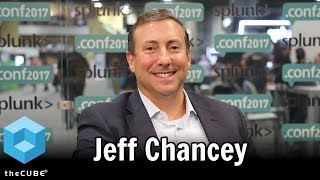
Chris Kurtz, Arizona State University, sits with Dave Vellante and John Walls at Splunk .conf 2017 in Washington, D.C
#splunkconf17 #theCUBE
https://siliconangle.com/2018/01/12/crowded-splunk-community-kitchen-serves-piping-hot-product-dev-splunkconf17/
Crowded Splunk community kitchen serves piping hot product dev
Splunk Inc. shares shot through the ceiling in 2017, climbing 62 percent year-over-year. What’s the company’s recipe for such sizable gains? For starters, there’s no such thing as too many cooks in Splunk’s kitchen, i.e., the SplunkTrust community of helpers.
“We’re not just a group to rubber stamp anything that Splunk does. But we’re also not a group to just sit there and complain about things we don’t like,” said Chris Kurtz (pictured), system architect and Splunk evangelist at Arizona State University and SplunkTrust member.
SplunkTrust trustees are devout Splunk users — customers or partners — who lend their expert hands to other Splunk users and to the company’s product developers. “It’s really very much a give and take” between Splunk and members, Kurtz explained. He spoke with Dave Vellante (@dvellante) and John Walls (@JohnWalls21), co-hosts of theCUBE, SiliconANGLE Media’s mobile livestreaming studio, during the Splunk .conf2017 event in Washington, D.C. (* Disclosure below.)
SplunkTrust feedback enhances platform
In helping fellow users out of technical jams, SplunkTrust members get the lowdown on pain points and hand it to Splunk. Their feedback helps Splunk engineers polish and debug the platform. Kurtz personally helped hone Splunk’s table datasets feature that simplifies data prep and analysis. Trustees also score advanced previews of beta or earlier potential product releases for critique.
“Splunk is generous and open enough to give us that access, and we take that very seriously — to be able to help guide Splunk into making their product the best it can be,” Kurtz said.
Interestingly, Splunk’s sometimes poo-pooed pricing is not on Kurtz’ list of cons. The pricing model is commensurate to the value his university derives from it as a catch-all for a whole range of data tasks. Because it’s schema on-demand, it’s use case on-demand, he stated.
“Every single good use case in the beginning was standing around the water cooler, having a drink and saying, ‘I wonder if we combine data set A and we combine data set B, we come up with something that nobody was asking about,'” Kurtz said. “And now we see something that we can help fix, we can help grow, we can make more efficient.”
Watch the complete video interview below, and be sure to check out more of SiliconANGLE’s and theCUBE’s coverage of Splunk .conf2017. (* Disclosure: Splunk Inc. sponsored this segment of theCUBE. Neither Splunk nor other sponsors have editorial control over content on theCUBE or SiliconANGLE.)
Forgot Password
Almost there!
We just sent you a verification email. Please verify your account to gain access to
Splunk.conf 2017. If you don’t think you received an email check your
spam folder.
In order to sign in, enter the email address you used to registered for the event. Once completed, you will receive an email with a verification link. Open this link to automatically sign into the site.
Register For Splunk.conf 2017
Please fill out the information below. You will recieve an email with a verification link confirming your registration. Click the link to automatically sign into the site.
You’re almost there!
We just sent you a verification email. Please click the verification button in the email. Once your email address is verified, you will have full access to all event content for Splunk.conf 2017.
I want my badge and interests to be visible to all attendees.
Checking this box will display your presense on the attendees list, view your profile and allow other attendees to contact you via 1-1 chat. Read the Privacy Policy. At any time, you can choose to disable this preference.
Select your Interests!
add
Upload your photo
Uploading..
OR
Connect via Twitter
Connect via Linkedin
EDIT PASSWORD
Share
Forgot Password
Almost there!
We just sent you a verification email. Please verify your account to gain access to
Splunk.conf 2017. If you don’t think you received an email check your
spam folder.
In order to sign in, enter the email address you used to registered for the event. Once completed, you will receive an email with a verification link. Open this link to automatically sign into the site.
Sign in to gain access to Splunk.conf 2017
Please sign in with LinkedIn to continue to Splunk.conf 2017. Signing in with LinkedIn ensures a professional environment.
Are you sure you want to remove access rights for this user?
Details
Manage Access
email address
Community Invitation
Chris Kurtz, Arizona State University | Splunk .conf 2017
Chris Kurtz, Arizona State University, sits with Dave Vellante and John Walls at Splunk .conf 2017 in Washington, D.C
#splunkconf17 #theCUBE
https://siliconangle.com/2018/01/12/crowded-splunk-community-kitchen-serves-piping-hot-product-dev-splunkconf17/
Crowded Splunk community kitchen serves piping hot product dev
Splunk Inc. shares shot through the ceiling in 2017, climbing 62 percent year-over-year. What’s the company’s recipe for such sizable gains? For starters, there’s no such thing as too many cooks in Splunk’s kitchen, i.e., the SplunkTrust community of helpers.
“We’re not just a group to rubber stamp anything that Splunk does. But we’re also not a group to just sit there and complain about things we don’t like,” said Chris Kurtz (pictured), system architect and Splunk evangelist at Arizona State University and SplunkTrust member.
SplunkTrust trustees are devout Splunk users — customers or partners — who lend their expert hands to other Splunk users and to the company’s product developers. “It’s really very much a give and take” between Splunk and members, Kurtz explained. He spoke with Dave Vellante (@dvellante) and John Walls (@JohnWalls21), co-hosts of theCUBE, SiliconANGLE Media’s mobile livestreaming studio, during the Splunk .conf2017 event in Washington, D.C. (* Disclosure below.)
SplunkTrust feedback enhances platform
In helping fellow users out of technical jams, SplunkTrust members get the lowdown on pain points and hand it to Splunk. Their feedback helps Splunk engineers polish and debug the platform. Kurtz personally helped hone Splunk’s table datasets feature that simplifies data prep and analysis. Trustees also score advanced previews of beta or earlier potential product releases for critique.
“Splunk is generous and open enough to give us that access, and we take that very seriously — to be able to help guide Splunk into making their product the best it can be,” Kurtz said.
Interestingly, Splunk’s sometimes poo-pooed pricing is not on Kurtz’ list of cons. The pricing model is commensurate to the value his university derives from it as a catch-all for a whole range of data tasks. Because it’s schema on-demand, it’s use case on-demand, he stated.
“Every single good use case in the beginning was standing around the water cooler, having a drink and saying, ‘I wonder if we combine data set A and we combine data set B, we come up with something that nobody was asking about,'” Kurtz said. “And now we see something that we can help fix, we can help grow, we can make more efficient.”
Watch the complete video interview below, and be sure to check out more of SiliconANGLE’s and theCUBE’s coverage of Splunk .conf2017. (* Disclosure: Splunk Inc. sponsored this segment of theCUBE. Neither Splunk nor other sponsors have editorial control over content on theCUBE or SiliconANGLE.)