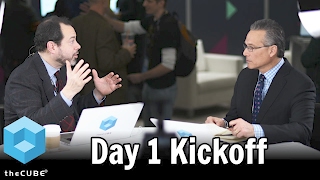
Ziya Ma, Vice President of Big Data at Intel, sits down with Dave Vellante & George Gilbert at Spark Summit East 2017 at the Hynes Convention Center in Boston, Massachusetts.
#SparkSummit #theCUBE
https://siliconangle.com/2017/02/08/intels-bigdl-aims-bring-deep-learning-masses-sparksummit/
Intel’s BigDL aims to bring deep learning to the masses | #SparkSummit
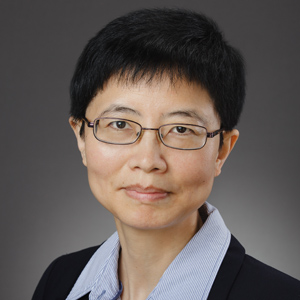
With Intel Corp.’s efforts to get involved in practically every aspect of modern technology, from the hardware base up through the software that’s run on it, the natural move to stay competitive these days is to expand into deep learning and big data. Yet as Intel has found, the need for converging systems becomes increasingly clear every day, according to Ziya Ma (pictured), vice president of big data at Intel.
Speaking with Dave Vellante (@dvellante), co-host of theCUBE, SiliconANGLE Media’s mobile live streaming studio, during the Spark Summit East 2017 in Boston, Ma shared details on how Intel is shaping its tech developments in a variety of fields, meeting customer needs and supporting open-source ecosystems. (* Disclosure below.)
“Our customers … like to get the best performance out of the Intel hardware,” Ma noted. And that fundamental fact has been a prime shaper in organizing Intel’s development efforts, as it makes sure that optimization and compatible functionality of Intel’s hardware and software are the best it can deliver.
According to Ma, “[Intel] collaborated very extensively with the open-source community” for ecosystem development, giving the company the position of being a top contributor to the Apache Hadoop ecosystem as it began looking into deep learning and machine learning.
With AI and machine learning getting added into the big data domain, Intel’s portfolio expansion is also covering the work of improving big data performance and security “using Intel hardware,” Ma said, and while improving performance will remain “top priority… we don’t just limit our work to optimization.”
Big things for BigDL
Developing a deep learning network on top of an Apache framework is another effort Intel is focusing on advancing, Ma shared.
“The reason that we decided to work on this project,” she said, was because “it becomes more difficult to integrate an AI” into existing data frameworks when customers are trying to do it themselves, “and then later, they have to overcome a lot of challenges.”
With Intel’s BigDL, a deep learning utility, they’re leveraging efficient scale-out and elasticity naturally enabled by the big data platform while also eliminating the need for setting up a separate cluster, reducing cost and hassle, she said.
“Performance wise, we also tested BigDL with Caffe, Torch, and TensorFlow,” Ma said, with results “orders of magnitude faster” than the out-of-the-box alternatives, while an end-to-end deep learning solution using BigDL shows high improvement in initial runs.
Still, there challenges remain. For an enterprise to host their deep-learning datasets, “you need a huge infrastructure … for improving your model accuracy,” Ma noted.
And with many enterprises focusing simply on developing these independent functionalities, without fully considering how to bring the services together later on, “The integration is not coherent. It’s like they’re superficially integrated,” Ma said.
While full smoothing and folding of those discrete systems into each other won’t happen in the very near future, Intel seems determined to be one of the first companies to arrive at that goal line.
Watch the complete video interview, and be sure to check out more of SiliconANGLE’s and theCUBE’s coverage of the Spark Summit East 2017 Boston. (* Disclosure: TheCUBE is a media partner at the conference. Neither Databricks nor other sponsors have editorial control over content on theCUBE or SiliconANGLE.)
Forgot Password
Almost there!
We just sent you a verification email. Please verify your account to gain access to
Spark Summit East 2017 | Boston. If you don’t think you received an email check your
spam folder.
In order to sign in, enter the email address you used to registered for the event. Once completed, you will receive an email with a verification link. Open this link to automatically sign into the site.
Register For Spark Summit East 2017 | Boston
Please fill out the information below. You will recieve an email with a verification link confirming your registration. Click the link to automatically sign into the site.
You’re almost there!
We just sent you a verification email. Please click the verification button in the email. Once your email address is verified, you will have full access to all event content for Spark Summit East 2017 | Boston.
I want my badge and interests to be visible to all attendees.
Checking this box will display your presense on the attendees list, view your profile and allow other attendees to contact you via 1-1 chat. Read the Privacy Policy. At any time, you can choose to disable this preference.
Select your Interests!
add
Upload your photo
Uploading..
OR
Connect via Twitter
Connect via Linkedin
EDIT PASSWORD
Share
Forgot Password
Almost there!
We just sent you a verification email. Please verify your account to gain access to
Spark Summit East 2017 | Boston. If you don’t think you received an email check your
spam folder.
In order to sign in, enter the email address you used to registered for the event. Once completed, you will receive an email with a verification link. Open this link to automatically sign into the site.
Sign in to gain access to Spark Summit East 2017 | Boston
Please sign in with LinkedIn to continue to Spark Summit East 2017 | Boston. Signing in with LinkedIn ensures a professional environment.
Are you sure you want to remove access rights for this user?
Details
Manage Access
email address
Community Invitation
Ziya Ma, Intel | Spark Summit East 2017
Ziya Ma, Vice President of Big Data at Intel, sits down with Dave Vellante & George Gilbert at Spark Summit East 2017 at the Hynes Convention Center in Boston, Massachusetts.
#SparkSummit #theCUBE
https://siliconangle.com/2017/02/08/intels-bigdl-aims-bring-deep-learning-masses-sparksummit/
Intel’s BigDL aims to bring deep learning to the masses | #SparkSummit
With Intel Corp.’s efforts to get involved in practically every aspect of modern technology, from the hardware base up through the software that’s run on it, the natural move to stay competitive these days is to expand into deep learning and big data. Yet as Intel has found, the need for converging systems becomes increasingly clear every day, according to Ziya Ma (pictured), vice president of big data at Intel.
Speaking with Dave Vellante (@dvellante), co-host of theCUBE, SiliconANGLE Media’s mobile live streaming studio, during the Spark Summit East 2017 in Boston, Ma shared details on how Intel is shaping its tech developments in a variety of fields, meeting customer needs and supporting open-source ecosystems. (* Disclosure below.)
“Our customers … like to get the best performance out of the Intel hardware,” Ma noted. And that fundamental fact has been a prime shaper in organizing Intel’s development efforts, as it makes sure that optimization and compatible functionality of Intel’s hardware and software are the best it can deliver.
According to Ma, “[Intel] collaborated very extensively with the open-source community” for ecosystem development, giving the company the position of being a top contributor to the Apache Hadoop ecosystem as it began looking into deep learning and machine learning.
With AI and machine learning getting added into the big data domain, Intel’s portfolio expansion is also covering the work of improving big data performance and security “using Intel hardware,” Ma said, and while improving performance will remain “top priority… we don’t just limit our work to optimization.”
Big things for BigDL
Developing a deep learning network on top of an Apache framework is another effort Intel is focusing on advancing, Ma shared.
“The reason that we decided to work on this project,” she said, was because “it becomes more difficult to integrate an AI” into existing data frameworks when customers are trying to do it themselves, “and then later, they have to overcome a lot of challenges.”
With Intel’s BigDL, a deep learning utility, they’re leveraging efficient scale-out and elasticity naturally enabled by the big data platform while also eliminating the need for setting up a separate cluster, reducing cost and hassle, she said.
“Performance wise, we also tested BigDL with Caffe, Torch, and TensorFlow,” Ma said, with results “orders of magnitude faster” than the out-of-the-box alternatives, while an end-to-end deep learning solution using BigDL shows high improvement in initial runs.
Still, there challenges remain. For an enterprise to host their deep-learning datasets, “you need a huge infrastructure … for improving your model accuracy,” Ma noted.
And with many enterprises focusing simply on developing these independent functionalities, without fully considering how to bring the services together later on, “The integration is not coherent. It’s like they’re superficially integrated,” Ma said.
While full smoothing and folding of those discrete systems into each other won’t happen in the very near future, Intel seems determined to be one of the first companies to arrive at that goal line.
Watch the complete video interview, and be sure to check out more of SiliconANGLE’s and theCUBE’s coverage of the Spark Summit East 2017 Boston. (* Disclosure: TheCUBE is a media partner at the conference. Neither Databricks nor other sponsors have editorial control over content on theCUBE or SiliconANGLE.)