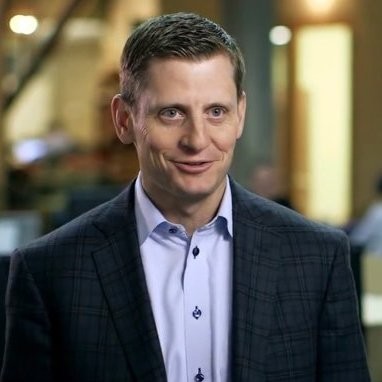
01. Rob Thomas, IBM, Visits #theCUBE. (00:21)
02. Progress of the Development Center in San Francisco. (00:47)
03. Quarks for Open Source Streaming Analytics. (01:52)
04. Collecting Data from Tour de France Bikes. (08:35)
05. Vision for a Broader Platform for IoT Analytics. (09:43)
06. Spark Needs to Move to a Business Discussion. (12:00)
https://siliconangle.com/2016/02/18/rejecting-the-wheel-ibm-and-iot-sparksummit/ #theCUBE #IBM #SparkSummit #SiliconANGLE
--- ---
Rejecting the wheel: IBM and IoT | #SparkSummit
by Gabriel Pesek | Feb 18, 2016
As the Spark Summit East 2016 event drew to a close on Thursday, energy and enthusiasm for the topics and technologies addressed at the gathering were still high, with attendees still engaged as they headed for home and other business engagements.
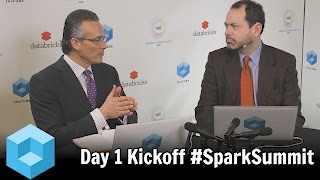
Wrapping up their coverage of the event, Jeff Frick and George Gilbert, cohosts of theCUBE, from the SiliconANGLE Media team, met with a frequent guest of theCUBE. Rob Thomas, VP of product management and analytics at IBM, sat down to talk with theCUBE about something concerning virtually every corner of the tech world these days: Big Data and how to handle it.
Data, devices and IoT
One of the first points mentioned in the discussion was IBM’s expansion of its Spark team, along with its plans to work with the Watson team in exploring and developing further implementation of both utilities. Also examined was IBM’s Open for Data initiative, with a spearhead focus on the idea that the strategy behind data analytics starts with open source and new tools for streaming analytics on endpoints.
A large part of the push behind these developments is linked to a market examination of the ways that will be needed to adapt to the Internet of Things (IoT) and the vast increase in connected devices that it brings. Pre-processing, pre-analytics and addressing the unusable scaling of data shuttling are some of the ways IBM is looking to manage the data bulk sent and received by IoT devices, keeping a clear goal of how to move as much of this processing to the edge as possible.
While Thomas praised the efficiency of GE’s vertical integration, he also noted that it is not a model that applies to most companies. For most of the market, he said, the question is: “How is the average company, or the average developer, going to access data at an endpoint?”
Keeping it simple
IBM’s current approach to handling this, given the difficulty of scaling traditional data-management models to the billions of new devices informing the networks, is an emphasis on using software components of the IBM Streams technology to collect data, ingest it, filter it and build models on top of that with programming languages to determine what to send back.
As any processed data will need to be brought back to where a networked company is doing its centralized processing, the “hub and spoke” model is one that simply is not suited to the workload of today and the near future. As Thomas put it, “We’re trying to invert the approach to analytics to say ‘analytics should be decentralized.’”
Thomas also noted that IBM’s goal is to avoid building “to an enormous scale,” instead aiming to “build to the right scale.” Adding that a broader platform for IoT analytics is “definitely [IBM’s] vision,” he seemed positive on the company’s ability to handle the challenges in this field for the coming decade.
@theCUBE @Databricks @IBM Data and AI @IBM
#SparkSummit
Forgot Password
Almost there!
We just sent you a verification email. Please verify your account to gain access to
Spark Summit East 2016 | New York. If you don’t think you received an email check your
spam folder.
In order to sign in, enter the email address you used to registered for the event. Once completed, you will receive an email with a verification link. Open this link to automatically sign into the site.
Register For Spark Summit East 2016 | New York
Please fill out the information below. You will recieve an email with a verification link confirming your registration. Click the link to automatically sign into the site.
You’re almost there!
We just sent you a verification email. Please click the verification button in the email. Once your email address is verified, you will have full access to all event content for Spark Summit East 2016 | New York.
I want my badge and interests to be visible to all attendees.
Checking this box will display your presense on the attendees list, view your profile and allow other attendees to contact you via 1-1 chat. Read the Privacy Policy. At any time, you can choose to disable this preference.
Select your Interests!
add
Upload your photo
Uploading..
OR
Connect via Twitter
Connect via Linkedin
EDIT PASSWORD
Share
Forgot Password
Almost there!
We just sent you a verification email. Please verify your account to gain access to
Spark Summit East 2016 | New York. If you don’t think you received an email check your
spam folder.
In order to sign in, enter the email address you used to registered for the event. Once completed, you will receive an email with a verification link. Open this link to automatically sign into the site.
Sign in to gain access to Spark Summit East 2016 | New York
Please sign in with LinkedIn to continue to Spark Summit East 2016 | New York. Signing in with LinkedIn ensures a professional environment.
Are you sure you want to remove access rights for this user?
Details
Manage Access
email address
Community Invitation
Rob Thomas, IBM | Spark Summit East 2016
01. Rob Thomas, IBM, Visits #theCUBE. (00:21)
02. Progress of the Development Center in San Francisco. (00:47)
03. Quarks for Open Source Streaming Analytics. (01:52)
04. Collecting Data from Tour de France Bikes. (08:35)
05. Vision for a Broader Platform for IoT Analytics. (09:43)
06. Spark Needs to Move to a Business Discussion. (12:00)
https://siliconangle.com/2016/02/18/rejecting-the-wheel-ibm-and-iot-sparksummit/ #theCUBE #IBM #SparkSummit #SiliconANGLE
--- ---
Rejecting the wheel: IBM and IoT | #SparkSummit
by Gabriel Pesek | Feb 18, 2016
As the Spark Summit East 2016 event drew to a close on Thursday, energy and enthusiasm for the topics and technologies addressed at the gathering were still high, with attendees still engaged as they headed for home and other business engagements.
Wrapping up their coverage of the event, Jeff Frick and George Gilbert, cohosts of theCUBE, from the SiliconANGLE Media team, met with a frequent guest of theCUBE. Rob Thomas, VP of product management and analytics at IBM, sat down to talk with theCUBE about something concerning virtually every corner of the tech world these days: Big Data and how to handle it.
Data, devices and IoT
One of the first points mentioned in the discussion was IBM’s expansion of its Spark team, along with its plans to work with the Watson team in exploring and developing further implementation of both utilities. Also examined was IBM’s Open for Data initiative, with a spearhead focus on the idea that the strategy behind data analytics starts with open source and new tools for streaming analytics on endpoints.
A large part of the push behind these developments is linked to a market examination of the ways that will be needed to adapt to the Internet of Things (IoT) and the vast increase in connected devices that it brings. Pre-processing, pre-analytics and addressing the unusable scaling of data shuttling are some of the ways IBM is looking to manage the data bulk sent and received by IoT devices, keeping a clear goal of how to move as much of this processing to the edge as possible.
While Thomas praised the efficiency of GE’s vertical integration, he also noted that it is not a model that applies to most companies. For most of the market, he said, the question is: “How is the average company, or the average developer, going to access data at an endpoint?”
Keeping it simple
IBM’s current approach to handling this, given the difficulty of scaling traditional data-management models to the billions of new devices informing the networks, is an emphasis on using software components of the IBM Streams technology to collect data, ingest it, filter it and build models on top of that with programming languages to determine what to send back.
As any processed data will need to be brought back to where a networked company is doing its centralized processing, the “hub and spoke” model is one that simply is not suited to the workload of today and the near future. As Thomas put it, “We’re trying to invert the approach to analytics to say ‘analytics should be decentralized.’”
Thomas also noted that IBM’s goal is to avoid building “to an enormous scale,” instead aiming to “build to the right scale.” Adding that a broader platform for IoT analytics is “definitely [IBM’s] vision,” he seemed positive on the company’s ability to handle the challenges in this field for the coming decade.
@theCUBE @Databricks @IBM Data and AI @IBM
#SparkSummit