01. Anjul Bhambhri, IBM, Visits #theCUBE!. (00:20)
02. What Is IBM Doing At Spark. (00:48)
03. Is There Big Demand For SQL. (03:02)
04. Talking To Matei About The Way They Load Data. (04:60)
05. Does This Also Require The Edge Intelligence. (09:10)
06. What Is The Analytics OS. (09:54)
07. How Did The Decision To Get Behind Using The Spark Stack. (12:42)
08. What Are The Constraints Of SAS. (15:52)
09. What Is IBM's Approach To The Missing Bits That Spark Didn't Address. (16:60)
10. What Should We Be Watching For With IBM. (18:51)
Track List created with http://www.vinjavideo.com.
--- ---
Going real-time with Spark and SQL | #SparkSummit
by Nelson Williams | Feb 17, 2016
Big Data analytics are becoming central to the success of all types of businesses. Analytics is a vital tool in managing the complex task of serving the customer while staying ahead of the competition. However, information is most valuable when it can be put to best use, and these days, that window can be very small; just minutes or seconds.
Customers aren’t going to wait for a company’s data processing to run in the background. That’s why real-time is so important. A company that can provide the right analytics, in real-time, will win out over their slower peers.
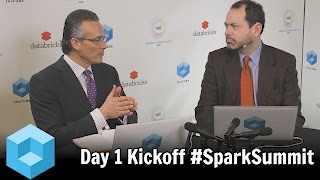
To shed some light on how Spark is helping companies process analytics in real-time, Dave Vellante and George Gilbert, cohosts of theCUBE, from the SiliconANGLE Media team, sat down with Anjul Bhambhri at the Spark Summit East 2016 conference. Bhambhri is the VP of Engineering for Big Data at IBM.
Moving forward from tradition
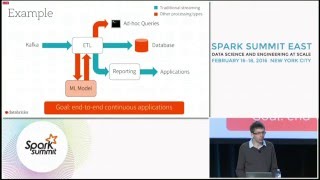
The discussion started off with a simple question: Why Spark SQL? Bhambhri replied that everyone wants to move into real-time these days, and Spark SQL takes analytics streaming to a whole new level. She continued, saying the traditional way was to take data and put it into a warehouse, but that job could take a long time. “These days, it’s all about real-time,” she said. She also mentioned Quarks, IBM’s open-source development tool that supports real-time applications.
IBM, she said, considers Spark to be a game-changer from an applications standpoint. That’s because Spark’s capabilities are all foundational to what an analytics application would need. She also pointed out how Spark’s abilities work together seamlessly, where other solutions tended to function in walled silos. Spark’s one foundation created what she called an “Analytics OS.”
Services and the future
Despite its many features, Spark doesn’t do everything. Bhambrhi took a moment to talk about IBM’s on-premise services to help companies with their Spark installations. Also, she mentioned they offered Spark as a Service on the cloud, to help businesses decouple compute from storage.
There remains, however, much to do. Bhambhri said that while technologies such as Spark were making things faster, they don’t solve the skill gap problem. People find it hard to get their arms around all these technologies, she said. To solve that skill gap, IBM was turning toward simplified tools to help businesses go from data to insight with almost no code. They were focused on getting these tools to companies and developers, she said.
@theCUBE
#SparkSummit
Forgot Password
Almost there!
We just sent you a verification email. Please verify your account to gain access to
Spark Summit East 2016 | New York. If you don’t think you received an email check your
spam folder.
In order to sign in, enter the email address you used to registered for the event. Once completed, you will receive an email with a verification link. Open this link to automatically sign into the site.
Register For Spark Summit East 2016 | New York
Please fill out the information below. You will recieve an email with a verification link confirming your registration. Click the link to automatically sign into the site.
You’re almost there!
We just sent you a verification email. Please click the verification button in the email. Once your email address is verified, you will have full access to all event content for Spark Summit East 2016 | New York.
I want my badge and interests to be visible to all attendees.
Checking this box will display your presense on the attendees list, view your profile and allow other attendees to contact you via 1-1 chat. Read the Privacy Policy. At any time, you can choose to disable this preference.
Select your Interests!
add
Upload your photo
Uploading..
OR
Connect via Twitter
Connect via Linkedin
EDIT PASSWORD
Share
Forgot Password
Almost there!
We just sent you a verification email. Please verify your account to gain access to
Spark Summit East 2016 | New York. If you don’t think you received an email check your
spam folder.
In order to sign in, enter the email address you used to registered for the event. Once completed, you will receive an email with a verification link. Open this link to automatically sign into the site.
Sign in to gain access to Spark Summit East 2016 | New York
Please sign in with LinkedIn to continue to Spark Summit East 2016 | New York. Signing in with LinkedIn ensures a professional environment.
Are you sure you want to remove access rights for this user?
Details
Manage Access
email address
Community Invitation
Anjul Bhambhri, IBM - #SparkSummit East 2016 - #theCUBE
01. Anjul Bhambhri, IBM, Visits #theCUBE!. (00:20)
02. What Is IBM Doing At Spark. (00:48)
03. Is There Big Demand For SQL. (03:02)
04. Talking To Matei About The Way They Load Data. (04:60)
05. Does This Also Require The Edge Intelligence. (09:10)
06. What Is The Analytics OS. (09:54)
07. How Did The Decision To Get Behind Using The Spark Stack. (12:42)
08. What Are The Constraints Of SAS. (15:52)
09. What Is IBM's Approach To The Missing Bits That Spark Didn't Address. (16:60)
10. What Should We Be Watching For With IBM. (18:51)
Track List created with http://www.vinjavideo.com.
--- ---
Going real-time with Spark and SQL | #SparkSummit
by Nelson Williams | Feb 17, 2016
Big Data analytics are becoming central to the success of all types of businesses. Analytics is a vital tool in managing the complex task of serving the customer while staying ahead of the competition. However, information is most valuable when it can be put to best use, and these days, that window can be very small; just minutes or seconds.
Customers aren’t going to wait for a company’s data processing to run in the background. That’s why real-time is so important. A company that can provide the right analytics, in real-time, will win out over their slower peers.
To shed some light on how Spark is helping companies process analytics in real-time, Dave Vellante and George Gilbert, cohosts of theCUBE, from the SiliconANGLE Media team, sat down with Anjul Bhambhri at the Spark Summit East 2016 conference. Bhambhri is the VP of Engineering for Big Data at IBM.
Moving forward from tradition
The discussion started off with a simple question: Why Spark SQL? Bhambhri replied that everyone wants to move into real-time these days, and Spark SQL takes analytics streaming to a whole new level. She continued, saying the traditional way was to take data and put it into a warehouse, but that job could take a long time. “These days, it’s all about real-time,” she said. She also mentioned Quarks, IBM’s open-source development tool that supports real-time applications.
IBM, she said, considers Spark to be a game-changer from an applications standpoint. That’s because Spark’s capabilities are all foundational to what an analytics application would need. She also pointed out how Spark’s abilities work together seamlessly, where other solutions tended to function in walled silos. Spark’s one foundation created what she called an “Analytics OS.”
Services and the future
Despite its many features, Spark doesn’t do everything. Bhambrhi took a moment to talk about IBM’s on-premise services to help companies with their Spark installations. Also, she mentioned they offered Spark as a Service on the cloud, to help businesses decouple compute from storage.
There remains, however, much to do. Bhambhri said that while technologies such as Spark were making things faster, they don’t solve the skill gap problem. People find it hard to get their arms around all these technologies, she said. To solve that skill gap, IBM was turning toward simplified tools to help businesses go from data to insight with almost no code. They were focused on getting these tools to companies and developers, she said.
@theCUBE
#SparkSummit