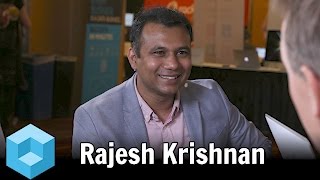
01. Marek Niedzwiedz, deepsense.io, Visits #theCUBE!. (00:20)
02. Martin Hall, Intel, Visits #theCUBE!. (00:36)
03. What Is Your Take On What's Happening Here. (00:46)
04. Tell Us What deepsense's Primary Focus Is. (01:43)
05. Give Us An Example Of Visual Recognition. (02:44)
06. Are You Modeling It After Pattern Recognition. (05:20)
07. What's The Motivation With Intel. (05:57)
08. On Intel Are There Things From The Analytic Stack In The Chip. (08:20)
09. How Does The Visual Recognition Tie Back To Deep Learning. (09:35)
10. Is There A Sense That We're On The Cusp Of Cloud Based Horse Power. (12:38)
11. How Do You Bridge The Gaps Within Various Enterprises. (13:38)
12. How Much Collaberation Is Better Tools. (15:55)
13. How Do You Empower The Citizen Data Scientist To Get More Out Of The Data. (16:33)
Track List created with http://www.vinjavideo.com.
--- ---
Save the whales! Taking a high dive into deep learning | #SparkSummit
by Timothy Walden | Jun 7, 2016
Whether we notice it or not, we are hardwired to recognize patterns. However, we now have technology that can recognize hundreds of patterns at once. This computing power can help revolutionize everything from photo recognition to national security.
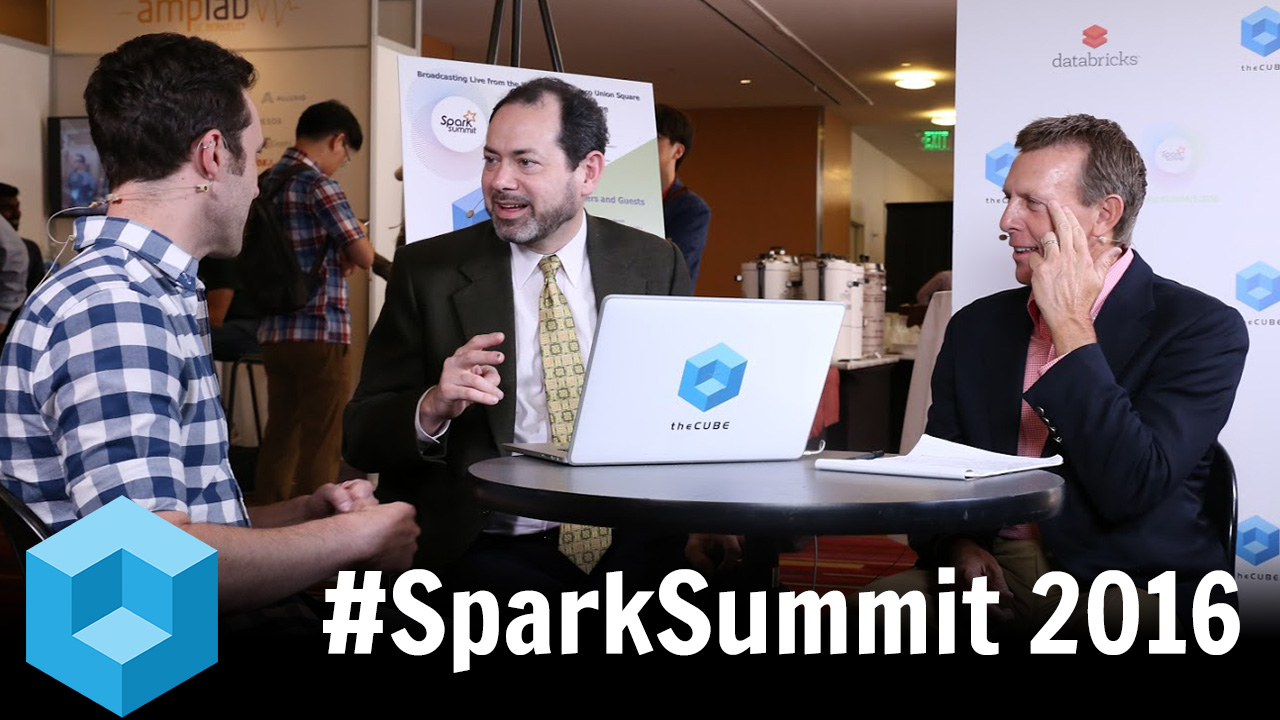
Martin Hall, Big Data business development at Intel, and Marek Niedzwiedz, COO at CodiLime, Inc. (deepsense.io), talked with John Walls and George Gilbert (@ggilbert41), cohosts of theCUBE, from the SiliconANGLE Media team, during the Spark Summit 2016 about deep learning.
How does it work?
Spark is making the lives of many data scientists and analysts much easier by integrating with existing workflows. It uses deep learning to create scalable models and more interactive visuals. How? By learning and processing patterns. Recently, deepsense.io used these capabilities to participate in a competition to save whales.
Though an altruistic goal, the software that was used has several real-world applications. It can now recognize faces, shapes and patterns “with 85% accuracy,” according to Niedzwiedz. Essentially, computers can now comb through thousands of faces in airports in order to more quickly and safely determine suspicious behavior.
Open source that can be trusted
Over the years, Intel has made a significant commitment to the open-source community. The motivation for such a bold move is to create analytics that perform well. With a variety of data stacks to process, there is a much larger push to create open-source environments that can be trusted.
Intel looks to optimize two very important functions: “Performance and security,” Hall said. To do that, companies must be willing to invest in cloud-based source power.
Who to trust
With so much learning and integration, security quickly comes to mind. In a world of open-source, is it possible to keep your information proprietary? The answer is yes. “Security is key,” according to Hall, and Intel is making it a point to invest in securing data as much as sharing it.
The biggest problem to overcome, in fact, is bridging the gap between so many users and companies. There is an “awareness chasm” that often prevents many brilliant minds from connecting, Hall said. By fostering more team-based relationships, many of today’s computing problems can easily be solved.
“Teams win over individuals,” Hall said. And in a perfect world, the open-source environment helps build more teams.
#SparkSummit
#theCUBE
Forgot Password
Almost there!
We just sent you a verification email. Please verify your account to gain access to
Spark Summit 2016 | San Francisco. If you don’t think you received an email check your
spam folder.
In order to sign in, enter the email address you used to registered for the event. Once completed, you will receive an email with a verification link. Open this link to automatically sign into the site.
Register For Spark Summit 2016 | San Francisco
Please fill out the information below. You will recieve an email with a verification link confirming your registration. Click the link to automatically sign into the site.
You’re almost there!
We just sent you a verification email. Please click the verification button in the email. Once your email address is verified, you will have full access to all event content for Spark Summit 2016 | San Francisco.
I want my badge and interests to be visible to all attendees.
Checking this box will display your presense on the attendees list, view your profile and allow other attendees to contact you via 1-1 chat. Read the Privacy Policy. At any time, you can choose to disable this preference.
Select your Interests!
add
Upload your photo
Uploading..
OR
Connect via Twitter
Connect via Linkedin
EDIT PASSWORD
Share
Forgot Password
Almost there!
We just sent you a verification email. Please verify your account to gain access to
Spark Summit 2016 | San Francisco. If you don’t think you received an email check your
spam folder.
In order to sign in, enter the email address you used to registered for the event. Once completed, you will receive an email with a verification link. Open this link to automatically sign into the site.
Sign in to gain access to Spark Summit 2016 | San Francisco
Please sign in with LinkedIn to continue to Spark Summit 2016 | San Francisco. Signing in with LinkedIn ensures a professional environment.
Are you sure you want to remove access rights for this user?
Details
Manage Access
email address
Community Invitation
Marek Niedzwiedz, deepsense.io & Martin Hall, Intel | Spark Summit 2016
01. Marek Niedzwiedz, deepsense.io, Visits #theCUBE!. (00:20)
02. Martin Hall, Intel, Visits #theCUBE!. (00:36)
03. What Is Your Take On What's Happening Here. (00:46)
04. Tell Us What deepsense's Primary Focus Is. (01:43)
05. Give Us An Example Of Visual Recognition. (02:44)
06. Are You Modeling It After Pattern Recognition. (05:20)
07. What's The Motivation With Intel. (05:57)
08. On Intel Are There Things From The Analytic Stack In The Chip. (08:20)
09. How Does The Visual Recognition Tie Back To Deep Learning. (09:35)
10. Is There A Sense That We're On The Cusp Of Cloud Based Horse Power. (12:38)
11. How Do You Bridge The Gaps Within Various Enterprises. (13:38)
12. How Much Collaberation Is Better Tools. (15:55)
13. How Do You Empower The Citizen Data Scientist To Get More Out Of The Data. (16:33)
Track List created with http://www.vinjavideo.com.
--- ---
Save the whales! Taking a high dive into deep learning | #SparkSummit
by Timothy Walden | Jun 7, 2016
Whether we notice it or not, we are hardwired to recognize patterns. However, we now have technology that can recognize hundreds of patterns at once. This computing power can help revolutionize everything from photo recognition to national security.
Martin Hall, Big Data business development at Intel, and Marek Niedzwiedz, COO at CodiLime, Inc. (deepsense.io), talked with John Walls and George Gilbert (@ggilbert41), cohosts of theCUBE, from the SiliconANGLE Media team, during the Spark Summit 2016 about deep learning.
How does it work?
Spark is making the lives of many data scientists and analysts much easier by integrating with existing workflows. It uses deep learning to create scalable models and more interactive visuals. How? By learning and processing patterns. Recently, deepsense.io used these capabilities to participate in a competition to save whales.
Though an altruistic goal, the software that was used has several real-world applications. It can now recognize faces, shapes and patterns “with 85% accuracy,” according to Niedzwiedz. Essentially, computers can now comb through thousands of faces in airports in order to more quickly and safely determine suspicious behavior.
Open source that can be trusted
Over the years, Intel has made a significant commitment to the open-source community. The motivation for such a bold move is to create analytics that perform well. With a variety of data stacks to process, there is a much larger push to create open-source environments that can be trusted.
Intel looks to optimize two very important functions: “Performance and security,” Hall said. To do that, companies must be willing to invest in cloud-based source power.
Who to trust
With so much learning and integration, security quickly comes to mind. In a world of open-source, is it possible to keep your information proprietary? The answer is yes. “Security is key,” according to Hall, and Intel is making it a point to invest in securing data as much as sharing it.
The biggest problem to overcome, in fact, is bridging the gap between so many users and companies. There is an “awareness chasm” that often prevents many brilliant minds from connecting, Hall said. By fostering more team-based relationships, many of today’s computing problems can easily be solved.
“Teams win over individuals,” Hall said. And in a perfect world, the open-source environment helps build more teams.
#SparkSummit
#theCUBE