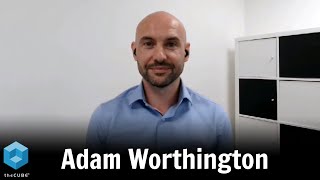
Lester Waters, CTO, Io-Taho, Patrick Smith, Patrick Smith, Field CTO, Pure Storage and Ezat Dayeh, SE Manager UK&I, Cohesity and Adam Worthington, Co-founder and CTO, Ethos Technology joined theCUBE's Dave Vellante on a Power Panel discussing solutions and strategies that leverage data automation in optimizing all stages of data lifecycle.
Like an apple falling from a tree, data may have gravity, but its journey from creation to consumption to archive is hardly a straight, uninterrupted path. In reality, the data lifecycle is a sequence of stages that are managed using different tools and technologies. The process can be complex and prone to problems, especially as data volumes climb to nearly unfathomable levels.
“The number one problem that we are trying to solve for our customers is to help them understand what they have,” said Lester Waters (pictured, second from left), chief technology officer of Io-Tahoe LLC. “If they don’t understand what they have in terms of their data, they can’t manage it, they can’t control it, they can’t monitor it, they can’t ensure compliance."
Waters spoke with Dave Vellante, host of theCUBE, SiliconANGLE Media’s livestreaming studio, as part of the recent Smart Data Lifecycle CrowdChat. He was joined by Patrick Smith (pictured, second from right), field chief technology officer of Pure Storage Inc., and Ezat Dayeh (pictured, right), systems engineering manager for the U.K. and Ireland at Cohesity Inc. Adam Worthington, co-founder and chief technology officer at Ethos Technology Ltd., spoke with Vellante in a separate interview.
A critical need to understand enterprise data has placed companies in a position of applying smart technology to help with governance, agility and performance at each stage of the lifecycle. This is where metadata, encoded information that describes the data itself, becomes especially important in the process of discovery and management.
“Imagine for my data lifecycle I can communicate with the backup system for Cohesity and find out the last time that data was backed up or where it’s backed up to,” Waters explained. “I can exchange data with Pure Storage and find out what tier it’s on. Is the data at the right tier commensurate with its use level? Being able to share metadata across systems is the direction that we’re going in.”
Building in processes that use metadata goes hand-in-hand with another key element: automation. This need for data automation was highlighted in a recent survey, which found that companies continue to struggle with meeting compliance standards set by the California Consumer Privacy Act. Barely a third of respondents had fully automated customer access to personal data.
The process of data backup, a common procedure for most information-technology organizations, can itself lead to data sprawl and clog an enterprise’s ability to derive value from the information it has. Ethos Technology confronted this issue with one customer that had allowed its data backup process to become unwieldy and burdensome for the company.
“It’s a huge organization with literally petabytes of data that were serviced in their backup and archive,” Worthington said. “What they had was not just reams of data; they had five different backup applications that were dependent on what area of infrastructure they were backing up to. Through a consolidated approach that we recommended, they were able to significantly reduce complexity and reduce the amount of time that it took them.”
Pure’s “flash-to-cloud” approach is part of an ongoing conversation around the role of cloud in smart data solutions. Migration of data-heavy workloads to the cloud continues to be an ongoing trend. Yet, some industry leaders are questioning whether a wholesale shift makes sense.
“I’ve seen customers go into the cloud very quickly, and recently they’re starting to remove workloads from the cloud,” Dayeh said. “Why do we all live in houses and not hotels? The simple answer is that it’s cheaper. The cloud is great for many things, but it can work out costlier for certain applications.”
However, the evolution of smart data management also includes the flexibility to run business workloads in hybrid environments, combining cloud and on-premises platforms. Results from a survey released in late July show that 72% of respondents characterized their cloud strategy as hybrid-first.
“It reinforces the importance of hybrid and multicloud environments because it gives you that flexibility, the optimal environment to run your business workloads, and that’s what it’s all about,” Smith said.
One recent forecast shows that an estimated 41 billion connected internet of things devices will generate 80 times the amount of data that comprised all global internet traffic in 2016. That will demand tools which allow enterprises to take full advantage of this massive amount of information, from creation to consumption to archive.
Forgot Password
Almost there!
We just sent you a verification email. Please verify your account to gain access to
Io-Tahoe Smart Data Lifecycle. If you don’t think you received an email check your
spam folder.
In order to sign in, enter the email address you used to registered for the event. Once completed, you will receive an email with a verification link. Open this link to automatically sign into the site.
Register For Io-Tahoe Smart Data Lifecycle
Please fill out the information below. You will recieve an email with a verification link confirming your registration. Click the link to automatically sign into the site.
You’re almost there!
We just sent you a verification email. Please click the verification button in the email. Once your email address is verified, you will have full access to all event content for Io-Tahoe Smart Data Lifecycle.
I want my badge and interests to be visible to all attendees.
Checking this box will display your presense on the attendees list, view your profile and allow other attendees to contact you via 1-1 chat. Read the Privacy Policy. At any time, you can choose to disable this preference.
Select your Interests!
add
Upload your photo
Uploading..
OR
Connect via Twitter
Connect via Linkedin
EDIT PASSWORD
Share
Forgot Password
Almost there!
We just sent you a verification email. Please verify your account to gain access to
Io-Tahoe Smart Data Lifecycle. If you don’t think you received an email check your
spam folder.
In order to sign in, enter the email address you used to registered for the event. Once completed, you will receive an email with a verification link. Open this link to automatically sign into the site.
Sign in to gain access to Io-Tahoe Smart Data Lifecycle
Please sign in with LinkedIn to continue to Io-Tahoe Smart Data Lifecycle. Signing in with LinkedIn ensures a professional environment.
Are you sure you want to remove access rights for this user?
Details
Manage Access
email address
Community Invitation
Io-Tahoe Smart Data Lifecycle CrowdChat | Digital
Lester Waters, CTO, Io-Taho, Patrick Smith, Patrick Smith, Field CTO, Pure Storage and Ezat Dayeh, SE Manager UK&I, Cohesity and Adam Worthington, Co-founder and CTO, Ethos Technology joined theCUBE's Dave Vellante on a Power Panel discussing solutions and strategies that leverage data automation in optimizing all stages of data lifecycle.
Like an apple falling from a tree, data may have gravity, but its journey from creation to consumption to archive is hardly a straight, uninterrupted path. In reality, the data lifecycle is a sequence of stages that are managed using different tools and technologies. The process can be complex and prone to problems, especially as data volumes climb to nearly unfathomable levels.
“The number one problem that we are trying to solve for our customers is to help them understand what they have,” said Lester Waters (pictured, second from left), chief technology officer of Io-Tahoe LLC. “If they don’t understand what they have in terms of their data, they can’t manage it, they can’t control it, they can’t monitor it, they can’t ensure compliance."
Waters spoke with Dave Vellante, host of theCUBE, SiliconANGLE Media’s livestreaming studio, as part of the recent Smart Data Lifecycle CrowdChat. He was joined by Patrick Smith (pictured, second from right), field chief technology officer of Pure Storage Inc., and Ezat Dayeh (pictured, right), systems engineering manager for the U.K. and Ireland at Cohesity Inc. Adam Worthington, co-founder and chief technology officer at Ethos Technology Ltd., spoke with Vellante in a separate interview.
A critical need to understand enterprise data has placed companies in a position of applying smart technology to help with governance, agility and performance at each stage of the lifecycle. This is where metadata, encoded information that describes the data itself, becomes especially important in the process of discovery and management.
“Imagine for my data lifecycle I can communicate with the backup system for Cohesity and find out the last time that data was backed up or where it’s backed up to,” Waters explained. “I can exchange data with Pure Storage and find out what tier it’s on. Is the data at the right tier commensurate with its use level? Being able to share metadata across systems is the direction that we’re going in.”
Building in processes that use metadata goes hand-in-hand with another key element: automation. This need for data automation was highlighted in a recent survey, which found that companies continue to struggle with meeting compliance standards set by the California Consumer Privacy Act. Barely a third of respondents had fully automated customer access to personal data.
The process of data backup, a common procedure for most information-technology organizations, can itself lead to data sprawl and clog an enterprise’s ability to derive value from the information it has. Ethos Technology confronted this issue with one customer that had allowed its data backup process to become unwieldy and burdensome for the company.
“It’s a huge organization with literally petabytes of data that were serviced in their backup and archive,” Worthington said. “What they had was not just reams of data; they had five different backup applications that were dependent on what area of infrastructure they were backing up to. Through a consolidated approach that we recommended, they were able to significantly reduce complexity and reduce the amount of time that it took them.”
Pure’s “flash-to-cloud” approach is part of an ongoing conversation around the role of cloud in smart data solutions. Migration of data-heavy workloads to the cloud continues to be an ongoing trend. Yet, some industry leaders are questioning whether a wholesale shift makes sense.
“I’ve seen customers go into the cloud very quickly, and recently they’re starting to remove workloads from the cloud,” Dayeh said. “Why do we all live in houses and not hotels? The simple answer is that it’s cheaper. The cloud is great for many things, but it can work out costlier for certain applications.”
However, the evolution of smart data management also includes the flexibility to run business workloads in hybrid environments, combining cloud and on-premises platforms. Results from a survey released in late July show that 72% of respondents characterized their cloud strategy as hybrid-first.
“It reinforces the importance of hybrid and multicloud environments because it gives you that flexibility, the optimal environment to run your business workloads, and that’s what it’s all about,” Smith said.
One recent forecast shows that an estimated 41 billion connected internet of things devices will generate 80 times the amount of data that comprised all global internet traffic in 2016. That will demand tools which allow enterprises to take full advantage of this massive amount of information, from creation to consumption to archive.