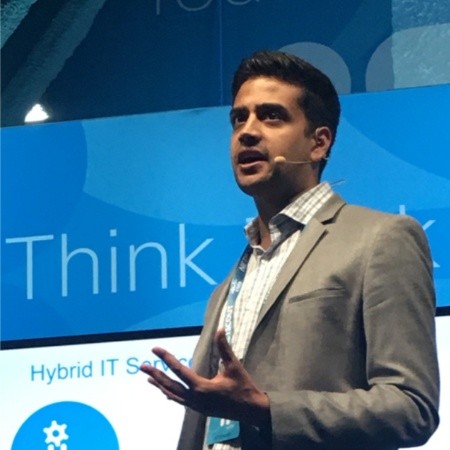
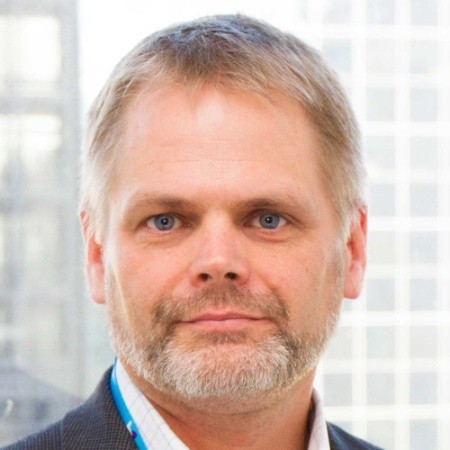
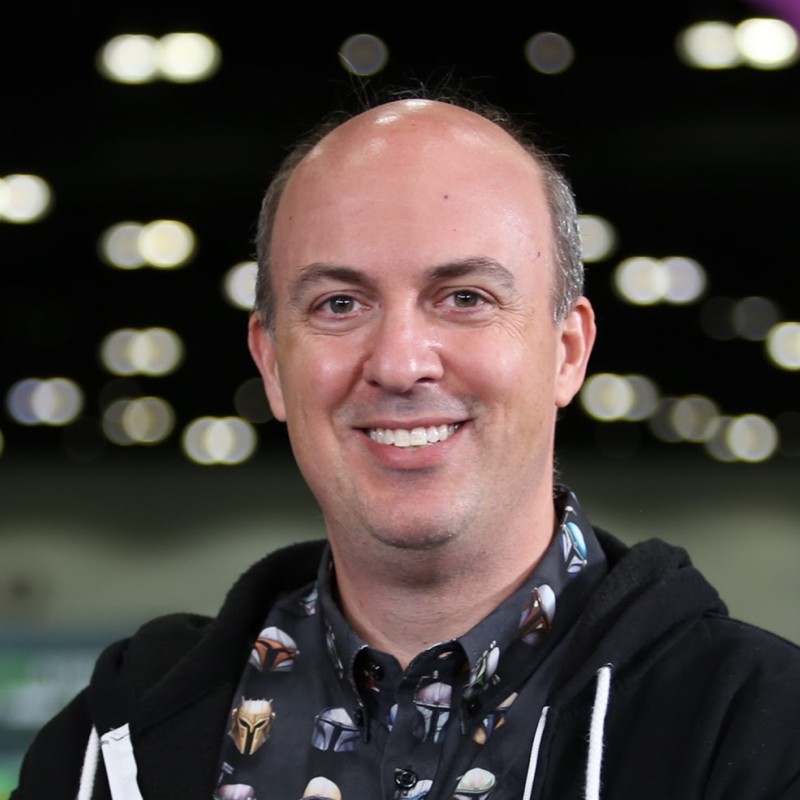
Rob Gruener, Solutions Architect, Telstra & Raj Patnam, VP Global Solutions, ScienceLogic talk with Stu Miniman at ScienceLogic Symposium at The Ritz-Carlton in Washington, DC.
#SL19 #theCUBE
https://siliconangle.com/2019/04/26/qa-no-magic-easy-button-navigate-aiops-sl19/
Q&A: There is no ‘magic easy button’ to navigate AIOps
As the world moves toward AIOps — the application of artificial intelligence for IT operations — it’s not an easy change for many large enterprises. So what’s the reality of working as a customer and supplier to implement radical technological changes within larger enterprise legacy systems? Rob Gruener (pictured, left), service delivery manager at Telstra Corp. Ltd., and Raj Patnam (pictured, right), vice president of global solutions at ScienceLogic, Inc., recently weighed in on the topic.
Gruener and Patnam spoke with Stu Miniman (@stu), host of theCUBE, SiliconANGLE Media’s mobile livestreaming studio, during the ScienceLogic Symposium in Washington, D.C. They discussed navigating legacy systems in larger enterprises, the teamwork that must develop between client and tech supplier, and the challenges of data (see the full interview with transcript here). (* Disclosure below.)
[Editor’s note: The following has been condensed for clarity.]
Give us a little insight as to how fast things are changing.
Gruener: Telstra is trying as hard as it can to move as quickly as the market can allow it. So, definitely, it’s virtualizing, it’s automating. AIOps is a big component of what we’re doing, and it’s extremely important for the business.
Talk about how ScienceLogic position themselves as, ‘This is going to help you move at machine speed and keep up with that.’ Give us a bit the reality of what you’re seeing. How … does that impact your job, your organization?
Gruener: It’s the legacy infrastructure within any organization — particularly at Telstra scale — that’s really holding you back. And there’s a lot of will, I think, at a people level within Telstra to move as quickly as we can. But we have such a large number of legacy systems to deal with. We’re looking at one deployment of ScienceLogic — we’re looking at 18 systems to kill. So that’s a big task.
Raj, this is something we hear from all customers. ‘It’d be lovely if I had the mythical unicorn that starts from the ground up and it can start afresh.’ But we always have to have that mix. Give us what you’re seeing — both with Telstra and a little bit broader.
Patnam: I think what Telstra has done really well with taking advantage of our technology was they didn’t come in with this attitude of, ‘I’m gonna rip out everything that we have and just have a magic easy button.’ Software doesn’t work that way. I think we’ve all learned the lessons of tough deployments … when you try to auto-fix everything. So they came in with a really gradual, phased approach of — get a couple pieces done where they had gaps. We started to fill those gaps.
I think when we look at our most successful customers like Telstra, it’s because they’ve had this gradual, phased approach where they’re using software rather than single-person bottlenecks and rather than having these tiger teams to try to solve problems — and moving towards a better process to take advantage of the world we’re in today.
I heard of strong emphasis into training … so talk about how ScienceLogic is looking to addresses this, especially for some large customers like Telstra.
Patnam: We’ve long focused on training the operator on how to utilize the technology to solve their specific problems. And while those aspects are really powerful, some of the things we’ve done recently to go a step further is — when we hear similar questions, we’ve started to record all of those so our customers can watch videos of how to solve problems instead of going onto some forum. So we’ve got to look at a better mechanism, and video-based training, handling the customers — we can build out these use cases [that] drives the platform value.
Watch the complete video interview below, and be sure to check out more of SiliconANGLE’s and theCUBE’s coverage of the ScienceLogic Symposium. (* Disclosure: TheCUBE is a paid media partner for the ScienceLogic Symposium event. Neither ScienceLogic Inc., the sponsor for theCUBE’s event coverage, nor other sponsors have editorial control over content on theCUBE or SiliconANGLE.)
Forgot Password
Almost there!
We just sent you a verification email. Please verify your account to gain access to
ScienceLogic Symposium 2019 | Washington D.C. . If you don’t think you received an email check your
spam folder.
Sign in to ScienceLogic Symposium 2019 | Washington D.C. .
In order to sign in, enter the email address you used to registered for the event. Once completed, you will receive an email with a verification link. Open this link to automatically sign into the site.
Register For ScienceLogic Symposium 2019 | Washington D.C.
Please fill out the information below. You will recieve an email with a verification link confirming your registration. Click the link to automatically sign into the site.
You’re almost there!
We just sent you a verification email. Please click the verification button in the email. Once your email address is verified, you will have full access to all event content for ScienceLogic Symposium 2019 | Washington D.C. .
I want my badge and interests to be visible to all attendees.
Checking this box will display your presense on the attendees list, view your profile and allow other attendees to contact you via 1-1 chat. Read the Privacy Policy. At any time, you can choose to disable this preference.
Select your Interests!
add
Upload your photo
Uploading..
OR
Connect via Twitter
Connect via Linkedin
EDIT PASSWORD
Share
Forgot Password
Almost there!
We just sent you a verification email. Please verify your account to gain access to
ScienceLogic Symposium 2019 | Washington D.C. . If you don’t think you received an email check your
spam folder.
Sign in to ScienceLogic Symposium 2019 | Washington D.C. .
In order to sign in, enter the email address you used to registered for the event. Once completed, you will receive an email with a verification link. Open this link to automatically sign into the site.
Sign in to gain access to ScienceLogic Symposium 2019 | Washington D.C.
Please sign in with LinkedIn to continue to ScienceLogic Symposium 2019 | Washington D.C. . Signing in with LinkedIn ensures a professional environment.
Rob Gruener, Solutions Architect, Telstra & Raj Patnam, VP Global Solutions, ScienceLogic talk with Stu Miniman at ScienceLogic Symposium at The Ritz-Carlton in Washington, DC.
#SL19 #theCUBE
https://siliconangle.com/2019/04/26/qa-no-magic-easy-button-navigate-aiops-sl19/
Q&A: There is no ‘magic easy button’ to navigate AIOps
As the world moves toward AIOps — the application of artificial intelligence for IT operations — it’s not an easy change for many large enterprises. So what’s the reality of working as a customer and supplier to implement radical technological changes within larger enterprise legacy systems? Rob Gruener (pictured, left), service delivery manager at Telstra Corp. Ltd., and Raj Patnam (pictured, right), vice president of global solutions at ScienceLogic, Inc., recently weighed in on the topic.
Gruener and Patnam spoke with Stu Miniman (@stu), host of theCUBE, SiliconANGLE Media’s mobile livestreaming studio, during the ScienceLogic Symposium in Washington, D.C. They discussed navigating legacy systems in larger enterprises, the teamwork that must develop between client and tech supplier, and the challenges of data (see the full interview with transcript here). (* Disclosure below.)
[Editor’s note: The following has been condensed for clarity.]
Give us a little insight as to how fast things are changing.
Gruener: Telstra is trying as hard as it can to move as quickly as the market can allow it. So, definitely, it’s virtualizing, it’s automating. AIOps is a big component of what we’re doing, and it’s extremely important for the business.
Talk about how ScienceLogic position themselves as, ‘This is going to help you move at machine speed and keep up with that.’ Give us a bit the reality of what you’re seeing. How … does that impact your job, your organization?
Gruener: It’s the legacy infrastructure within any organization — particularly at Telstra scale — that’s really holding you back. And there’s a lot of will, I think, at a people level within Telstra to move as quickly as we can. But we have such a large number of legacy systems to deal with. We’re looking at one deployment of ScienceLogic — we’re looking at 18 systems to kill. So that’s a big task.
Raj, this is something we hear from all customers. ‘It’d be lovely if I had the mythical unicorn that starts from the ground up and it can start afresh.’ But we always have to have that mix. Give us what you’re seeing — both with Telstra and a little bit broader.
Patnam: I think what Telstra has done really well with taking advantage of our technology was they didn’t come in with this attitude of, ‘I’m gonna rip out everything that we have and just have a magic easy button.’ Software doesn’t work that way. I think we’ve all learned the lessons of tough deployments … when you try to auto-fix everything. So they came in with a really gradual, phased approach of — get a couple pieces done where they had gaps. We started to fill those gaps.
I think when we look at our most successful customers like Telstra, it’s because they’ve had this gradual, phased approach where they’re using software rather than single-person bottlenecks and rather than having these tiger teams to try to solve problems — and moving towards a better process to take advantage of the world we’re in today.
I heard of strong emphasis into training … so talk about how ScienceLogic is looking to addresses this, especially for some large customers like Telstra.
Patnam: We’ve long focused on training the operator on how to utilize the technology to solve their specific problems. And while those aspects are really powerful, some of the things we’ve done recently to go a step further is — when we hear similar questions, we’ve started to record all of those so our customers can watch videos of how to solve problems instead of going onto some forum. So we’ve got to look at a better mechanism, and video-based training, handling the customers — we can build out these use cases [that] drives the platform value.
Watch the complete video interview below, and be sure to check out more of SiliconANGLE’s and theCUBE’s coverage of the ScienceLogic Symposium. (* Disclosure: TheCUBE is a paid media partner for the ScienceLogic Symposium event. Neither ScienceLogic Inc., the sponsor for theCUBE’s event coverage, nor other sponsors have editorial control over content on theCUBE or SiliconANGLE.)