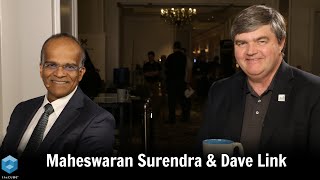
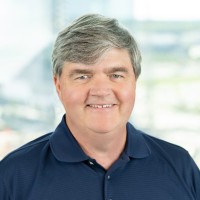
Dave Link, CEO, ScienceLogic talks with Stu Miniman at ScienceLogic Symposium 2019 at The Ritz-Carlton in Washington, DC.
#SL19 #theCUBE
https://siliconangle.com/2019/04/25/the-new-rules-for-monitoring-hectic-modern-it-ops-sl19/
The new rules for monitoring hectic modern IT Ops
The new cloud-computing environments may be lighter and less clunky than older information technology systems. But they’re not necessarily less complex. They’re made of many compounded services and abstraction layers. They require a new set of binoculars to monitor the busy, ephemeral goings-on inside them.
The key is to shift from monitoring devices or nodes to monitoring services, according to Dave Link (pictured), co-founder and chief executive officer of ScienceLogic Inc. The service level is where the action is in cloud — and where teams can catch, predict and prevent problems, Link pointed out. It features short-lived systems and services, containers (a virtualized method for running distributed applications) and abstractions.
“All these abstraction layers require a different mindset,” Link stated.
Link spoke with Stu Miniman (@stu), host of theCUBE, SiliconANGLE Media’s mobile livestreaming studio, during the ScienceLogic Symposium in Washington, D.C. They discussed the need to monitor modern IT systems at the service level (see the full interview with transcript here). (* Disclosure below.)
Linking DevOps chain
Everything going on at the service level has to be visible so operations teams can take easy action on it.
“Enterprises are getting into a moment where they’re having to really act as service bureaus, service brokers,” Link said. “And that means that all the different teams that support different technology silos really have to work together as one — yet they still need their own views.” This requires a platform with an open architecture for pulling in and contextualizing data from numerous sources.
Beyond monitoring at the service level, modern IT needs a system that links silos together, Link explained. Developer operations does not work with either monolithic monitoring or siloed monitoring alone — it requires both, he added.
Most products built for monitoring offer a single-tenant enterprise view of a system, according to Link, and that doesn’t offer the granularity for each persona to get a deep view into their own silos. They need to work as a converged team, working as one across many silos.
“That requires a very different way of thinking, a different tool space, a different solution to the problem that we built kind of from the ground up,” he stated.
ScienceLogic offers both kinds of views in a holistic platform. “It’s now really appropriate for the DevOps teams, the teams that are really having to break down the silos and work as one team,” Link concluded.
Watch the complete video interview below, and be sure to check out more of SiliconANGLE’s and theCUBE’s coverage of the ScienceLogic Symposium. (* Disclosure: TheCUBE is a paid media partner for the ScienceLogic Symposium event. Neither ScienceLogic Inc., the sponsor for theCUBE’s event coverage, nor other sponsors have editorial control over content on theCUBE or SiliconANGLE.)
Forgot Password
Almost there!
We just sent you a verification email. Please verify your account to gain access to
ScienceLogic Symposium 2019 | Washington D.C. . If you don’t think you received an email check your
spam folder.
Sign in to ScienceLogic Symposium 2019 | Washington D.C. .
In order to sign in, enter the email address you used to registered for the event. Once completed, you will receive an email with a verification link. Open this link to automatically sign into the site.
Register For ScienceLogic Symposium 2019 | Washington D.C.
Please fill out the information below. You will recieve an email with a verification link confirming your registration. Click the link to automatically sign into the site.
You’re almost there!
We just sent you a verification email. Please click the verification button in the email. Once your email address is verified, you will have full access to all event content for ScienceLogic Symposium 2019 | Washington D.C. .
I want my badge and interests to be visible to all attendees.
Checking this box will display your presense on the attendees list, view your profile and allow other attendees to contact you via 1-1 chat. Read the Privacy Policy. At any time, you can choose to disable this preference.
Select your Interests!
add
Upload your photo
Uploading..
OR
Connect via Twitter
Connect via Linkedin
EDIT PASSWORD
Share
Forgot Password
Almost there!
We just sent you a verification email. Please verify your account to gain access to
ScienceLogic Symposium 2019 | Washington D.C. . If you don’t think you received an email check your
spam folder.
Sign in to ScienceLogic Symposium 2019 | Washington D.C. .
In order to sign in, enter the email address you used to registered for the event. Once completed, you will receive an email with a verification link. Open this link to automatically sign into the site.
Sign in to gain access to ScienceLogic Symposium 2019 | Washington D.C.
Please sign in with LinkedIn to continue to ScienceLogic Symposium 2019 | Washington D.C. . Signing in with LinkedIn ensures a professional environment.
Are you sure you want to remove access rights for this user?
Details
Manage Access
email address
Community Invitation
Dave Link, ScienceLogic | ScienceLogic Symposium 2019
Dave Link, CEO, ScienceLogic talks with Stu Miniman at ScienceLogic Symposium 2019 at The Ritz-Carlton in Washington, DC.
#SL19 #theCUBE
https://siliconangle.com/2019/04/25/the-new-rules-for-monitoring-hectic-modern-it-ops-sl19/
The new rules for monitoring hectic modern IT Ops
The new cloud-computing environments may be lighter and less clunky than older information technology systems. But they’re not necessarily less complex. They’re made of many compounded services and abstraction layers. They require a new set of binoculars to monitor the busy, ephemeral goings-on inside them.
The key is to shift from monitoring devices or nodes to monitoring services, according to Dave Link (pictured), co-founder and chief executive officer of ScienceLogic Inc. The service level is where the action is in cloud — and where teams can catch, predict and prevent problems, Link pointed out. It features short-lived systems and services, containers (a virtualized method for running distributed applications) and abstractions.
“All these abstraction layers require a different mindset,” Link stated.
Link spoke with Stu Miniman (@stu), host of theCUBE, SiliconANGLE Media’s mobile livestreaming studio, during the ScienceLogic Symposium in Washington, D.C. They discussed the need to monitor modern IT systems at the service level (see the full interview with transcript here). (* Disclosure below.)
Linking DevOps chain
Everything going on at the service level has to be visible so operations teams can take easy action on it.
“Enterprises are getting into a moment where they’re having to really act as service bureaus, service brokers,” Link said. “And that means that all the different teams that support different technology silos really have to work together as one — yet they still need their own views.” This requires a platform with an open architecture for pulling in and contextualizing data from numerous sources.
Beyond monitoring at the service level, modern IT needs a system that links silos together, Link explained. Developer operations does not work with either monolithic monitoring or siloed monitoring alone — it requires both, he added.
Most products built for monitoring offer a single-tenant enterprise view of a system, according to Link, and that doesn’t offer the granularity for each persona to get a deep view into their own silos. They need to work as a converged team, working as one across many silos.
“That requires a very different way of thinking, a different tool space, a different solution to the problem that we built kind of from the ground up,” he stated.
ScienceLogic offers both kinds of views in a holistic platform. “It’s now really appropriate for the DevOps teams, the teams that are really having to break down the silos and work as one team,” Link concluded.
Watch the complete video interview below, and be sure to check out more of SiliconANGLE’s and theCUBE’s coverage of the ScienceLogic Symposium. (* Disclosure: TheCUBE is a paid media partner for the ScienceLogic Symposium event. Neither ScienceLogic Inc., the sponsor for theCUBE’s event coverage, nor other sponsors have editorial control over content on theCUBE or SiliconANGLE.)