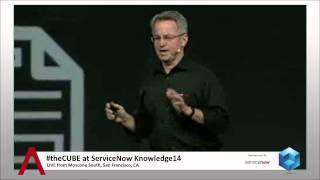
01. Martha Heller - Pres. Heller Search Associates - Visits theCUBE!. (00:30)
02. What Are Some Of The CIO Contradictions?. (01:44)
03. How Are CIOs Dealing With Legacy In Enterprise?. (05:23)
04. CIOs And Marketing In IT By IT. (07:31)
05. Leadership Coming From The Business Ranks. (08:51)
06. The Challenge Of Being A CIO And Actually Getting Stuff Done.. (11:10)
07. Is A Lack Of A Budget A Legitimate CIO Complaint?. (13:10)
--- ---
Martha Heller, Heller Search Associates, at ServiceNow Knowledge 2014 with Dave Vellante and Jeff Frick
@thecube
#theCUBE #ServiceNow #Know14 #SiliconANGLE
Martha Heller, President of Heller Search Associates and author of “The CIO Paradox,” explained her new concept based on the contradictions in IT management that generate paradoxes in CIOs’ roles to theCUBE co-hosts Jeff Frick and Dave Vellante, live at the ServiceNow Knowledge14 conference.
Heller has been working with CIOs for more than 15 years. She explained that when they get a new job, a new CIO role, she always asks, “What did you inherit?” The vast majority will answer, “I inherited a mess.” If asked what they will change, they all have great plans, but three years later, they are replaced, and the mess is still there, and someone with other great plans come in.
With smart, accomplished, well-meaning and well educated CIOs Heller ponders, “Why is IT failing so often, and in such a major way?” She said a series of contradictions in IT management which she called the CIO paradox are the root of the problem.
The most interesting such paradox is “futurist vs archivist.” Heller explained, “IT is about change, but the CIO drags behind him the past,” that includes legacy decisions. Thinking of infrastructure as an iceberg, the tip – 10-30 percent of the budget – is shiny, trendy and what the CEO wants. Beneath lays the rest of the infrastructure which is bloated, not secure, expensive and slow. “Legacy begins the day you put something in,” Heller proclaimed.
Asked how are CIOs are dealing with that paradox, Heller said “it all depends on the life cycle of the company and what the state of the infrastructure is.”
One successful approach towards dismantling the infrastructure is to employ finances to tell the infrastructure story in terms of business goals. It’s not only about being business oriented, but also knowing the technical details of the infrastructure.
Being a good salesman is “a challenge for CIOs from the beginning of IT,” according to Heller. The ultimate paradox is that which attracts them to a career in writing code, repels a salesperson’s networking skills.
“Getting everyone on board is a challenging skill for CIOs,” she explained, noting they need to “find the metaphors that resonate with the business and tell the story of IT strategy.”
Asked why CIOs with non-technical backgrounds fail, Heller says that “in very, very large companies that have resources to hire a whole suite of tech executives” working for the CIOs, they can be successful. They are great at building teams, but they don’t know or recognize the structure of the IT organization. Running IT requires capabilities that don’t exist in other functions. They fail because “they don’t know how to run IT,” not because they are not technical.
Another interesting paradox is “strategy vs operations.” CEOs want CIOs to turn IT from a necessary evil to a major strategy lever. Yet CIOs are busy putting out operational fires, it takes years to get to work on strategy. Quoting one CIO, Heller said “it’s hard to be strategic when your pants are on fire.”
“Sometimes it’s important to recognize that running IT, getting your house on order, that is the most strategic thing you can do” in order not to fail, Heller explains. Only then should there be a move into the fancy strategic planning of IT.
Asked if the budget limitation was a valid excuse, Heller said that CIOs “don’t have the budget. The crutch is saying ‘there’s nothing I can do about it.'” In Heller’s opinion, everyone is trying to get a piece of the budget and the most competitive person wins. It takes building a business case for the budget you need.
Forgot Password
Almost there!
We just sent you a verification email. Please verify your account to gain access to
ServiceNow Knowledge 2014. If you don’t think you received an email check your
spam folder.
In order to sign in, enter the email address you used to registered for the event. Once completed, you will receive an email with a verification link. Open this link to automatically sign into the site.
Register For ServiceNow Knowledge 2014
Please fill out the information below. You will recieve an email with a verification link confirming your registration. Click the link to automatically sign into the site.
You’re almost there!
We just sent you a verification email. Please click the verification button in the email. Once your email address is verified, you will have full access to all event content for ServiceNow Knowledge 2014.
I want my badge and interests to be visible to all attendees.
Checking this box will display your presense on the attendees list, view your profile and allow other attendees to contact you via 1-1 chat. Read the Privacy Policy. At any time, you can choose to disable this preference.
Select your Interests!
add
Upload your photo
Uploading..
OR
Connect via Twitter
Connect via Linkedin
EDIT PASSWORD
Share
Forgot Password
Almost there!
We just sent you a verification email. Please verify your account to gain access to
ServiceNow Knowledge 2014. If you don’t think you received an email check your
spam folder.
In order to sign in, enter the email address you used to registered for the event. Once completed, you will receive an email with a verification link. Open this link to automatically sign into the site.
Sign in to gain access to ServiceNow Knowledge 2014
Please sign in with LinkedIn to continue to ServiceNow Knowledge 2014. Signing in with LinkedIn ensures a professional environment.
01. Martha Heller - Pres. Heller Search Associates - Visits theCUBE!. (00:30)
02. What Are Some Of The CIO Contradictions?. (01:44)
03. How Are CIOs Dealing With Legacy In Enterprise?. (05:23)
04. CIOs And Marketing In IT By IT. (07:31)
05. Leadership Coming From The Business Ranks. (08:51)
06. The Challenge Of Being A CIO And Actually Getting Stuff Done.. (11:10)
07. Is A Lack Of A Budget A Legitimate CIO Complaint?. (13:10)
--- ---
Martha Heller, Heller Search Associates, at ServiceNow Knowledge 2014 with Dave Vellante and Jeff Frick
@thecube
#theCUBE #ServiceNow #Know14 #SiliconANGLE
Martha Heller, President of Heller Search Associates and author of “The CIO Paradox,” explained her new concept based on the contradictions in IT management that generate paradoxes in CIOs’ roles to theCUBE co-hosts Jeff Frick and Dave Vellante, live at the ServiceNow Knowledge14 conference.
Heller has been working with CIOs for more than 15 years. She explained that when they get a new job, a new CIO role, she always asks, “What did you inherit?” The vast majority will answer, “I inherited a mess.” If asked what they will change, they all have great plans, but three years later, they are replaced, and the mess is still there, and someone with other great plans come in.
With smart, accomplished, well-meaning and well educated CIOs Heller ponders, “Why is IT failing so often, and in such a major way?” She said a series of contradictions in IT management which she called the CIO paradox are the root of the problem.
The most interesting such paradox is “futurist vs archivist.” Heller explained, “IT is about change, but the CIO drags behind him the past,” that includes legacy decisions. Thinking of infrastructure as an iceberg, the tip – 10-30 percent of the budget – is shiny, trendy and what the CEO wants. Beneath lays the rest of the infrastructure which is bloated, not secure, expensive and slow. “Legacy begins the day you put something in,” Heller proclaimed.
Asked how are CIOs are dealing with that paradox, Heller said “it all depends on the life cycle of the company and what the state of the infrastructure is.”
One successful approach towards dismantling the infrastructure is to employ finances to tell the infrastructure story in terms of business goals. It’s not only about being business oriented, but also knowing the technical details of the infrastructure.
Being a good salesman is “a challenge for CIOs from the beginning of IT,” according to Heller. The ultimate paradox is that which attracts them to a career in writing code, repels a salesperson’s networking skills.
“Getting everyone on board is a challenging skill for CIOs,” she explained, noting they need to “find the metaphors that resonate with the business and tell the story of IT strategy.”
Asked why CIOs with non-technical backgrounds fail, Heller says that “in very, very large companies that have resources to hire a whole suite of tech executives” working for the CIOs, they can be successful. They are great at building teams, but they don’t know or recognize the structure of the IT organization. Running IT requires capabilities that don’t exist in other functions. They fail because “they don’t know how to run IT,” not because they are not technical.
Another interesting paradox is “strategy vs operations.” CEOs want CIOs to turn IT from a necessary evil to a major strategy lever. Yet CIOs are busy putting out operational fires, it takes years to get to work on strategy. Quoting one CIO, Heller said “it’s hard to be strategic when your pants are on fire.”
“Sometimes it’s important to recognize that running IT, getting your house on order, that is the most strategic thing you can do” in order not to fail, Heller explains. Only then should there be a move into the fancy strategic planning of IT.
Asked if the budget limitation was a valid excuse, Heller said that CIOs “don’t have the budget. The crutch is saying ‘there’s nothing I can do about it.'” In Heller’s opinion, everyone is trying to get a piece of the budget and the most competitive person wins. It takes building a business case for the budget you need.