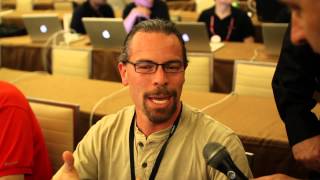
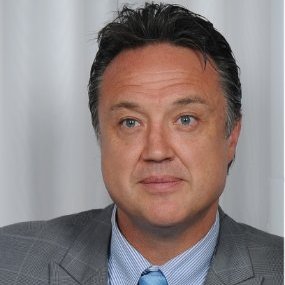
Craig Wishart, CIO, Service Stream, at ServiceNow Knowledge13 with theCUBE's Dave Vellante and Jeff Frick
CIO Challenge: Lower Cost, Increase Value + Innovate
With firsthand experience that spans media, telecommunications, government, banking and finance, Craig Wishart, CIO of ServiceStream, joined theCube hosts Dave Vellante and Jeff Frick at ServiceNow's annual Knowledge conference in Las Vegas to talk about innovation, leadership and instrumenting the business.
According to Wishart, Service Stream is Australia's leading provider of end-to-end solutions in the telecommunications and utilities sectors, representing the link between many of Australia's largest utility companies and millions of their end users.
ServiceNow has three unique business divisions: telecommunications, (responsible for rolling out and managing fiber), mobile (building 15,000 towers as we speak and upgrading old technology) and energy. The company is maintaining and managing vital Australian infrastructure needed for telecommunications, electricity, solar energy and water, with a field force of 400.000+ people.
Challenges CIOs face today
The challenges Wishart faced when he was appointed CIO, in March 2012, were dealing with different cultures, different platforms, and disparate infrastructure.
As it was addressed at the CIO Conference at the Knowledge13 event, the challenges are many more. There are the increasing cost pressures, not only to lower costs, but to deliver value all the while. Then there is the question of competing very quickly. The market and its competitors are moving quickly, so there is a big challenge not only to keep pace, but to innovate at the same time. Innovation is a key thing.
CIO heart-to-heart
Wishart was pleased with the vibe of the CIO Conference. As he said, with other conferences the participants were all very guarded, so it was very refreshing at this particular event to see people being open and discussing topics that meant a lot for them as leaders and business executives.
Some of these topis were:
how do CIOs lead and how do you get business connectiveness?
how do you drive innovation often when you're competing against taking costs out?
how to work together, leveraging the capabilities of this platform?
Evolution of CIO leadership
Speaking of leadership, Vellante wanted to know what has changed during the past 10 years.
Wishart believes that the title of CIO will change sometime in the future, and maybe the job description itself. After all, 15 years ago CIOs were infrastructure applications people. They evolved and they grew with specific knowledge regarding "how to build stuff." Over the last five years, their role has transitioned to the "person who has accountability for information systems and technologies". They are meant to provide coaching and leadership to the business units on how they can best leverage new technologies, on how to increase the profitability drive, revenue, take costs out, etc, but also on how to manage the work force.
It's a very diverse role, with one pitfall of locking you into a paradigm, where it's restricting you from being innovative. Wishart warns: "Be careful. If you define yourself as a CIO, you might define yourself as out of the business."
The role of the CIO in the innovation process
One mantra of Silicon Valley is that "if you're going to fail, fail fast". But this is not part of a CIO's DNA, and they often times try to avoid failure, at all costs. So how can a CIO both lead and innovate in a climate that is frequently thought as de-risking themselves?
The challenge with de-risking sits in the relationships. At the end of the day, a CIO or any business executive is facing the challenge of taking an investment strategy and turning it into a tool that's going to mean something for the business, either in adding value to the shared price or in taking costs out of the business, so that more can be done with the money being saved.
Wishart explains: "During the past 6 months, 3 things have come up and they still continue to resonate: 1. How do we solve mobility? 2. How do we solve Big Data? 3. How do we solve what will become the cloud-by services? A big challenge here is data sovereignty."
How does the CIO collaborate with competitors?
And then there's the issue of collaboration. How do you collaborate with competitors? Well, Wishart candidly replied that, six months into using ServiceNow, he honestly doesn't believe that the company is doing anything that hasn't been done elsewhere. But, as he relaxed in a state of business zen, he stated that "at the end of the day the measure for success is delivering the services that the clients are demanding of you, and deliver them well. The technology used for this goal is up to you."
https://siliconangle.com/2013/06/01/cio-challenge-lower-cost-increase-value-innovate/
@ServiceNow @SiliconANGLE theCUBE
Forgot Password
Almost there!
We just sent you a verification email. Please verify your account to gain access to
ServiceNow Knowledge 2013. If you don’t think you received an email check your
spam folder.
In order to sign in, enter the email address you used to registered for the event. Once completed, you will receive an email with a verification link. Open this link to automatically sign into the site.
Register For ServiceNow Knowledge 2013
Please fill out the information below. You will recieve an email with a verification link confirming your registration. Click the link to automatically sign into the site.
You’re almost there!
We just sent you a verification email. Please click the verification button in the email. Once your email address is verified, you will have full access to all event content for ServiceNow Knowledge 2013.
I want my badge and interests to be visible to all attendees.
Checking this box will display your presense on the attendees list, view your profile and allow other attendees to contact you via 1-1 chat. Read the Privacy Policy. At any time, you can choose to disable this preference.
Select your Interests!
add
Upload your photo
Uploading..
OR
Connect via Twitter
Connect via Linkedin
EDIT PASSWORD
Share
Forgot Password
Almost there!
We just sent you a verification email. Please verify your account to gain access to
ServiceNow Knowledge 2013. If you don’t think you received an email check your
spam folder.
In order to sign in, enter the email address you used to registered for the event. Once completed, you will receive an email with a verification link. Open this link to automatically sign into the site.
Sign in to gain access to ServiceNow Knowledge 2013
Please sign in with LinkedIn to continue to ServiceNow Knowledge 2013. Signing in with LinkedIn ensures a professional environment.
Are you sure you want to remove access rights for this user?
Details
Manage Access
email address
Community Invitation
Craig Wishart, Service Stream | ServiceNow Knowledge13
Craig Wishart, CIO, Service Stream, at ServiceNow Knowledge13 with theCUBE's Dave Vellante and Jeff Frick
CIO Challenge: Lower Cost, Increase Value + Innovate
With firsthand experience that spans media, telecommunications, government, banking and finance, Craig Wishart, CIO of ServiceStream, joined theCube hosts Dave Vellante and Jeff Frick at ServiceNow's annual Knowledge conference in Las Vegas to talk about innovation, leadership and instrumenting the business.
According to Wishart, Service Stream is Australia's leading provider of end-to-end solutions in the telecommunications and utilities sectors, representing the link between many of Australia's largest utility companies and millions of their end users.
ServiceNow has three unique business divisions: telecommunications, (responsible for rolling out and managing fiber), mobile (building 15,000 towers as we speak and upgrading old technology) and energy. The company is maintaining and managing vital Australian infrastructure needed for telecommunications, electricity, solar energy and water, with a field force of 400.000+ people.
Challenges CIOs face today
The challenges Wishart faced when he was appointed CIO, in March 2012, were dealing with different cultures, different platforms, and disparate infrastructure.
As it was addressed at the CIO Conference at the Knowledge13 event, the challenges are many more. There are the increasing cost pressures, not only to lower costs, but to deliver value all the while. Then there is the question of competing very quickly. The market and its competitors are moving quickly, so there is a big challenge not only to keep pace, but to innovate at the same time. Innovation is a key thing.
CIO heart-to-heart
Wishart was pleased with the vibe of the CIO Conference. As he said, with other conferences the participants were all very guarded, so it was very refreshing at this particular event to see people being open and discussing topics that meant a lot for them as leaders and business executives.
Some of these topis were:
how do CIOs lead and how do you get business connectiveness?
how do you drive innovation often when you're competing against taking costs out?
how to work together, leveraging the capabilities of this platform?
Evolution of CIO leadership
Speaking of leadership, Vellante wanted to know what has changed during the past 10 years.
Wishart believes that the title of CIO will change sometime in the future, and maybe the job description itself. After all, 15 years ago CIOs were infrastructure applications people. They evolved and they grew with specific knowledge regarding "how to build stuff." Over the last five years, their role has transitioned to the "person who has accountability for information systems and technologies". They are meant to provide coaching and leadership to the business units on how they can best leverage new technologies, on how to increase the profitability drive, revenue, take costs out, etc, but also on how to manage the work force.
It's a very diverse role, with one pitfall of locking you into a paradigm, where it's restricting you from being innovative. Wishart warns: "Be careful. If you define yourself as a CIO, you might define yourself as out of the business."
The role of the CIO in the innovation process
One mantra of Silicon Valley is that "if you're going to fail, fail fast". But this is not part of a CIO's DNA, and they often times try to avoid failure, at all costs. So how can a CIO both lead and innovate in a climate that is frequently thought as de-risking themselves?
The challenge with de-risking sits in the relationships. At the end of the day, a CIO or any business executive is facing the challenge of taking an investment strategy and turning it into a tool that's going to mean something for the business, either in adding value to the shared price or in taking costs out of the business, so that more can be done with the money being saved.
Wishart explains: "During the past 6 months, 3 things have come up and they still continue to resonate: 1. How do we solve mobility? 2. How do we solve Big Data? 3. How do we solve what will become the cloud-by services? A big challenge here is data sovereignty."
How does the CIO collaborate with competitors?
And then there's the issue of collaboration. How do you collaborate with competitors? Well, Wishart candidly replied that, six months into using ServiceNow, he honestly doesn't believe that the company is doing anything that hasn't been done elsewhere. But, as he relaxed in a state of business zen, he stated that "at the end of the day the measure for success is delivering the services that the clients are demanding of you, and deliver them well. The technology used for this goal is up to you."
https://siliconangle.com/2013/06/01/cio-challenge-lower-cost-increase-value-innovate/
@ServiceNow @SiliconANGLE theCUBE