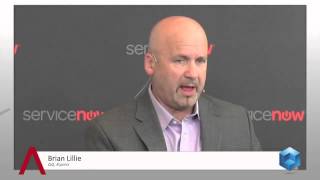
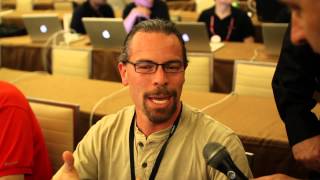
Ross Rexer, KPMG,& Eli Lilly, TiJuan Lumpkin, at ServiceNow Knowledge13 with Dave Vellante and Jeff Frick
Today most big organization are in a transition, trying to find their way in a new business world that demands agility and harnessing new technologies to seize the business opportunities that will spell prosperity or just survival in the reality of the 21st Century. Big pharma, however is caught in a double transformation, KPMG Managing Director Ross Rexer & Eli Lilly Director of Service Integration TiJuan Limpkin told Wikibon Cofounder/Chief Analyst David Vellante in the Cube from the ServiceNow Knowledge13 conference. Just what that means, and how far along Eli Lilly is in this transition, was demonstrated by the vocabulary they used. While many IT shops are struggling with redefining their offerings and still talk about "infrastructure", "servers", "applications", "solutions", and "end users", Limpkin and Rexer talked about "services" and "customers".
The huge challenge confronting big pharma, Rexer said, is that the big blockbuster drugs that have provided the foundation of their businesses for 50 years are coming off patent. That means new competition in the form of cheap generics, and a transition to a new business reality. It means not just finding new traditional drugs faster but developing solutions that deliver better patient outcomes in novel ways. Those that don't make that transition right now probably won't survive.
Traditional big pharma was a huge drug R&D operation where everything was in-house, and that house contained many rooms with doors shut and minimal contact with other parts of the organization. Things moved slowly through development and trial to eventual licensing of the drugs that succeeded. A company like Eli Lilly would have large numbers of research projects in different rooms and various stages at any time. From an IT standpoint this was all supported by a hodge podge of systems run by different IT groups that often had no contact with each other. Just transferring a successful research project to a group to handle regulatory approval was a massive event. The result was huge waste and inefficiency as research groups constantly duplicated each others efforts, and no one had visibility into the organization.
Forgot Password
Almost there!
We just sent you a verification email. Please verify your account to gain access to
ServiceNow Knowledge 2013. If you don’t think you received an email check your
spam folder.
In order to sign in, enter the email address you used to registered for the event. Once completed, you will receive an email with a verification link. Open this link to automatically sign into the site.
Register For ServiceNow Knowledge 2013
Please fill out the information below. You will recieve an email with a verification link confirming your registration. Click the link to automatically sign into the site.
You’re almost there!
We just sent you a verification email. Please click the verification button in the email. Once your email address is verified, you will have full access to all event content for ServiceNow Knowledge 2013.
I want my badge and interests to be visible to all attendees.
Checking this box will display your presense on the attendees list, view your profile and allow other attendees to contact you via 1-1 chat. Read the Privacy Policy. At any time, you can choose to disable this preference.
Select your Interests!
add
Upload your photo
Uploading..
OR
Connect via Twitter
Connect via Linkedin
EDIT PASSWORD
Share
Forgot Password
Almost there!
We just sent you a verification email. Please verify your account to gain access to
ServiceNow Knowledge 2013. If you don’t think you received an email check your
spam folder.
In order to sign in, enter the email address you used to registered for the event. Once completed, you will receive an email with a verification link. Open this link to automatically sign into the site.
Sign in to gain access to ServiceNow Knowledge 2013
Please sign in with LinkedIn to continue to ServiceNow Knowledge 2013. Signing in with LinkedIn ensures a professional environment.
Are you sure you want to remove access rights for this user?
Details
Manage Access
email address
Community Invitation
Ross Rexer & Eli Lilly | ServiceNow Knowledge13
Ross Rexer, KPMG,& Eli Lilly, TiJuan Lumpkin, at ServiceNow Knowledge13 with Dave Vellante and Jeff Frick
Today most big organization are in a transition, trying to find their way in a new business world that demands agility and harnessing new technologies to seize the business opportunities that will spell prosperity or just survival in the reality of the 21st Century. Big pharma, however is caught in a double transformation, KPMG Managing Director Ross Rexer & Eli Lilly Director of Service Integration TiJuan Limpkin told Wikibon Cofounder/Chief Analyst David Vellante in the Cube from the ServiceNow Knowledge13 conference. Just what that means, and how far along Eli Lilly is in this transition, was demonstrated by the vocabulary they used. While many IT shops are struggling with redefining their offerings and still talk about "infrastructure", "servers", "applications", "solutions", and "end users", Limpkin and Rexer talked about "services" and "customers".
The huge challenge confronting big pharma, Rexer said, is that the big blockbuster drugs that have provided the foundation of their businesses for 50 years are coming off patent. That means new competition in the form of cheap generics, and a transition to a new business reality. It means not just finding new traditional drugs faster but developing solutions that deliver better patient outcomes in novel ways. Those that don't make that transition right now probably won't survive.
Traditional big pharma was a huge drug R&D operation where everything was in-house, and that house contained many rooms with doors shut and minimal contact with other parts of the organization. Things moved slowly through development and trial to eventual licensing of the drugs that succeeded. A company like Eli Lilly would have large numbers of research projects in different rooms and various stages at any time. From an IT standpoint this was all supported by a hodge podge of systems run by different IT groups that often had no contact with each other. Just transferring a successful research project to a group to handle regulatory approval was a massive event. The result was huge waste and inefficiency as research groups constantly duplicated each others efforts, and no one had visibility into the organization.