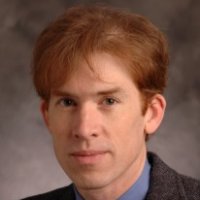
John Lockwood, @Algo_Logic_Inc, CEO, Algo-Logic Systems Inc, talks with Jeff Frick at Super Computing 2017
#theCUBE #SuperComputing #AlgoLogic #SiliconANGLE #SC17
https://siliconangle.com/2017/12/04/accelerated-processing-teaches-autonomous-cars-to-drive-in-minutes-sc17/
Accelerated processing teaches autonomous cars to drive in minutes
Speed is the name of the game in the processor world, and the latest competitive sprint down the innovation track involves field programmable gate arrays, known as FPGAs. Since Intel Corp. announced FPGA acceleration platforms operating with Xeon CPUs early last month, several companies have been showcasing a number of use cases for the lightning-fast technology.
At a computing conference last month, one firm created buzz among attendees with a machine learning-based demonstration where simulated cars were taught to drive in less time than it takes to eat a sandwich.
“Within a few minutes and about 15 million simulations, the cars start driving better than humans,” said John Lockwood (pictured), chief executive officer at Algo-Logic Systems Inc. “You can give [machines] man-years of experience in a few minutes with these scale-out computer systems.”
Lockwood visited theCUBE, SiliconANGLE Media’s mobile livestreaming studio, and spoke with host Jeff Frick (@JeffFrick) during the recent Supercomputing event in Denver, Colorado. They discussed FPGA-based applications for the financial world and early tests of machine-to-machine communication in the drone community. (* Disclosure below.)
Algo-Logic’s network-attached Key Value Store in an FPGA scales out machine learning and enables faster decision-making, according to Lockwood. This kind of solution forms a growing ecosystem that not only powers machine learning applications for cars, but also high-frequency trading in the financial world.
Millions of sub-microsecond trades
Speed has become paramount in high-frequency trading, where millions of transactions are executed in the blink of an eye. Algo-Logic has developed a trading system technology with sub-microsecond latency, where futures market data comes in and fixed orders are placed out to market.
“That happens in under a microsecond, under a millionth of a second,” Lockwood said. “That beats every other software system that’s being used.”
Rapid advances in deep learning and decision-making are raising the possibility that machine-to-machine communication will lead to some intriguing future applications. Early examples can be found in the drone community where groups or “swarms” of the unmanned aerial vehicles are being tested in the skies.
Earlier this year, the U.S. military announced that it released 103 Perdix drones that performed a mock surveillance mission while communicating with each other. “It’s about how to make machines interact better with other machines,” Lockwood said. “Having a swarm or a cluster of these machines that work with each other, you can really do interesting things.”
Watch the complete video interview below, and be sure to check out more of SiliconANGLE’s and theCUBE’s coverage of the Supercomputing 2017 conference. (* Disclosure: TheCUBE is a paid media partner for the Super Computing 2017 conference. Neither Intel, the event sponsor, nor other sponsors have editorial control over content on theCUBE or SiliconANGLE.)
Forgot Password
Almost there!
We just sent you a verification email. Please verify your account to gain access to
Super Computing Conference 2017. If you don’t think you received an email check your
spam folder.
In order to sign in, enter the email address you used to registered for the event. Once completed, you will receive an email with a verification link. Open this link to automatically sign into the site.
Register For Super Computing Conference 2017
Please fill out the information below. You will recieve an email with a verification link confirming your registration. Click the link to automatically sign into the site.
You’re almost there!
We just sent you a verification email. Please click the verification button in the email. Once your email address is verified, you will have full access to all event content for Super Computing Conference 2017.
I want my badge and interests to be visible to all attendees.
Checking this box will display your presense on the attendees list, view your profile and allow other attendees to contact you via 1-1 chat. Read the Privacy Policy. At any time, you can choose to disable this preference.
Select your Interests!
add
Upload your photo
Uploading..
OR
Connect via Twitter
Connect via Linkedin
EDIT PASSWORD
Share
Forgot Password
Almost there!
We just sent you a verification email. Please verify your account to gain access to
Super Computing Conference 2017. If you don’t think you received an email check your
spam folder.
In order to sign in, enter the email address you used to registered for the event. Once completed, you will receive an email with a verification link. Open this link to automatically sign into the site.
Sign in to gain access to Super Computing Conference 2017
Please sign in with LinkedIn to continue to Super Computing Conference 2017. Signing in with LinkedIn ensures a professional environment.
Are you sure you want to remove access rights for this user?
Details
Manage Access
email address
Community Invitation
John Lockwood, Algo Logic Systems | Super Computing 2017
John Lockwood, @Algo_Logic_Inc, CEO, Algo-Logic Systems Inc, talks with Jeff Frick at Super Computing 2017
#theCUBE #SuperComputing #AlgoLogic #SiliconANGLE #SC17
https://siliconangle.com/2017/12/04/accelerated-processing-teaches-autonomous-cars-to-drive-in-minutes-sc17/
Accelerated processing teaches autonomous cars to drive in minutes
Speed is the name of the game in the processor world, and the latest competitive sprint down the innovation track involves field programmable gate arrays, known as FPGAs. Since Intel Corp. announced FPGA acceleration platforms operating with Xeon CPUs early last month, several companies have been showcasing a number of use cases for the lightning-fast technology.
At a computing conference last month, one firm created buzz among attendees with a machine learning-based demonstration where simulated cars were taught to drive in less time than it takes to eat a sandwich.
“Within a few minutes and about 15 million simulations, the cars start driving better than humans,” said John Lockwood (pictured), chief executive officer at Algo-Logic Systems Inc. “You can give [machines] man-years of experience in a few minutes with these scale-out computer systems.”
Lockwood visited theCUBE, SiliconANGLE Media’s mobile livestreaming studio, and spoke with host Jeff Frick (@JeffFrick) during the recent Supercomputing event in Denver, Colorado. They discussed FPGA-based applications for the financial world and early tests of machine-to-machine communication in the drone community. (* Disclosure below.)
Algo-Logic’s network-attached Key Value Store in an FPGA scales out machine learning and enables faster decision-making, according to Lockwood. This kind of solution forms a growing ecosystem that not only powers machine learning applications for cars, but also high-frequency trading in the financial world.
Millions of sub-microsecond trades
Speed has become paramount in high-frequency trading, where millions of transactions are executed in the blink of an eye. Algo-Logic has developed a trading system technology with sub-microsecond latency, where futures market data comes in and fixed orders are placed out to market.
“That happens in under a microsecond, under a millionth of a second,” Lockwood said. “That beats every other software system that’s being used.”
Rapid advances in deep learning and decision-making are raising the possibility that machine-to-machine communication will lead to some intriguing future applications. Early examples can be found in the drone community where groups or “swarms” of the unmanned aerial vehicles are being tested in the skies.
Earlier this year, the U.S. military announced that it released 103 Perdix drones that performed a mock surveillance mission while communicating with each other. “It’s about how to make machines interact better with other machines,” Lockwood said. “Having a swarm or a cluster of these machines that work with each other, you can really do interesting things.”
Watch the complete video interview below, and be sure to check out more of SiliconANGLE’s and theCUBE’s coverage of the Supercomputing 2017 conference. (* Disclosure: TheCUBE is a paid media partner for the Super Computing 2017 conference. Neither Intel, the event sponsor, nor other sponsors have editorial control over content on theCUBE or SiliconANGLE.)