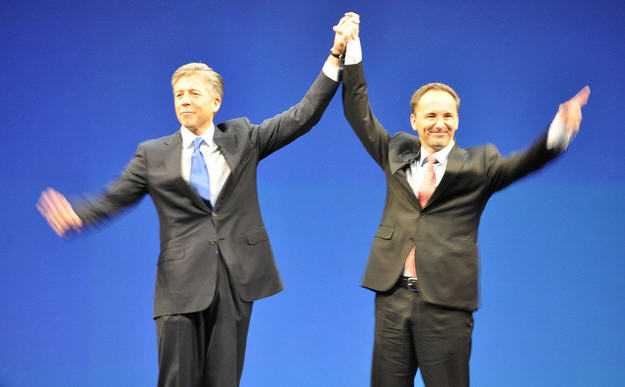
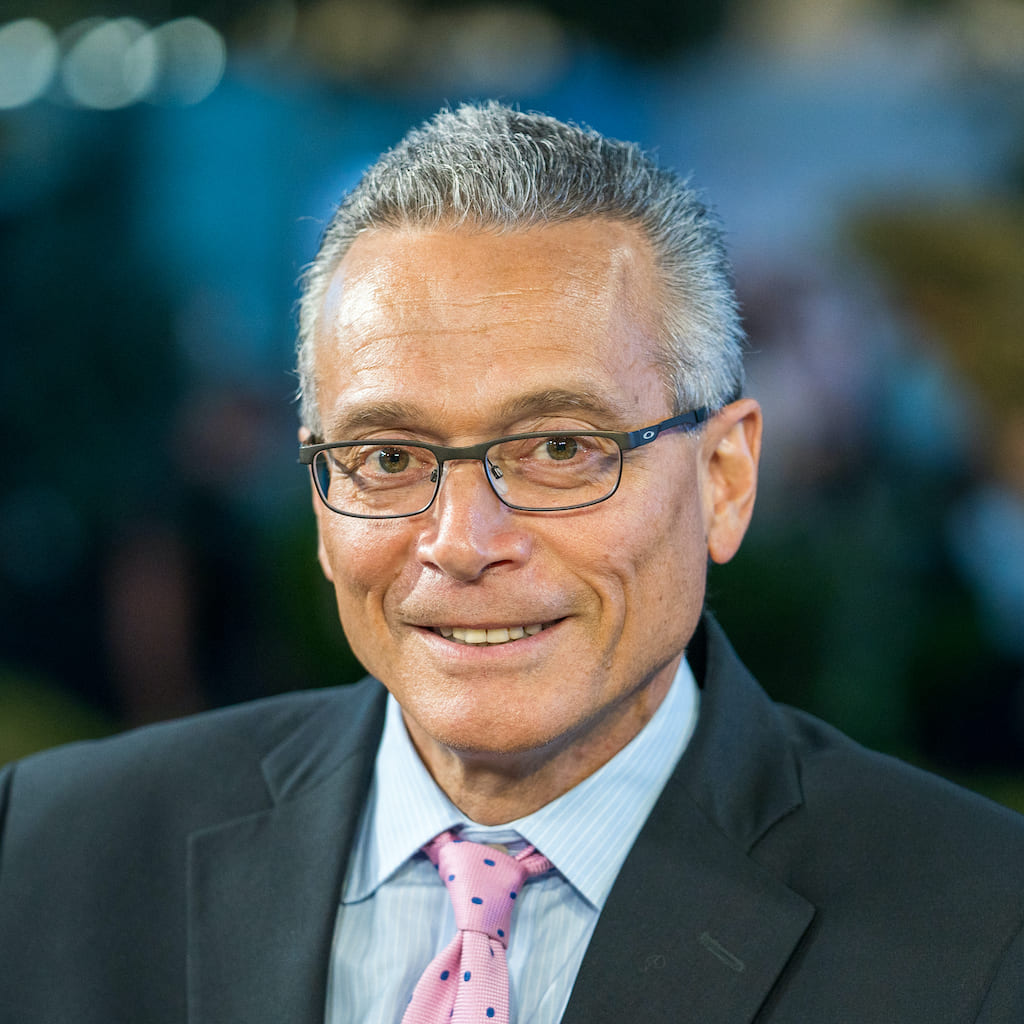
Jeff Kelly, John Furrier and Dave Vellante at SAP SAPphire 2011.
John Furrier and Dave Vellante sat down with Jeff Kelly a Wikibon analyst to talk about the vibe of the keynote address. Kelly thought that it was "very much forward looking in terms of the next 5, 10, 15 years, and not so much about what you could do today to make the most of your SAP investment."
The "sizzle," is the "in-memory analytics," their Hannah appliance, trying to get that out to as many customers as they can, with the "steak," being the mobile stuff that is truly going to help the end-users and allow SAP to differentiate itself from others. Vellante asks if SAP needs to simplify and get away from their history of being very cumbersome and too big or if its possible for them to essentially change their DNA to be more simple and user-friendly. Kelly says their going through a growth period with new leadership and their ability to simplify still remains to be seen.
The keynote was to talk about the future and what business looks like. Today SAP's business is "largely old, on-premise business, it's those customers buying and its good, most companies get most of their business from their existing customers anyways," and if that will continue or change. Kelly things it will change as "privacy issues, once those start to be understood a little better you'll see more companies transitioning to a more on premise/off premise model."
SAP is doing something right; they have a strong customer base, solid financials, good revenue and a solid business intelligence product and business optics, the company is struggling and needs to clarify their message a little (or even find the message) is around big data. Making big data analytics faster, more relevant would be an important step forward. Kelly hasn't even heard SAP use the term big data, and says he isn't sure what capabilities SAP even has when it comes to big data analytics which will likely force them to come up with a strategy eventually.
SAP needs to go after the data, getting it in and getting it out, making sense of it and then using it for the benefit of the customer.
Forgot Password
Almost there!
We just sent you a verification email. Please verify your account to gain access to
SAP SAPPHIRE NOW 2011 | Orlando. If you don’t think you received an email check your
spam folder.
In order to sign in, enter the email address you used to registered for the event. Once completed, you will receive an email with a verification link. Open this link to automatically sign into the site.
Register For SAP SAPPHIRE NOW 2011 | Orlando
Please fill out the information below. You will recieve an email with a verification link confirming your registration. Click the link to automatically sign into the site.
You’re almost there!
We just sent you a verification email. Please click the verification button in the email. Once your email address is verified, you will have full access to all event content for SAP SAPPHIRE NOW 2011 | Orlando.
I want my badge and interests to be visible to all attendees.
Checking this box will display your presense on the attendees list, view your profile and allow other attendees to contact you via 1-1 chat. Read the Privacy Policy. At any time, you can choose to disable this preference.
Select your Interests!
add
Upload your photo
Uploading..
OR
Connect via Twitter
Connect via Linkedin
EDIT PASSWORD
Share
Forgot Password
Almost there!
We just sent you a verification email. Please verify your account to gain access to
SAP SAPPHIRE NOW 2011 | Orlando. If you don’t think you received an email check your
spam folder.
In order to sign in, enter the email address you used to registered for the event. Once completed, you will receive an email with a verification link. Open this link to automatically sign into the site.
Sign in to gain access to SAP SAPPHIRE NOW 2011 | Orlando
Please sign in with LinkedIn to continue to SAP SAPPHIRE NOW 2011 | Orlando. Signing in with LinkedIn ensures a professional environment.
Are you sure you want to remove access rights for this user?
Details
Manage Access
email address
Community Invitation
Jeff Kelly - SAP Sapphire 2011 - theCUBE
Jeff Kelly, John Furrier and Dave Vellante at SAP SAPphire 2011.
John Furrier and Dave Vellante sat down with Jeff Kelly a Wikibon analyst to talk about the vibe of the keynote address. Kelly thought that it was "very much forward looking in terms of the next 5, 10, 15 years, and not so much about what you could do today to make the most of your SAP investment."
The "sizzle," is the "in-memory analytics," their Hannah appliance, trying to get that out to as many customers as they can, with the "steak," being the mobile stuff that is truly going to help the end-users and allow SAP to differentiate itself from others. Vellante asks if SAP needs to simplify and get away from their history of being very cumbersome and too big or if its possible for them to essentially change their DNA to be more simple and user-friendly. Kelly says their going through a growth period with new leadership and their ability to simplify still remains to be seen.
The keynote was to talk about the future and what business looks like. Today SAP's business is "largely old, on-premise business, it's those customers buying and its good, most companies get most of their business from their existing customers anyways," and if that will continue or change. Kelly things it will change as "privacy issues, once those start to be understood a little better you'll see more companies transitioning to a more on premise/off premise model."
SAP is doing something right; they have a strong customer base, solid financials, good revenue and a solid business intelligence product and business optics, the company is struggling and needs to clarify their message a little (or even find the message) is around big data. Making big data analytics faster, more relevant would be an important step forward. Kelly hasn't even heard SAP use the term big data, and says he isn't sure what capabilities SAP even has when it comes to big data analytics which will likely force them to come up with a strategy eventually.
SAP needs to go after the data, getting it in and getting it out, making sense of it and then using it for the benefit of the customer.