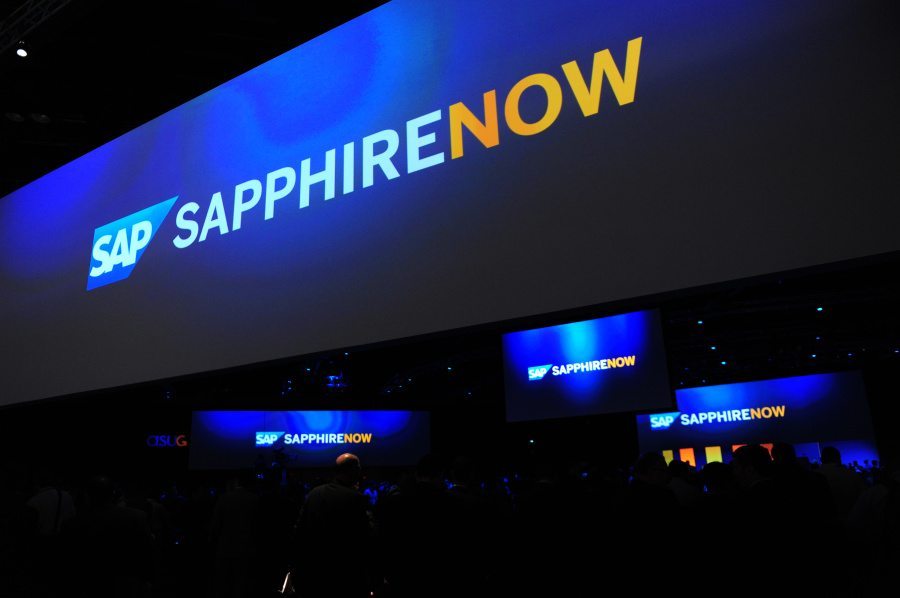
Levi Strauss CIO Tom Peck talks with John Furrier, founder of SiliconANGLE.com and Dave Vellante, founder of Wikibon.org about the changing role of the CIO, the importance of good process, the elimination of technology silos and vendor management in the emerging cloud data center. Tom talks about transformation at scale when dealing with the cloud, open source, silo's systems, and vendors.
In the first part of this analysis (IT Faces Revolutionary Change, Who Will Survive) I outlined the massive impact of a series of technology-driven forces transforming the IT industry. These include Open Source, Big Data, hyperscale systems, flash storage, converged systems, software-defined infrastructure, public cloud services, and mobile computing. Together these are reshaping our lives and the IT industry. In this second piece in the series, I want to look at the probable impact of these forces on the vendors.
In any revolution those at the top have the most to lose. In this case those include the hardware giants — IBM, HP, EMC, Fujitsu, Hitachi, & Dell — and software giants Microsoft, Oracle & SAP. Of these, IBM and Microsoft come into this with the strongest positions, which is not to say that they are guaranteed to come out unscathed. All the major hardware vendors face a major threat in hyperscale architecture, which was developed by the big cloud service providers and built on cheap white-box hardware from Asia running in a virtualized environment in which all management and other features have migrated up to the software layer. The question is when will large traditional enterprises start adopting hyperscale and how deeply will that cut into the hardware market. But even without that, software-defined infrastructure and Moore's Law promise to reduce hardware at all levels to commodities within this decade, forcing hardware vendors to compete on price and survive on razor-thin margins. When that happened in the desktop market two decades ago, all but one of the independent PC makers — Dell — were either purchased or went out of business. Apple was on the way out when Steve Jobs revolutionized the company with the iPod, iPhone, and iPad. Even IBM eventually exited the market it had largely created.
Of the big hardware vendors, actually IBM is in the best position, mainly because in the early 2000s it made the wrenching transition to become in large part a software and services company. Today it has completely embraced Open Systems, providing Linux on servers and mainframes and Hadoop along with DB2. This is not to say that it will not be hurt if the bottom falls out of the hardware market, it still makes a handsome income from the sales of its mainframes and servers. But it is no longer dependent on those sales for the majority of its income. It will survive and even prosper.
HP is primarily a hardware company, and this makes it more vulnerable. While it has made no announcement, it appears to be following the path IBM pioneered, focusing more on software and services. It is extracting the management layer from its hardware and redesigning it to work across multiple vendors' boxes, just as IBM did, for instance with StorWize, several years ago. HP also is the only member of this group to have announced its own hyperscale products, which seems to be a white flag flying over its hardware business. Obviously HP management sees the tsunami, the question is can it get to high ground in time.
EMC has created its own survuval strategy through diversification. It also has a strong services arm, which always has been an important part of its market presence. But those are mainly low-level break/fix services, the kinds of things that are increasingly being automated. It appeared well positioned with its purchase of VMware, but this year we have seen that falter as its competitors, particularly Microsoft, have caught up in primary functionality and offer their hypervisors at a fraction of VMware's price. It is difficult to under-price Hyper-V. Part of the question here is whether Pat Gessinger, a very smart man, can find a new winning strategy for VMware. Personally I would not bet against him or the rest of EMC's leadership. I think EMC will survive, although it will be battered and may eventually need to merge with Cisco to play in an increasingly converged hardware marketplace.
Forgot Password
Almost there!
We just sent you a verification email. Please verify your account to gain access to
SAP SAPPHIRE 2010 | Orlando. If you don’t think you received an email check your
spam folder.
In order to sign in, enter the email address you used to registered for the event. Once completed, you will receive an email with a verification link. Open this link to automatically sign into the site.
Register For SAP SAPPHIRE 2010 | Orlando
Please fill out the information below. You will recieve an email with a verification link confirming your registration. Click the link to automatically sign into the site.
You’re almost there!
We just sent you a verification email. Please click the verification button in the email. Once your email address is verified, you will have full access to all event content for SAP SAPPHIRE 2010 | Orlando.
I want my badge and interests to be visible to all attendees.
Checking this box will display your presense on the attendees list, view your profile and allow other attendees to contact you via 1-1 chat. Read the Privacy Policy. At any time, you can choose to disable this preference.
Select your Interests!
add
Upload your photo
Uploading..
OR
Connect via Twitter
Connect via Linkedin
EDIT PASSWORD
Share
Forgot Password
Almost there!
We just sent you a verification email. Please verify your account to gain access to
SAP SAPPHIRE 2010 | Orlando. If you don’t think you received an email check your
spam folder.
In order to sign in, enter the email address you used to registered for the event. Once completed, you will receive an email with a verification link. Open this link to automatically sign into the site.
Sign in to gain access to SAP SAPPHIRE 2010 | Orlando
Please sign in with LinkedIn to continue to SAP SAPPHIRE 2010 | Orlando. Signing in with LinkedIn ensures a professional environment.
Are you sure you want to remove access rights for this user?
Details
Manage Access
email address
Community Invitation
Tom Peck - SAP Sapphire 2010 - theCUBE
Levi Strauss CIO Tom Peck talks with John Furrier, founder of SiliconANGLE.com and Dave Vellante, founder of Wikibon.org about the changing role of the CIO, the importance of good process, the elimination of technology silos and vendor management in the emerging cloud data center. Tom talks about transformation at scale when dealing with the cloud, open source, silo's systems, and vendors.
In the first part of this analysis (IT Faces Revolutionary Change, Who Will Survive) I outlined the massive impact of a series of technology-driven forces transforming the IT industry. These include Open Source, Big Data, hyperscale systems, flash storage, converged systems, software-defined infrastructure, public cloud services, and mobile computing. Together these are reshaping our lives and the IT industry. In this second piece in the series, I want to look at the probable impact of these forces on the vendors.
In any revolution those at the top have the most to lose. In this case those include the hardware giants — IBM, HP, EMC, Fujitsu, Hitachi, & Dell — and software giants Microsoft, Oracle & SAP. Of these, IBM and Microsoft come into this with the strongest positions, which is not to say that they are guaranteed to come out unscathed. All the major hardware vendors face a major threat in hyperscale architecture, which was developed by the big cloud service providers and built on cheap white-box hardware from Asia running in a virtualized environment in which all management and other features have migrated up to the software layer. The question is when will large traditional enterprises start adopting hyperscale and how deeply will that cut into the hardware market. But even without that, software-defined infrastructure and Moore's Law promise to reduce hardware at all levels to commodities within this decade, forcing hardware vendors to compete on price and survive on razor-thin margins. When that happened in the desktop market two decades ago, all but one of the independent PC makers — Dell — were either purchased or went out of business. Apple was on the way out when Steve Jobs revolutionized the company with the iPod, iPhone, and iPad. Even IBM eventually exited the market it had largely created.
Of the big hardware vendors, actually IBM is in the best position, mainly because in the early 2000s it made the wrenching transition to become in large part a software and services company. Today it has completely embraced Open Systems, providing Linux on servers and mainframes and Hadoop along with DB2. This is not to say that it will not be hurt if the bottom falls out of the hardware market, it still makes a handsome income from the sales of its mainframes and servers. But it is no longer dependent on those sales for the majority of its income. It will survive and even prosper.
HP is primarily a hardware company, and this makes it more vulnerable. While it has made no announcement, it appears to be following the path IBM pioneered, focusing more on software and services. It is extracting the management layer from its hardware and redesigning it to work across multiple vendors' boxes, just as IBM did, for instance with StorWize, several years ago. HP also is the only member of this group to have announced its own hyperscale products, which seems to be a white flag flying over its hardware business. Obviously HP management sees the tsunami, the question is can it get to high ground in time.
EMC has created its own survuval strategy through diversification. It also has a strong services arm, which always has been an important part of its market presence. But those are mainly low-level break/fix services, the kinds of things that are increasingly being automated. It appeared well positioned with its purchase of VMware, but this year we have seen that falter as its competitors, particularly Microsoft, have caught up in primary functionality and offer their hypervisors at a fraction of VMware's price. It is difficult to under-price Hyper-V. Part of the question here is whether Pat Gessinger, a very smart man, can find a new winning strategy for VMware. Personally I would not bet against him or the rest of EMC's leadership. I think EMC will survive, although it will be battered and may eventually need to merge with Cisco to play in an increasingly converged hardware marketplace.