01. Greg White, Hertz, Visits #theCUBE!. (00:19)
02. What Is Your Role At Hertz. (00:30)
03. What's The Driver's That's Pushing IT. (00:55)
04. Paint A Picture Of Where You Are And Where You're Headed. (01:40)
05. How Important Is Networking To What You're Doing. (03:39)
06. What Cloud Services Do You Use. (04:50)
07. Do You Try To Minimize Data Movement. (06:23)
08. Do You Use Riverbed To Minize The Latency Between Clouds. (07:35)
09. Is The Goal To Move Everything To The Cloud. (08:46)
10. Paint Us A Picture Of The Mission Critical Applications. (09:49)
11. How Has Mobile Affected Your Infrastructure Strategy. (11:45)
12. Are You Flatening Your Network. (12:58)
13. Tell Us About Operationally Inside Hertz. (13:51)
14. What Are Your Final Thoughts On Disrupt. (15:33)
Track List created with http://www.vinjavideo.com.
--- ---
First cloud, now fog: Meet the floating layer that talks to applications at the edge | #Riverbed
by R. Danes | Sep 13, 2016
Multi-clouding is breaking up applications and scattering them across the virtualized universe. This is undoubtedly creating challenges to swift communication of data among all these different environments. Yet no one denies that multi-clouding is a net positive for most businesses, so the big push is for better means for applications to talk to each other across clouds. One company has found that a mobile “fog” layer can be the courier among its different clouds.
Greg White, senior director of Cloud Architecture at The Hertz Corp., said that virtualizing of the network is helping Hertz solve business problems. He tells his IT team, “We don’t necessarily have to have a big expensive MPLS [Multiprotocol Label Switching] only network; we can have an Internet-based network, add a lot of flexibility, save some money and provide better service to our customers.”
The fog lifts … and floats to the edge
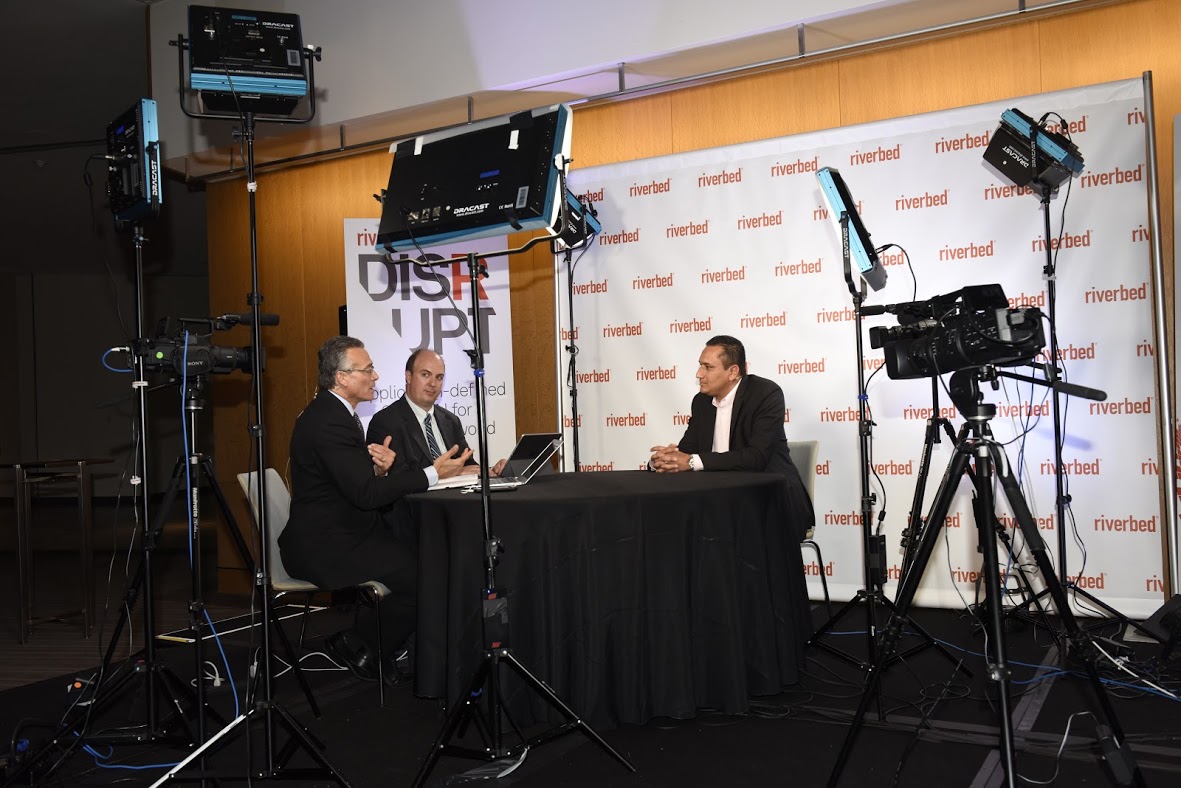
White told Dave Vellante (@dvellante) and Stu Miniman (@stu), cohosts of theCUBE, from the SiliconANGLE Media team, during the Riverbed Disrupt event about the layer he’s designing to float data to the application and back.
“We have a general cloud, and we have what we would call a hyper-converged or ‘fog’ layer that I am trying to finish designing, which pushes the edge of the cloud away from the cloud, which might be considered floating above the business,” he explained. “And it pushes it down to where the transactions are occurring — for example, at the local rental facilities or even on a mobile device.”
A WAN-win situation
White said that Riverbed’s WAN optimization and it’s SD-WAN are enabling Hertz’s move to cloud and the design of its fog layer. The Riverbed SteelCentral solution, in particular, allows Hertz to have a high level of visibility at each layer.
“And every time a packet moves, we can get in, and we can have a look at everything from A to Z,” he said.
Watch the complete video interview below, and be sure to check out more of SiliconANGLE and theCUBE’s coverage of the Riverbed Disrupt.
Forgot Password
Almost there!
We just sent you a verification email. Please verify your account to gain access to
Riverbed Disrupt 2016 | New York. If you don’t think you received an email check your
spam folder.
In order to sign in, enter the email address you used to registered for the event. Once completed, you will receive an email with a verification link. Open this link to automatically sign into the site.
Register For Riverbed Disrupt 2016 | New York
Please fill out the information below. You will recieve an email with a verification link confirming your registration. Click the link to automatically sign into the site.
You’re almost there!
We just sent you a verification email. Please click the verification button in the email. Once your email address is verified, you will have full access to all event content for Riverbed Disrupt 2016 | New York.
I want my badge and interests to be visible to all attendees.
Checking this box will display your presense on the attendees list, view your profile and allow other attendees to contact you via 1-1 chat. Read the Privacy Policy. At any time, you can choose to disable this preference.
Select your Interests!
add
Upload your photo
Uploading..
OR
Connect via Twitter
Connect via Linkedin
EDIT PASSWORD
Share
Forgot Password
Almost there!
We just sent you a verification email. Please verify your account to gain access to
Riverbed Disrupt 2016 | New York. If you don’t think you received an email check your
spam folder.
In order to sign in, enter the email address you used to registered for the event. Once completed, you will receive an email with a verification link. Open this link to automatically sign into the site.
Sign in to gain access to Riverbed Disrupt 2016 | New York
Please sign in with LinkedIn to continue to Riverbed Disrupt 2016 | New York. Signing in with LinkedIn ensures a professional environment.
Are you sure you want to remove access rights for this user?
Details
Manage Access
email address
Community Invitation
Greg White, Hertz | Riverbed Disrupt 2016
01. Greg White, Hertz, Visits #theCUBE!. (00:19)
02. What Is Your Role At Hertz. (00:30)
03. What's The Driver's That's Pushing IT. (00:55)
04. Paint A Picture Of Where You Are And Where You're Headed. (01:40)
05. How Important Is Networking To What You're Doing. (03:39)
06. What Cloud Services Do You Use. (04:50)
07. Do You Try To Minimize Data Movement. (06:23)
08. Do You Use Riverbed To Minize The Latency Between Clouds. (07:35)
09. Is The Goal To Move Everything To The Cloud. (08:46)
10. Paint Us A Picture Of The Mission Critical Applications. (09:49)
11. How Has Mobile Affected Your Infrastructure Strategy. (11:45)
12. Are You Flatening Your Network. (12:58)
13. Tell Us About Operationally Inside Hertz. (13:51)
14. What Are Your Final Thoughts On Disrupt. (15:33)
Track List created with http://www.vinjavideo.com.
--- ---
First cloud, now fog: Meet the floating layer that talks to applications at the edge | #Riverbed
by R. Danes | Sep 13, 2016
Multi-clouding is breaking up applications and scattering them across the virtualized universe. This is undoubtedly creating challenges to swift communication of data among all these different environments. Yet no one denies that multi-clouding is a net positive for most businesses, so the big push is for better means for applications to talk to each other across clouds. One company has found that a mobile “fog” layer can be the courier among its different clouds.
Greg White, senior director of Cloud Architecture at The Hertz Corp., said that virtualizing of the network is helping Hertz solve business problems. He tells his IT team, “We don’t necessarily have to have a big expensive MPLS [Multiprotocol Label Switching] only network; we can have an Internet-based network, add a lot of flexibility, save some money and provide better service to our customers.”
The fog lifts … and floats to the edge
White told Dave Vellante (@dvellante) and Stu Miniman (@stu), cohosts of theCUBE, from the SiliconANGLE Media team, during the Riverbed Disrupt event about the layer he’s designing to float data to the application and back.
“We have a general cloud, and we have what we would call a hyper-converged or ‘fog’ layer that I am trying to finish designing, which pushes the edge of the cloud away from the cloud, which might be considered floating above the business,” he explained. “And it pushes it down to where the transactions are occurring — for example, at the local rental facilities or even on a mobile device.”
A WAN-win situation
White said that Riverbed’s WAN optimization and it’s SD-WAN are enabling Hertz’s move to cloud and the design of its fog layer. The Riverbed SteelCentral solution, in particular, allows Hertz to have a high level of visibility at each layer.
“And every time a packet moves, we can get in, and we can have a look at everything from A to Z,” he said.
Watch the complete video interview below, and be sure to check out more of SiliconANGLE and theCUBE’s coverage of the Riverbed Disrupt.