01. Jose Miguel Parrella, Microsoft Azure, visits #theCUBE!. (00:16)
02. The Microsoft Role in OpenSource. (00:34)
03. "Space" Illustrating the New "Open" and the Cloud. (01:42)
04. Demonstrating Microsoft's Commitment to OpenSource. (04:11)
05. The Dot Net World and Open Cloud Platforms. (06:42)
06. Meeting Customer Demands with OpenSource. (08:04)
07. The Azure Stack Announcement from Microsoft. (09:18)
08. Life for Jose After OpenSource. (11:16)
Track List created with http://www.vinjavideo.com.
--- ---
Finding penguins in the clouds of Microsoft | #RHSummit
by Gabriel Pesek | Jul 1, 2016
As the lines between proprietary and open-source continue to blur in the cloud services area of the tech market, some of the largest companies in the business are learning to reach out to the open-source community for reasons beyond simple architecture.
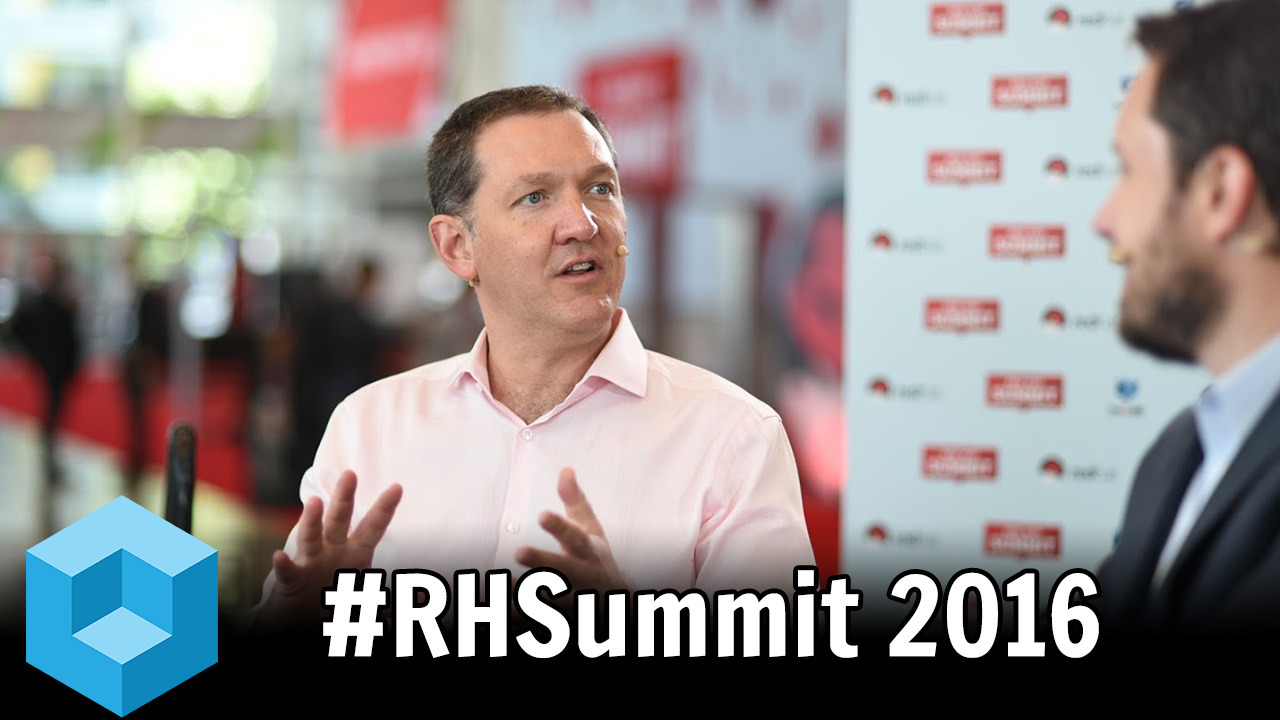
José Miguel Parrella Romero, open-source product management at Microsoft Azure, joined Stu Miniman (@stu) and Brian Gracely (@bgracely), cohosts of theCUBE, from the SiliconANGLE Media team, at the Red Hat Summit in San Francisco, sharing details on Microsoft’s approach to open-source, its incorporation into its cloud services and some of the other possibilities it is considering in the field.
Joining the open-source
As noted by the cohosts, the presence of Microsoft at a Linux conference has been raising some eyebrows, but Microsoft is making moves to smooth over ruffled feathers, including give-aways of Microsoft-branded penguin toys. Parrella-Romero explained that Microsoft sees open-source as an important component, particularly for attempting to improve the perception of Azure cloud services in terms of an open and hybrid potential.
“We have a very comprehensive approach to open-source,” he said, moving past Azure to note its usage in dashboard container services and other sectors. “It’s really exciting times, but participating at Red Hat Summit has been critical in anticipating what our customers want.”
In addition to Red Hat’s capabilities, other open-source focuses are being examined by Microsoft. “There are areas where we truly believe that open-source R is going to be [critical],” Parrella-Romero noted, before sharing details on a template for the OpenShift Platform-as-a-Service, intended for deployment in Azure and Red Hat Linux.
Moving back to focus on Azure, Parrella-Romero gave some information on Microsoft’s rollout of the service in China, as well as the excitement being stimulated by virtual machines on the cloud service.
Participate and learn
Parrella-Romero felt that engaging with the community had been instrumental in allowing Microsoft to make these advancements. “Participating and committing to that participation has been critical, I think,” he said. “Communicating and openly discussing our approach to open-source has been important … but [helping customers understand it] has been important as well.”
Additionally “the number of customers in containers has exploded … [and] our portfolio is really broad [now],” Parrella-Romero said, giving Microsoft even more customers from whom to learn. And by expanding the scope of that input, even more doors are being opened to them. For instance, “Providing the full spectrum allows us to talk about containers in the cloud,” he explained. “Generally speaking, I think the key has been to offer architectural choices.”
The wide range of customers from these assorted focuses has led to a variety of use-cases. “I would say that we have a scale of customers in different sophistication when it comes to those cloud applications,” Parrella-Romero said. “It’s a journey, we’re learning a lot as well, we’ve been over 10 years engaging with the open-source [culture].”
There’s also an emphasis on expanding features, as with Azure Stack, which will enable users to apply templates directly to the stack, as well as working to improve feature parity.
“Our participation at Red Hat Summit has surpassed all of our expectations in terms of excitement,” Parrella-Romero said. “Engagement has been fantastic, [and] we’ve learned a lot … [about] what customers in the enterprise want.”
Forgot Password
Almost there!
We just sent you a verification email. Please verify your account to gain access to
Red Hat Summit 2016 | San Francisco. If you don’t think you received an email check your
spam folder.
In order to sign in, enter the email address you used to registered for the event. Once completed, you will receive an email with a verification link. Open this link to automatically sign into the site.
Register For Red Hat Summit 2016 | San Francisco
Please fill out the information below. You will recieve an email with a verification link confirming your registration. Click the link to automatically sign into the site.
You’re almost there!
We just sent you a verification email. Please click the verification button in the email. Once your email address is verified, you will have full access to all event content for Red Hat Summit 2016 | San Francisco.
I want my badge and interests to be visible to all attendees.
Checking this box will display your presense on the attendees list, view your profile and allow other attendees to contact you via 1-1 chat. Read the Privacy Policy. At any time, you can choose to disable this preference.
Select your Interests!
add
Upload your photo
Uploading..
OR
Connect via Twitter
Connect via Linkedin
EDIT PASSWORD
Share
Forgot Password
Almost there!
We just sent you a verification email. Please verify your account to gain access to
Red Hat Summit 2016 | San Francisco. If you don’t think you received an email check your
spam folder.
In order to sign in, enter the email address you used to registered for the event. Once completed, you will receive an email with a verification link. Open this link to automatically sign into the site.
Sign in to gain access to Red Hat Summit 2016 | San Francisco
Please sign in with LinkedIn to continue to Red Hat Summit 2016 | San Francisco. Signing in with LinkedIn ensures a professional environment.
Are you sure you want to remove access rights for this user?
Details
Manage Access
email address
Community Invitation
Jose Miguel Parrella, Microsoft Azure - Red Hat Summit 2016
01. Jose Miguel Parrella, Microsoft Azure, visits #theCUBE!. (00:16)
02. The Microsoft Role in OpenSource. (00:34)
03. "Space" Illustrating the New "Open" and the Cloud. (01:42)
04. Demonstrating Microsoft's Commitment to OpenSource. (04:11)
05. The Dot Net World and Open Cloud Platforms. (06:42)
06. Meeting Customer Demands with OpenSource. (08:04)
07. The Azure Stack Announcement from Microsoft. (09:18)
08. Life for Jose After OpenSource. (11:16)
Track List created with http://www.vinjavideo.com.
--- ---
Finding penguins in the clouds of Microsoft | #RHSummit
by Gabriel Pesek | Jul 1, 2016
As the lines between proprietary and open-source continue to blur in the cloud services area of the tech market, some of the largest companies in the business are learning to reach out to the open-source community for reasons beyond simple architecture.
José Miguel Parrella Romero, open-source product management at Microsoft Azure, joined Stu Miniman (@stu) and Brian Gracely (@bgracely), cohosts of theCUBE, from the SiliconANGLE Media team, at the Red Hat Summit in San Francisco, sharing details on Microsoft’s approach to open-source, its incorporation into its cloud services and some of the other possibilities it is considering in the field.
Joining the open-source
As noted by the cohosts, the presence of Microsoft at a Linux conference has been raising some eyebrows, but Microsoft is making moves to smooth over ruffled feathers, including give-aways of Microsoft-branded penguin toys. Parrella-Romero explained that Microsoft sees open-source as an important component, particularly for attempting to improve the perception of Azure cloud services in terms of an open and hybrid potential.
“We have a very comprehensive approach to open-source,” he said, moving past Azure to note its usage in dashboard container services and other sectors. “It’s really exciting times, but participating at Red Hat Summit has been critical in anticipating what our customers want.”
In addition to Red Hat’s capabilities, other open-source focuses are being examined by Microsoft. “There are areas where we truly believe that open-source R is going to be [critical],” Parrella-Romero noted, before sharing details on a template for the OpenShift Platform-as-a-Service, intended for deployment in Azure and Red Hat Linux.
Moving back to focus on Azure, Parrella-Romero gave some information on Microsoft’s rollout of the service in China, as well as the excitement being stimulated by virtual machines on the cloud service.
Participate and learn
Parrella-Romero felt that engaging with the community had been instrumental in allowing Microsoft to make these advancements. “Participating and committing to that participation has been critical, I think,” he said. “Communicating and openly discussing our approach to open-source has been important … but [helping customers understand it] has been important as well.”
Additionally “the number of customers in containers has exploded … [and] our portfolio is really broad [now],” Parrella-Romero said, giving Microsoft even more customers from whom to learn. And by expanding the scope of that input, even more doors are being opened to them. For instance, “Providing the full spectrum allows us to talk about containers in the cloud,” he explained. “Generally speaking, I think the key has been to offer architectural choices.”
The wide range of customers from these assorted focuses has led to a variety of use-cases. “I would say that we have a scale of customers in different sophistication when it comes to those cloud applications,” Parrella-Romero said. “It’s a journey, we’re learning a lot as well, we’ve been over 10 years engaging with the open-source [culture].”
There’s also an emphasis on expanding features, as with Azure Stack, which will enable users to apply templates directly to the stack, as well as working to improve feature parity.
“Our participation at Red Hat Summit has surpassed all of our expectations in terms of excitement,” Parrella-Romero said. “Engagement has been fantastic, [and] we’ve learned a lot … [about] what customers in the enterprise want.”