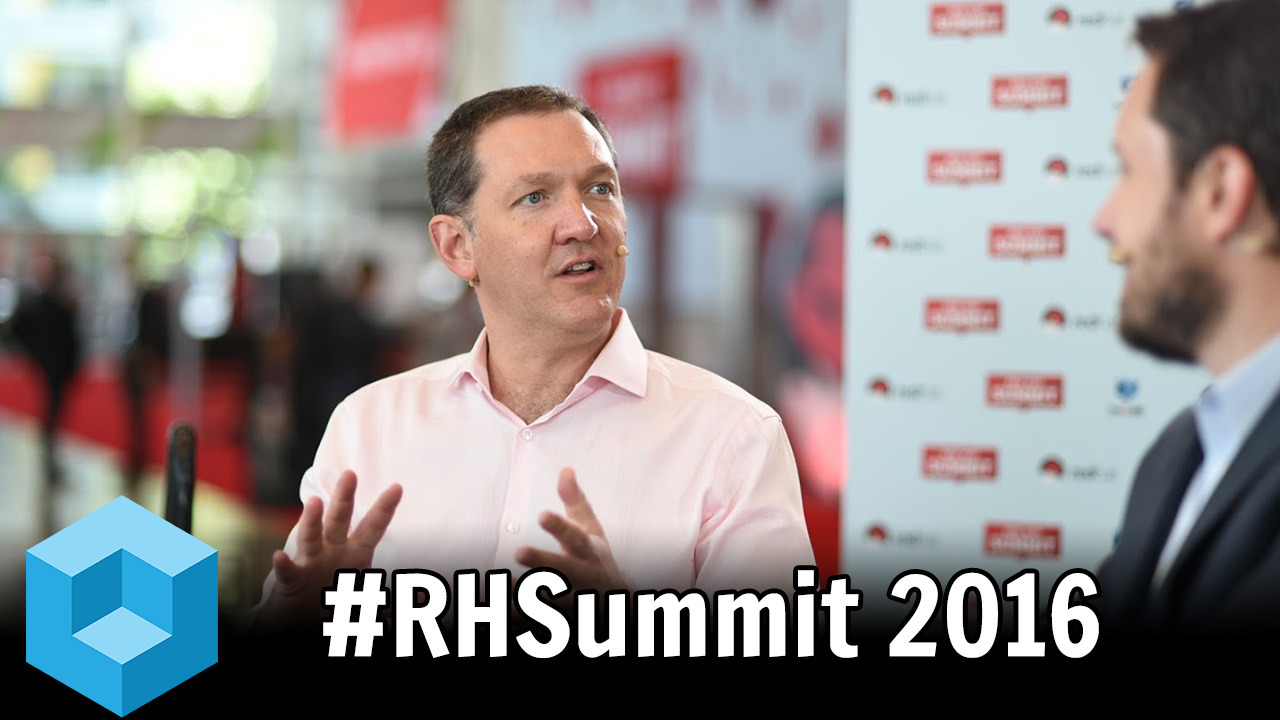
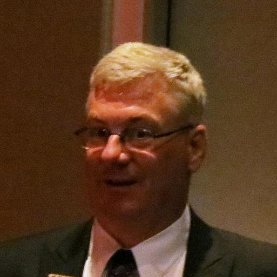
01. Randy Meyer, HPE, visits #theCUBE!. (00:16)
02. Mission Critical and Open Source. (00:40)
03. What People Should Know About Scale-Up Computing. (03:11)
04. Technology is About People. (04:44)
05. Front End Cost and Providing Consistent Experience. (06:55)
06. Getting from Mainframe to a More Agile Environment. (08:40)
07. Software Defined is the New Mantra. (10:32)
08. The HPE Mission Critical Portfolio. (12:10)
Track List created with http://www.vinjavideo.com.
--- ---
Merging the ‘right stuff’ in IoT software | #RHSummit
by Amber Johnson | Jun 30, 2016
The time for maintaining the status quo has fallen away. That is the message from Randy Meyer, VP and GM of Mission Critical Systems at Hewlett Packard Enterprise Co. (HPE). Whether the topic is Big Data processing, business transactions driven by IoT or building clouds, Meyer demands higher goals.
“A box doesn’t solve anything,” remarked Meyer. “Software-defined is the new mantra.”
Meyer talked with Stu Miniman (@stu) and Brian Gracely (@bgracely), cohosts of theCUBE from SiliconANGLE Media team, at Red Hat Summit 2016 in San Francisco. The VP discussed the intricacies of data processing. Meyer determined it’s “not just collecting the data” but also how you marry it that creates value and usefulness. He gave the example of a German companies that utilizes sensors to illustrate the importance of analyzing the right data in IoT.
The person at the end of business transaction
A central thesis of Meyer’s keynote presentation during day three of Red Hat’s Summit was the concept of people within IoT. Meyer explained this using a retail store as an example. A customer orders an item from the website. Naturally that customer then expects his or her exact order to be in a shopping bag waiting for pick-up. The customer doesn’t want to hear they had the wrong color or size.
When this happens the onus is placed on the associate, when the error is not their fault. That is importance of a smooth inventory system through IoT. Because customers don’t think about their order when it all goes right. Instead, the customer assumes it will go right.
Forgot Password
Almost there!
We just sent you a verification email. Please verify your account to gain access to
Red Hat Summit 2016 | San Francisco. If you don’t think you received an email check your
spam folder.
In order to sign in, enter the email address you used to registered for the event. Once completed, you will receive an email with a verification link. Open this link to automatically sign into the site.
Register For Red Hat Summit 2016 | San Francisco
Please fill out the information below. You will recieve an email with a verification link confirming your registration. Click the link to automatically sign into the site.
You’re almost there!
We just sent you a verification email. Please click the verification button in the email. Once your email address is verified, you will have full access to all event content for Red Hat Summit 2016 | San Francisco.
I want my badge and interests to be visible to all attendees.
Checking this box will display your presense on the attendees list, view your profile and allow other attendees to contact you via 1-1 chat. Read the Privacy Policy. At any time, you can choose to disable this preference.
Select your Interests!
add
Upload your photo
Uploading..
OR
Connect via Twitter
Connect via Linkedin
EDIT PASSWORD
Share
Forgot Password
Almost there!
We just sent you a verification email. Please verify your account to gain access to
Red Hat Summit 2016 | San Francisco. If you don’t think you received an email check your
spam folder.
In order to sign in, enter the email address you used to registered for the event. Once completed, you will receive an email with a verification link. Open this link to automatically sign into the site.
Sign in to gain access to Red Hat Summit 2016 | San Francisco
Please sign in with LinkedIn to continue to Red Hat Summit 2016 | San Francisco. Signing in with LinkedIn ensures a professional environment.
Are you sure you want to remove access rights for this user?
Details
Manage Access
email address
Community Invitation
Randy Meyer, HPE - Red Hat Summit 2016 - #theCUBE #RHSummit
01. Randy Meyer, HPE, visits #theCUBE!. (00:16)
02. Mission Critical and Open Source. (00:40)
03. What People Should Know About Scale-Up Computing. (03:11)
04. Technology is About People. (04:44)
05. Front End Cost and Providing Consistent Experience. (06:55)
06. Getting from Mainframe to a More Agile Environment. (08:40)
07. Software Defined is the New Mantra. (10:32)
08. The HPE Mission Critical Portfolio. (12:10)
Track List created with http://www.vinjavideo.com.
--- ---
Merging the ‘right stuff’ in IoT software | #RHSummit
by Amber Johnson | Jun 30, 2016
The time for maintaining the status quo has fallen away. That is the message from Randy Meyer, VP and GM of Mission Critical Systems at Hewlett Packard Enterprise Co. (HPE). Whether the topic is Big Data processing, business transactions driven by IoT or building clouds, Meyer demands higher goals.
“A box doesn’t solve anything,” remarked Meyer. “Software-defined is the new mantra.”
Meyer talked with Stu Miniman (@stu) and Brian Gracely (@bgracely), cohosts of theCUBE from SiliconANGLE Media team, at Red Hat Summit 2016 in San Francisco. The VP discussed the intricacies of data processing. Meyer determined it’s “not just collecting the data” but also how you marry it that creates value and usefulness. He gave the example of a German companies that utilizes sensors to illustrate the importance of analyzing the right data in IoT.
The person at the end of business transaction
A central thesis of Meyer’s keynote presentation during day three of Red Hat’s Summit was the concept of people within IoT. Meyer explained this using a retail store as an example. A customer orders an item from the website. Naturally that customer then expects his or her exact order to be in a shopping bag waiting for pick-up. The customer doesn’t want to hear they had the wrong color or size.
When this happens the onus is placed on the associate, when the error is not their fault. That is importance of a smooth inventory system through IoT. Because customers don’t think about their order when it all goes right. Instead, the customer assumes it will go right.