01. Todd Mancini, Red Hat, Visits #theCUBE!. (00:19)
02. Harry Mower, Red Hat, Visits #theCUBE!. (00:25)
03. Give Us The Highlights Of Dev Nation. (00:31)
04. What Were The Big Announcements. (01:16)
05. How Big A Deal Is .Net Core To The Market. (02:22)
06. How Are You Helping Companies Go Fast. (04:26)
07. What Did We See In The Demo Today. (06:42)
08. Is There A Huge Change For Developers To Have Consistency Of Environment. (09:27)
09. What Has Been Your Take Away This Week From Developers. (10:00)
10. What Do You Want People To Take Away Who Aren't At The Show. (11:34)
Track List created with http://www.vinjavideo.com.
--- ---
Red Hat and Microsoft partner to reduce development hassles | #RHSummit
by Gabriel Pesek | Jun 29, 2016
With the proliferation of open-source adoption, some formerly unlikely alliances are being forged, and the end-users are reaping the benefits from the changing times.
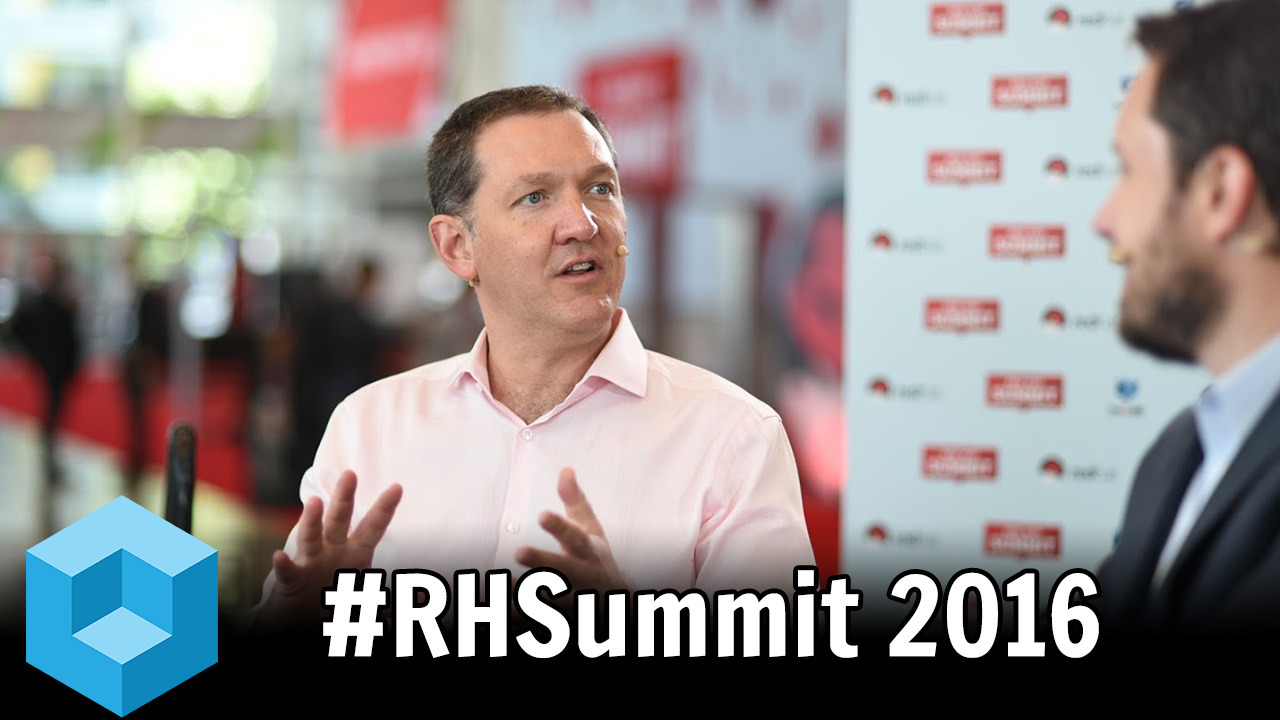
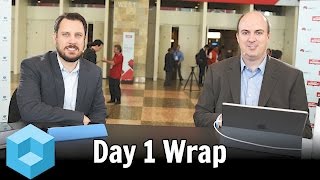
Harry Mower, senior director of Developer Programs at Red Hat, Inc., and Todd Mancini, senior principal product manager of Developer Tools at Red Hat, sat down with Brian Gracely (@bgracely), cohost of theCUBE, from the SiliconANGLE Media team, at this year’s Red Hat Summit in San Francisco, with the conversation open to questions about Red Hat’s latest announcements, developments and future plans.
Tools and refinements
As Mower pointed out, this was a big year and conference for Red Hat, with “one of the largest single-day announcements we’ve ever had” and “a number of announcements around technologies that we’ve been committed to for many years.”
Among these announcements were a new application of Enterprise Java and the announcement of new products, including the Red Hat Developer Suite, which Mancini explained as a utility suite that “takes all of our other developer tools and puts them in one package, so you can install it super-easy [and which features integration of the tools with each other].”
Open-source meets Microsoft
“We’re the first Linux provider to have a fully supported version of .NET,” Mower noted, which is just one of the ways in which Red Hat and Microsoft are coming together for mutually beneficial developments.
The team also highlighted Red Hat’s forming of “universal workspaces,” intended to aid developers by removing much of the transitional hassle. “So not only can you start coding, but you have a full environment in which to code [with access to the full stack],” Mancini explained.
“Moving to this new technology removes almost all of the frustration in [iteration],” Mower added.
Another point of cooperation shared by Mower was the creation of a flexible language server protocol so that languages being used for app development can be plugged into Red Hat and Microsoft’s tools interchangeably. As Mancini clarified, though, the aim here was not to make the tools themselves interchangeable: “It’s not about making it be consistent; it’s about having that choice. … The idea here is that you get to choose your tool that works the way you want.”
Development and progress
From there, the duo moved on to address different types of deployment strategies, including the “canary deploy,” which shares updates with only a portion of the audience, to test for problems and conflicts, before doing a full deployment, as Mower outlined. Also emphasized was the work Red Hat is doing to optimize the consistency of developing environments throughout the steps of that process.
Looking at the reception Red Hat had received at the conference so far, Mancini felt that the announcement of the company’s open Java Development Kit on Windows had received a big response from the audience.
For Mower’s part, he wanted to put focus on Red Hat’s ability to serve as a bridge for interested companies. “I think the big message that we’re trying to give developers this week is that we’re really committed to the environments you use today … but we’re also looking to bring you into the future,” he said.
Forgot Password
Almost there!
We just sent you a verification email. Please verify your account to gain access to
Red Hat Summit 2016 | San Francisco. If you don’t think you received an email check your
spam folder.
In order to sign in, enter the email address you used to registered for the event. Once completed, you will receive an email with a verification link. Open this link to automatically sign into the site.
Register For Red Hat Summit 2016 | San Francisco
Please fill out the information below. You will recieve an email with a verification link confirming your registration. Click the link to automatically sign into the site.
You’re almost there!
We just sent you a verification email. Please click the verification button in the email. Once your email address is verified, you will have full access to all event content for Red Hat Summit 2016 | San Francisco.
I want my badge and interests to be visible to all attendees.
Checking this box will display your presense on the attendees list, view your profile and allow other attendees to contact you via 1-1 chat. Read the Privacy Policy. At any time, you can choose to disable this preference.
Select your Interests!
add
Upload your photo
Uploading..
OR
Connect via Twitter
Connect via Linkedin
EDIT PASSWORD
Share
Forgot Password
Almost there!
We just sent you a verification email. Please verify your account to gain access to
Red Hat Summit 2016 | San Francisco. If you don’t think you received an email check your
spam folder.
In order to sign in, enter the email address you used to registered for the event. Once completed, you will receive an email with a verification link. Open this link to automatically sign into the site.
Sign in to gain access to Red Hat Summit 2016 | San Francisco
Please sign in with LinkedIn to continue to Red Hat Summit 2016 | San Francisco. Signing in with LinkedIn ensures a professional environment.
Are you sure you want to remove access rights for this user?
Details
Manage Access
email address
Community Invitation
Todd Mancini & Harry Mower, Red Hat - Red Hat Summit 2016 - #theCUBE #RHSummit
01. Todd Mancini, Red Hat, Visits #theCUBE!. (00:19)
02. Harry Mower, Red Hat, Visits #theCUBE!. (00:25)
03. Give Us The Highlights Of Dev Nation. (00:31)
04. What Were The Big Announcements. (01:16)
05. How Big A Deal Is .Net Core To The Market. (02:22)
06. How Are You Helping Companies Go Fast. (04:26)
07. What Did We See In The Demo Today. (06:42)
08. Is There A Huge Change For Developers To Have Consistency Of Environment. (09:27)
09. What Has Been Your Take Away This Week From Developers. (10:00)
10. What Do You Want People To Take Away Who Aren't At The Show. (11:34)
Track List created with http://www.vinjavideo.com.
--- ---
Red Hat and Microsoft partner to reduce development hassles | #RHSummit
by Gabriel Pesek | Jun 29, 2016
With the proliferation of open-source adoption, some formerly unlikely alliances are being forged, and the end-users are reaping the benefits from the changing times.
Harry Mower, senior director of Developer Programs at Red Hat, Inc., and Todd Mancini, senior principal product manager of Developer Tools at Red Hat, sat down with Brian Gracely (@bgracely), cohost of theCUBE, from the SiliconANGLE Media team, at this year’s Red Hat Summit in San Francisco, with the conversation open to questions about Red Hat’s latest announcements, developments and future plans.
Tools and refinements
As Mower pointed out, this was a big year and conference for Red Hat, with “one of the largest single-day announcements we’ve ever had” and “a number of announcements around technologies that we’ve been committed to for many years.”
Among these announcements were a new application of Enterprise Java and the announcement of new products, including the Red Hat Developer Suite, which Mancini explained as a utility suite that “takes all of our other developer tools and puts them in one package, so you can install it super-easy [and which features integration of the tools with each other].”
Open-source meets Microsoft
“We’re the first Linux provider to have a fully supported version of .NET,” Mower noted, which is just one of the ways in which Red Hat and Microsoft are coming together for mutually beneficial developments.
The team also highlighted Red Hat’s forming of “universal workspaces,” intended to aid developers by removing much of the transitional hassle. “So not only can you start coding, but you have a full environment in which to code [with access to the full stack],” Mancini explained.
“Moving to this new technology removes almost all of the frustration in [iteration],” Mower added.
Another point of cooperation shared by Mower was the creation of a flexible language server protocol so that languages being used for app development can be plugged into Red Hat and Microsoft’s tools interchangeably. As Mancini clarified, though, the aim here was not to make the tools themselves interchangeable: “It’s not about making it be consistent; it’s about having that choice. … The idea here is that you get to choose your tool that works the way you want.”
Development and progress
From there, the duo moved on to address different types of deployment strategies, including the “canary deploy,” which shares updates with only a portion of the audience, to test for problems and conflicts, before doing a full deployment, as Mower outlined. Also emphasized was the work Red Hat is doing to optimize the consistency of developing environments throughout the steps of that process.
Looking at the reception Red Hat had received at the conference so far, Mancini felt that the announcement of the company’s open Java Development Kit on Windows had received a big response from the audience.
For Mower’s part, he wanted to put focus on Red Hat’s ability to serve as a bridge for interested companies. “I think the big message that we’re trying to give developers this week is that we’re really committed to the environments you use today … but we’re also looking to bring you into the future,” he said.