OpenShift diversified: How Red Hat has tailored its platform for everyone | #RHSummit
by Tim Hawkins | Jun 30, 2016
Red Hat’s OpenShift Platform-as-a-Service (PaaS) has been around for a number of years, but due to some recent rebranding, some may think the product has changed in some way. Has it? While OpenShift is still the same product based around Kubernetes and Docker container technology, it continues to be refined as cloud technology and customer needs evolve.
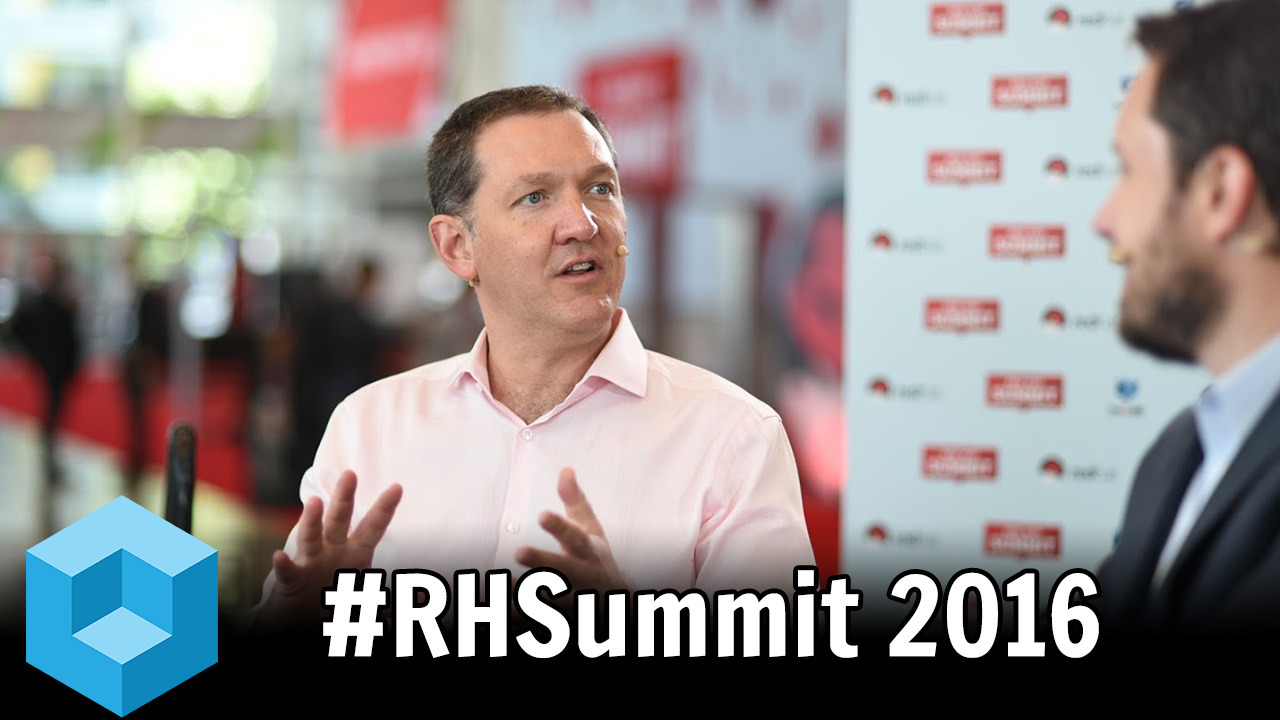
Ashesh Badani, VP and GM of the Cloud Business Unit and OpenShift PaaS at Red Hat, Inc., joined Stu Miniman (@stu) and Brian Gracely (@bgracely), cohosts of theCUBE, from the SiliconANGLE Media team, at the Red Hat Summit from the Moscone N & W in San Francisco, to discuss how the company continues to refine the OpenShift platform for everyone.
OpenShift containers: Nothing new
With the recent rebranding of OpenShift products, some customers may think that the addition of containers support to the platform is a new development. In fact, they have been a part of the product all along because containers are Linux processes to begin with.
“We’ve used containers from the first day that we launched OpenShift in the public cloud. We just happened not to call it ‘containers,'” said Badani. “We’ve been using container-based technology for many many years; in fact, it’s part of Linux.”
Multiple options breeds customer confidence
When choosing a cloud platform, customers like their eventual choice to be flexible. OpenShift goes far beyond that … not only is the platform itself highly configurable, but Red Hat has created different versions of the product targeted at the specific environment it will be used in. Several versions, such as OpenShift Dedicated, OpenShift Lab Edition or OpenShift Online, were all created specifically with different users and environments in mind. Having OpenShift available in so many flavors is a major benefit that has drawn customers to the platform.
“Most customers are really interested in having those choices, even if they are not necessarily going all in into the public cloud today,” explained Badani. “Having the option that OpenShift Online is run in the public cloud, managed by us, and having the fact that OpenShift Dedicated is available for them is extremely powerful.”
Forgot Password
Almost there!
We just sent you a verification email. Please verify your account to gain access to
Red Hat Summit 2016 | San Francisco. If you don’t think you received an email check your
spam folder.
In order to sign in, enter the email address you used to registered for the event. Once completed, you will receive an email with a verification link. Open this link to automatically sign into the site.
Register For Red Hat Summit 2016 | San Francisco
Please fill out the information below. You will recieve an email with a verification link confirming your registration. Click the link to automatically sign into the site.
You’re almost there!
We just sent you a verification email. Please click the verification button in the email. Once your email address is verified, you will have full access to all event content for Red Hat Summit 2016 | San Francisco.
I want my badge and interests to be visible to all attendees.
Checking this box will display your presense on the attendees list, view your profile and allow other attendees to contact you via 1-1 chat. Read the Privacy Policy. At any time, you can choose to disable this preference.
Select your Interests!
add
Upload your photo
Uploading..
OR
Connect via Twitter
Connect via Linkedin
EDIT PASSWORD
Share
Forgot Password
Almost there!
We just sent you a verification email. Please verify your account to gain access to
Red Hat Summit 2016 | San Francisco. If you don’t think you received an email check your
spam folder.
In order to sign in, enter the email address you used to registered for the event. Once completed, you will receive an email with a verification link. Open this link to automatically sign into the site.
Sign in to gain access to Red Hat Summit 2016 | San Francisco
Please sign in with LinkedIn to continue to Red Hat Summit 2016 | San Francisco. Signing in with LinkedIn ensures a professional environment.
Are you sure you want to remove access rights for this user?
Details
Manage Access
email address
Community Invitation
Ashesh Badani, Red Hat - Red Hat Summit 2016 - #theCUBE #RHSummit
OpenShift diversified: How Red Hat has tailored its platform for everyone | #RHSummit
by Tim Hawkins | Jun 30, 2016
Red Hat’s OpenShift Platform-as-a-Service (PaaS) has been around for a number of years, but due to some recent rebranding, some may think the product has changed in some way. Has it? While OpenShift is still the same product based around Kubernetes and Docker container technology, it continues to be refined as cloud technology and customer needs evolve.
Ashesh Badani, VP and GM of the Cloud Business Unit and OpenShift PaaS at Red Hat, Inc., joined Stu Miniman (@stu) and Brian Gracely (@bgracely), cohosts of theCUBE, from the SiliconANGLE Media team, at the Red Hat Summit from the Moscone N & W in San Francisco, to discuss how the company continues to refine the OpenShift platform for everyone.
OpenShift containers: Nothing new
With the recent rebranding of OpenShift products, some customers may think that the addition of containers support to the platform is a new development. In fact, they have been a part of the product all along because containers are Linux processes to begin with.
“We’ve used containers from the first day that we launched OpenShift in the public cloud. We just happened not to call it ‘containers,'” said Badani. “We’ve been using container-based technology for many many years; in fact, it’s part of Linux.”
Multiple options breeds customer confidence
When choosing a cloud platform, customers like their eventual choice to be flexible. OpenShift goes far beyond that … not only is the platform itself highly configurable, but Red Hat has created different versions of the product targeted at the specific environment it will be used in. Several versions, such as OpenShift Dedicated, OpenShift Lab Edition or OpenShift Online, were all created specifically with different users and environments in mind. Having OpenShift available in so many flavors is a major benefit that has drawn customers to the platform.
“Most customers are really interested in having those choices, even if they are not necessarily going all in into the public cloud today,” explained Badani. “Having the option that OpenShift Online is run in the public cloud, managed by us, and having the fact that OpenShift Dedicated is available for them is extremely powerful.”