01. Paul Cormier, Red Hat, Visits #theCUBE!. (00:20)
02. Why Is Red Hat Is Relevant And Why Should You Have The Pole Position. (00:25)
03. How Do You See The Boundaries With Your Partners. (01:38)
04. Can You Walk Us Through The Red Hat Portfolio. (02:46)
05. What Is Red Hats Philosophy On How Containers Are Intertwined. (04:54)
06. Do People Grasp How Broad The Linux Movement Has Gotten. (07:00)
07. When It Comes To Security Are We There Yet. (09:10)
08. What Are The Key Things With Customers Tell You About Architectural Changes. (10:21)
09. Are There Subcultures In The Communities. (12:02)
10. How Do You Keep In The Lead. (13:37)
11. How Do You Balance The Cloud Players. (15:49)
12. What Do You Want People To Take Away From Red Hat Summit. (16:51)
Track List created with http://www.vinjavideo.com.
--- ---
Containers and open source: How Red Hat is winning the market over | #RHSummit
by Tim Hawkins | Jun 29, 2016
As Red Hat, Inc. is a strictly open-source software company, a lot of talk has been centered around how the company will convince customers that a completely open-source container solution is better than a proprietary one.
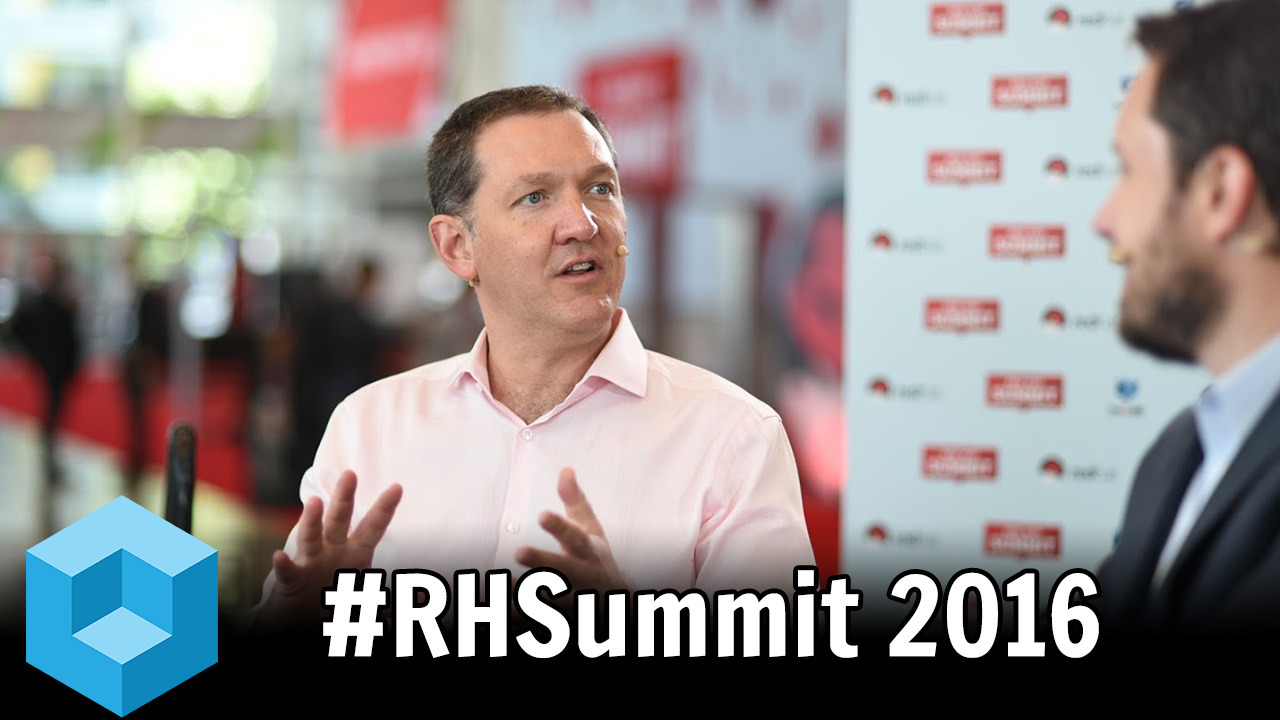
Paul Cormier, EVP of Engineering and president of Products and Technologies at Red Hat, joined Stu Miniman (@stu) and Brian Gracely (@bgracely), cohosts of theCUBE, from the SiliconANGLE Media team, at the Red Hat Summit from the Moscone N & W in San Francisco, to discuss Red Hat’s position on using open-source software in container development.
Competing with partners
A number of companies that Red Hat partners with on other projects are actually its direct competitors in the container market. But the company has partnered with these competitors, such as with Google and Docker, to develop the Open Container Initiative (OCI). But because Red Hat is such a large company with many fingers in many pies, Cormier doesn’t believe this is an issue; in fact, he thinks it is inevitable.
“We’ve worked with all vendors and competitors upstream; that’s the way open source works,” said Cormier. “We’re totally fine with that.”
Why is open source good for containers?
Anyone who knows anything about open source knows that transparency is at the very heart of it. And since you have large communities of developers working toward a common goal, the final product tends to be the best of what each developer has to offer.
Red Hat’s approach to its container platform is no different. The company takes what each open community has to offer, evaluates it, and if it makes the grade, implements it in its final product.
“We’re all about what we deliver to the customer, and we accomplish that by integrating various technology pieces from various communities,” said Cormier.
Forgot Password
Almost there!
We just sent you a verification email. Please verify your account to gain access to
Red Hat Summit 2016 | San Francisco. If you don’t think you received an email check your
spam folder.
In order to sign in, enter the email address you used to registered for the event. Once completed, you will receive an email with a verification link. Open this link to automatically sign into the site.
Register For Red Hat Summit 2016 | San Francisco
Please fill out the information below. You will recieve an email with a verification link confirming your registration. Click the link to automatically sign into the site.
You’re almost there!
We just sent you a verification email. Please click the verification button in the email. Once your email address is verified, you will have full access to all event content for Red Hat Summit 2016 | San Francisco.
I want my badge and interests to be visible to all attendees.
Checking this box will display your presense on the attendees list, view your profile and allow other attendees to contact you via 1-1 chat. Read the Privacy Policy. At any time, you can choose to disable this preference.
Select your Interests!
add
Upload your photo
Uploading..
OR
Connect via Twitter
Connect via Linkedin
EDIT PASSWORD
Share
Forgot Password
Almost there!
We just sent you a verification email. Please verify your account to gain access to
Red Hat Summit 2016 | San Francisco. If you don’t think you received an email check your
spam folder.
In order to sign in, enter the email address you used to registered for the event. Once completed, you will receive an email with a verification link. Open this link to automatically sign into the site.
Sign in to gain access to Red Hat Summit 2016 | San Francisco
Please sign in with LinkedIn to continue to Red Hat Summit 2016 | San Francisco. Signing in with LinkedIn ensures a professional environment.
Are you sure you want to remove access rights for this user?
Details
Manage Access
email address
Community Invitation
Paul Cormier, Red Hat - Red Hat Summit 2016 - #theCUBE #RHSummit
01. Paul Cormier, Red Hat, Visits #theCUBE!. (00:20)
02. Why Is Red Hat Is Relevant And Why Should You Have The Pole Position. (00:25)
03. How Do You See The Boundaries With Your Partners. (01:38)
04. Can You Walk Us Through The Red Hat Portfolio. (02:46)
05. What Is Red Hats Philosophy On How Containers Are Intertwined. (04:54)
06. Do People Grasp How Broad The Linux Movement Has Gotten. (07:00)
07. When It Comes To Security Are We There Yet. (09:10)
08. What Are The Key Things With Customers Tell You About Architectural Changes. (10:21)
09. Are There Subcultures In The Communities. (12:02)
10. How Do You Keep In The Lead. (13:37)
11. How Do You Balance The Cloud Players. (15:49)
12. What Do You Want People To Take Away From Red Hat Summit. (16:51)
Track List created with http://www.vinjavideo.com.
--- ---
Containers and open source: How Red Hat is winning the market over | #RHSummit
by Tim Hawkins | Jun 29, 2016
As Red Hat, Inc. is a strictly open-source software company, a lot of talk has been centered around how the company will convince customers that a completely open-source container solution is better than a proprietary one.
Paul Cormier, EVP of Engineering and president of Products and Technologies at Red Hat, joined Stu Miniman (@stu) and Brian Gracely (@bgracely), cohosts of theCUBE, from the SiliconANGLE Media team, at the Red Hat Summit from the Moscone N & W in San Francisco, to discuss Red Hat’s position on using open-source software in container development.
Competing with partners
A number of companies that Red Hat partners with on other projects are actually its direct competitors in the container market. But the company has partnered with these competitors, such as with Google and Docker, to develop the Open Container Initiative (OCI). But because Red Hat is such a large company with many fingers in many pies, Cormier doesn’t believe this is an issue; in fact, he thinks it is inevitable.
“We’ve worked with all vendors and competitors upstream; that’s the way open source works,” said Cormier. “We’re totally fine with that.”
Why is open source good for containers?
Anyone who knows anything about open source knows that transparency is at the very heart of it. And since you have large communities of developers working toward a common goal, the final product tends to be the best of what each developer has to offer.
Red Hat’s approach to its container platform is no different. The company takes what each open community has to offer, evaluates it, and if it makes the grade, implements it in its final product.
“We’re all about what we deliver to the customer, and we accomplish that by integrating various technology pieces from various communities,” said Cormier.