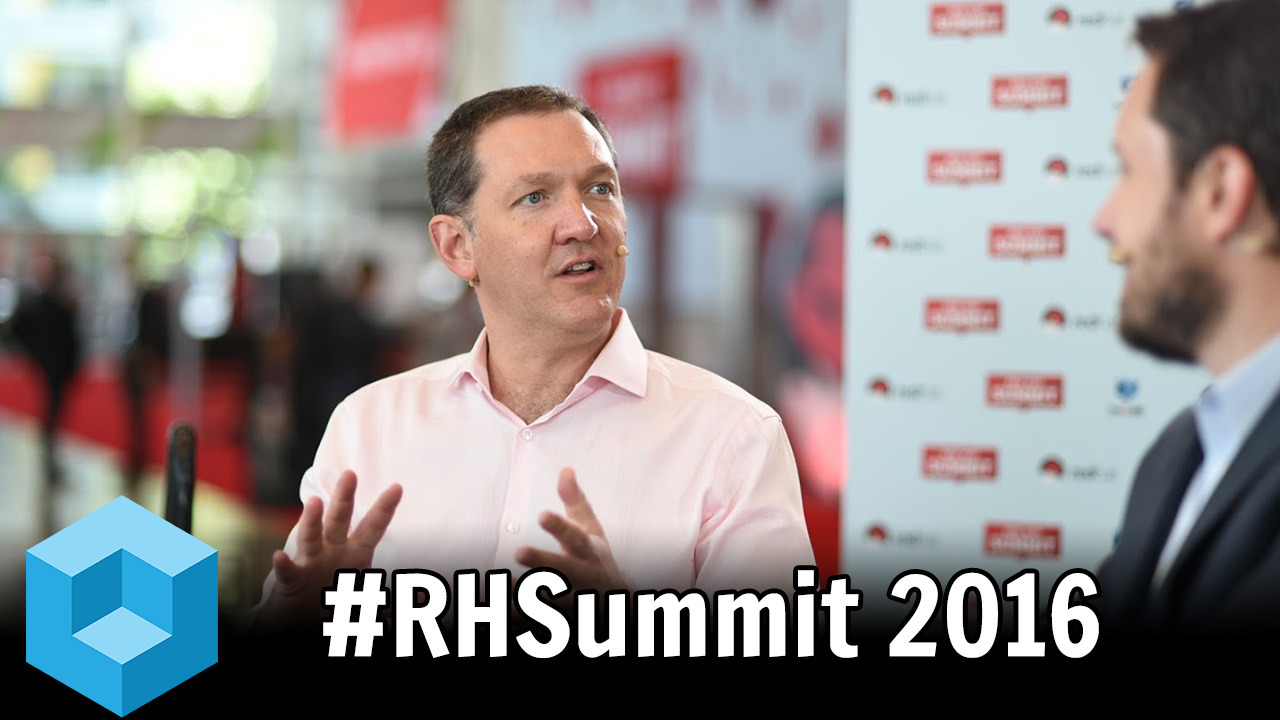
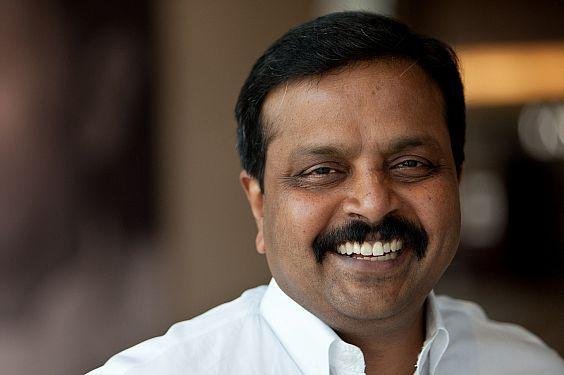
01. Ranga Rangachari, Red Hat, visits #theCUBE!. (00:16)
02. Persistence for Storage and Scaleability of Storage. (01:53)
03. Maturing the Storage Solution. (02:50)
04. Understanding the Critical Role of Stateful Applications. (04:03)
05. Software Defined, Secondary Storage, Object Storage. (06:27)
06. How Storage Solutions Fit In With Cloud Offerings. (07:59)
07. Changes in the Go To Market for Storage. (10:25)
08. The Role of Choice (The TelCo Example). (12:01)
09. Key Takeaways from Red Hat Summit. (13:04)
Track List created with http://www.vinjavideo.com.
--- ---
Containers swiftly becoming the de facto route to storage | #RHSummit
by Zoe Bernard | Jun 30, 2016
Bigger workload capacity means smarter storage options — which is why Ranga Rangachari, Red Hat, Inc.’s VP and GM of Storage, suggests containers as the ultimate solution for data storage. And Rangachari’s customers are quick to agree: Rangachari has spent the past few days at Red Hat Summit combing the crowds in search of user feedback. And, so far, response has been positive.
Rangachari spoke to Stu Miniman (@stu) and Brian Gracely (@bgracely), cohosts of theCUBE, from the SiliconANGLE Media team, today at Red Hat Summit.
Although Red Hat’s latest iteration is only three days old, Rangachari found early indications to be positive. “The interest level is definitely present, and so far it’s going very well,” he said. “There’s no doubt that this technology will change the way people share.”
Making storage indivisible
Red Hat’s aim is to make storage indivisible by creating a container made of storage where the components work together in a hyper-converged environment and scale as to their deployment. “When we talk about containing storage, it’s all about persistent storage,” said Rangachari. “The need for persistent storage is great. It’s completely integral to the scalability of a product.
Containers are now becoming the de facto route to storage, he said. Given the fact that customers are growing increasingly familiar with problems concerning storage and scalability, the need for a shift in technology is critical. “In terms of classical tech adoption, the level of understanding is night and day,” said Rangachari.
All of these key takeaways are couched in the context of Red Hat’s customer feedback. “People are telling me, ‘I cannot run today’s and tomorrow’s workloads on yesterday’s work structure.’ It’s this idea that’s totally changing today’s infrastructure.”
Forgot Password
Almost there!
We just sent you a verification email. Please verify your account to gain access to
Red Hat Summit 2016 | San Francisco. If you don’t think you received an email check your
spam folder.
In order to sign in, enter the email address you used to registered for the event. Once completed, you will receive an email with a verification link. Open this link to automatically sign into the site.
Register For Red Hat Summit 2016 | San Francisco
Please fill out the information below. You will recieve an email with a verification link confirming your registration. Click the link to automatically sign into the site.
You’re almost there!
We just sent you a verification email. Please click the verification button in the email. Once your email address is verified, you will have full access to all event content for Red Hat Summit 2016 | San Francisco.
I want my badge and interests to be visible to all attendees.
Checking this box will display your presense on the attendees list, view your profile and allow other attendees to contact you via 1-1 chat. Read the Privacy Policy. At any time, you can choose to disable this preference.
Select your Interests!
add
Upload your photo
Uploading..
OR
Connect via Twitter
Connect via Linkedin
EDIT PASSWORD
Share
Forgot Password
Almost there!
We just sent you a verification email. Please verify your account to gain access to
Red Hat Summit 2016 | San Francisco. If you don’t think you received an email check your
spam folder.
In order to sign in, enter the email address you used to registered for the event. Once completed, you will receive an email with a verification link. Open this link to automatically sign into the site.
Sign in to gain access to Red Hat Summit 2016 | San Francisco
Please sign in with LinkedIn to continue to Red Hat Summit 2016 | San Francisco. Signing in with LinkedIn ensures a professional environment.
Are you sure you want to remove access rights for this user?
Details
Manage Access
email address
Community Invitation
Ranga Rangachari, Red Hat - Red Hat Summit 2016 - #theCUBE #RHSummit
01. Ranga Rangachari, Red Hat, visits #theCUBE!. (00:16)
02. Persistence for Storage and Scaleability of Storage. (01:53)
03. Maturing the Storage Solution. (02:50)
04. Understanding the Critical Role of Stateful Applications. (04:03)
05. Software Defined, Secondary Storage, Object Storage. (06:27)
06. How Storage Solutions Fit In With Cloud Offerings. (07:59)
07. Changes in the Go To Market for Storage. (10:25)
08. The Role of Choice (The TelCo Example). (12:01)
09. Key Takeaways from Red Hat Summit. (13:04)
Track List created with http://www.vinjavideo.com.
--- ---
Containers swiftly becoming the de facto route to storage | #RHSummit
by Zoe Bernard | Jun 30, 2016
Bigger workload capacity means smarter storage options — which is why Ranga Rangachari, Red Hat, Inc.’s VP and GM of Storage, suggests containers as the ultimate solution for data storage. And Rangachari’s customers are quick to agree: Rangachari has spent the past few days at Red Hat Summit combing the crowds in search of user feedback. And, so far, response has been positive.
Rangachari spoke to Stu Miniman (@stu) and Brian Gracely (@bgracely), cohosts of theCUBE, from the SiliconANGLE Media team, today at Red Hat Summit.
Although Red Hat’s latest iteration is only three days old, Rangachari found early indications to be positive. “The interest level is definitely present, and so far it’s going very well,” he said. “There’s no doubt that this technology will change the way people share.”
Making storage indivisible
Red Hat’s aim is to make storage indivisible by creating a container made of storage where the components work together in a hyper-converged environment and scale as to their deployment. “When we talk about containing storage, it’s all about persistent storage,” said Rangachari. “The need for persistent storage is great. It’s completely integral to the scalability of a product.
Containers are now becoming the de facto route to storage, he said. Given the fact that customers are growing increasingly familiar with problems concerning storage and scalability, the need for a shift in technology is critical. “In terms of classical tech adoption, the level of understanding is night and day,” said Rangachari.
All of these key takeaways are couched in the context of Red Hat’s customer feedback. “People are telling me, ‘I cannot run today’s and tomorrow’s workloads on yesterday’s work structure.’ It’s this idea that’s totally changing today’s infrastructure.”