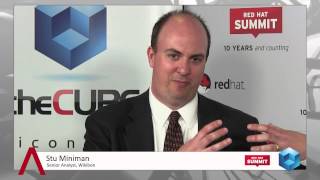
Ranga Rangachari, Red Hat, at Red Hat Summit 2014 with John Furrier and Stu Miniman
@thecube
#RHSummit
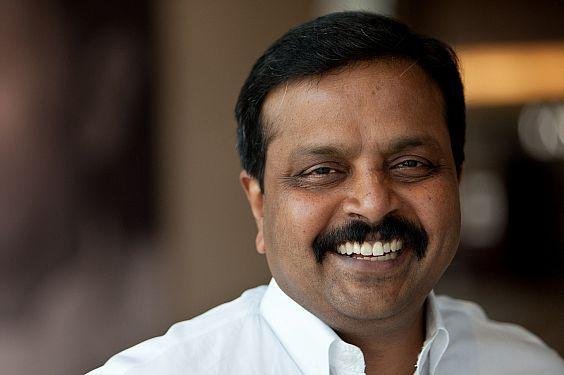
Ranga Rangachari, Vice President and General Manager of Storage at Red Hat, appeared in theCUBE to speak with co-hosts John Furrier and Stu Miniman, during the Red Hat Summit 2014 taking place this week in San Francisco.
"Storage is a subsystem of the OS, but in the context of cloud, it's a huge conversation," said Furrier, who invited Rangachari to elaborate on the way storage fits into the software-defined data center and into the cloud.
"What gets me excited at this summit is the continuous innovation," said Ranga Rangachari. "With storage, we saw a pronounced shift during the last couple of years, and that happened for a number of reasons:
1. the movement in the cloud -- you cannot take a piece of storage hardware and move it in the public cloud; it defies the laws of physics. That necessitated the need for a software-defined approach to storage.
2. the other aspect is a new type of workloads. Unstructured data -- industry analysts expect that over the next five years 90 percent of enterprise data to be unstructured in nature. Unstructured data requires a different type of treatment. It is no more scale-up, it's scale-out, so you got to continue to deal with the volume and the velocity of the data that's coming in.
Those are the two trends that we see," answered Rangachari.
"Nowadays data has become central to the value proposition. It's part of the development but also part of the OS," noted Furrier. What is, in your view, the software-defined storage?" he asked.
"It's the ability to truly decouple the services that the software layer can provide," answered Rangachari. "The intelligence elevates to the software level and the ultimate goal is you should be able to take industry standard commodity X86 servers which have a tremendous horse power built into it and layer in your software solution on top and have all the services that you've been providing: data replication, data backup, data migration, so the entire gamut of services that you're used to. With customers, it gives them complete flexibility and freedom of choice. Really, it's about separating the hardware and the software. Computers are becoming software-defined, so the triple play here is software-defined storage, compute and networking."
Watch Ranga Rangachari's interview below, as he talks about the service provider market and some relevant use-cases.
Forgot Password
Almost there!
We just sent you a verification email. Please verify your account to gain access to
Red Hat Summit 2014 | San Francisco. If you don’t think you received an email check your
spam folder.
In order to sign in, enter the email address you used to registered for the event. Once completed, you will receive an email with a verification link. Open this link to automatically sign into the site.
Register For Red Hat Summit 2014 | San Francisco
Please fill out the information below. You will recieve an email with a verification link confirming your registration. Click the link to automatically sign into the site.
You’re almost there!
We just sent you a verification email. Please click the verification button in the email. Once your email address is verified, you will have full access to all event content for Red Hat Summit 2014 | San Francisco.
I want my badge and interests to be visible to all attendees.
Checking this box will display your presense on the attendees list, view your profile and allow other attendees to contact you via 1-1 chat. Read the Privacy Policy. At any time, you can choose to disable this preference.
Select your Interests!
add
Upload your photo
Uploading..
OR
Connect via Twitter
Connect via Linkedin
EDIT PASSWORD
Share
Forgot Password
Almost there!
We just sent you a verification email. Please verify your account to gain access to
Red Hat Summit 2014 | San Francisco. If you don’t think you received an email check your
spam folder.
In order to sign in, enter the email address you used to registered for the event. Once completed, you will receive an email with a verification link. Open this link to automatically sign into the site.
Sign in to gain access to Red Hat Summit 2014 | San Francisco
Please sign in with LinkedIn to continue to Red Hat Summit 2014 | San Francisco. Signing in with LinkedIn ensures a professional environment.
Are you sure you want to remove access rights for this user?
Details
Manage Access
email address
Community Invitation
Ranga Rangachari - Red Hat Summit 2014 - TheCUBE
Ranga Rangachari, Red Hat, at Red Hat Summit 2014 with John Furrier and Stu Miniman
@thecube
#RHSummit
Ranga Rangachari, Vice President and General Manager of Storage at Red Hat, appeared in theCUBE to speak with co-hosts John Furrier and Stu Miniman, during the Red Hat Summit 2014 taking place this week in San Francisco.
"Storage is a subsystem of the OS, but in the context of cloud, it's a huge conversation," said Furrier, who invited Rangachari to elaborate on the way storage fits into the software-defined data center and into the cloud.
"What gets me excited at this summit is the continuous innovation," said Ranga Rangachari. "With storage, we saw a pronounced shift during the last couple of years, and that happened for a number of reasons:
1. the movement in the cloud -- you cannot take a piece of storage hardware and move it in the public cloud; it defies the laws of physics. That necessitated the need for a software-defined approach to storage.
2. the other aspect is a new type of workloads. Unstructured data -- industry analysts expect that over the next five years 90 percent of enterprise data to be unstructured in nature. Unstructured data requires a different type of treatment. It is no more scale-up, it's scale-out, so you got to continue to deal with the volume and the velocity of the data that's coming in.
Those are the two trends that we see," answered Rangachari.
"Nowadays data has become central to the value proposition. It's part of the development but also part of the OS," noted Furrier. What is, in your view, the software-defined storage?" he asked.
"It's the ability to truly decouple the services that the software layer can provide," answered Rangachari. "The intelligence elevates to the software level and the ultimate goal is you should be able to take industry standard commodity X86 servers which have a tremendous horse power built into it and layer in your software solution on top and have all the services that you've been providing: data replication, data backup, data migration, so the entire gamut of services that you're used to. With customers, it gives them complete flexibility and freedom of choice. Really, it's about separating the hardware and the software. Computers are becoming software-defined, so the triple play here is software-defined storage, compute and networking."
Watch Ranga Rangachari's interview below, as he talks about the service provider market and some relevant use-cases.