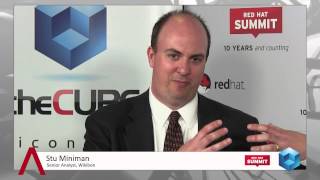
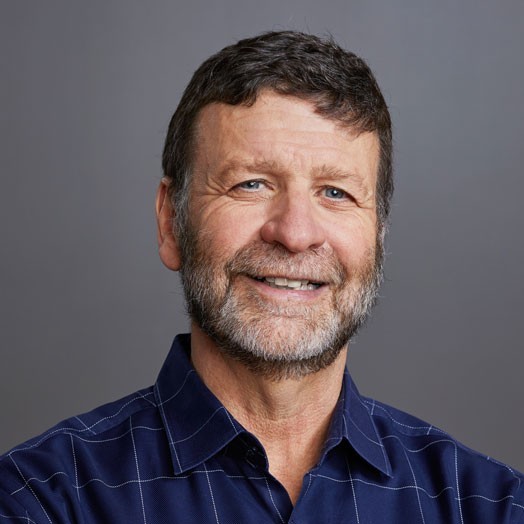
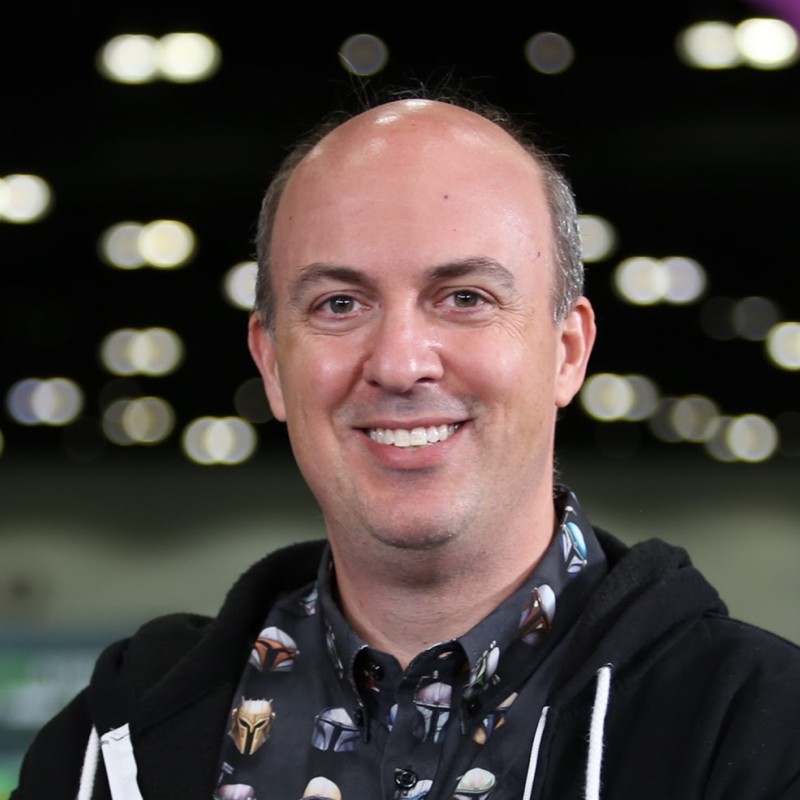
Paul Cormier, Red Hat,at Red Hat Summit 2014 with John Furrier and Stu Miniman
@thecube
#RHSummit
The Moscone Center in San Francisco is the scene of this week's Red Hat Summit, now in its 10th year. John Furrier and Stu Miniman welcomed the President of Products and Technology for Red Hat, Paul Cormier, to one of the final interviews for Day 1 on SiliconANGLE's theCUBE.
The history of Red Hat and the #RHSummit, the future of open source technologies and a caveat for Enterprise consumers were discussed in depth over the interview. Cormier's perspective, in light of his near 13 years with Red Hat, is one that has seen the inception and development of the entire open source community and movement. The conversation kicked off with his take on the atmosphere inside the Moscone Center.
"I think the reason [this year] is so special is the vibe," Cormier began. "This is really the first summit where we are seeing that Linux has been the driver of the innovation." He continued, "On the other hand, there is all this excitement around the open source technologies that are surrounding Linux. There's a lot of talk about Platform as a Service, Infrastructure as a Service, Cloud, Containers. It's all driven by Linux but it's all expanding of where open source is really going within the infrastructure. When [Red Hat] first started, we used to have this vision of the entire infrastructure being open source. We're here. Think about that."
Watch the interview in its entirety here:
Seizing on that idea, Furrier pressed Cormier to identify the most significant disruption point produced by Linux and the open source community thus far. "I think when virtualization got integrated in with Linux," Cormier began, "that was the inflection point." He claims the impetus behind Linux was, contrary to what many may believe, not initially based on a grand vision or a desire to revolutionize modern compute. "It was purely a commodity play," he stated. "It was commoditizing the compute layer. And Linux, combined with X86, did that commoditization." He claims that then laid the groundwork for future R&D and innovation to be done on Linux. "When virtualization hit, you could now spin up an operating system in a matter of seconds. I think that's really the inflection point when things happened."
Red Hat has continually adapted their business model to meet new advances in the compute world. They implemented a subscription model to replace their early days of shipping out CD-ROMs. Furrier now wanted to know how their business model would adapt to the advent of the Cloud that can, itself, act as a distribution vehicle.
Containers Helping Apps Get to the Cloud
"Containers is where that next magic happens," Cormier said. "I look at Containers as a way for the application to seamlessly get to the cloud. The Container is a different packaging paradigm for the application where one can bring in just the right part of the operating system that they would need for that application. The interesting part is," he continues, "that's now one object that can be transported electronically wherever the user may want to it to go. It's a game changer."
While recent press has heralded Red Hat's adoption of Containers, Cormier counters those assertions by arguing that, in fact, they have been there since the beginning. His contention is that the creation of Containers is a direct by-product of their early development.
In many of the interviews on theCUBE today, we have learned about Red Hat's vision of a platform that is able to address and, as a result, merge the four platforms in use today: virtualization, traditional, private, and public Cloud. "People are going to be forced and want to run in those four footprints, but they want to be able to manage it as one." Cormier mentioned Red Hat is offering just such a management solution with CloudForms.
Addressing the maturation of OpenStack, Cormier claimed the architecture was on a near-identical trajectory as Linux in their early days. "We are doing well in OpenStack," he claimed, "because we went through it with Linux. It's going to happen the same way. It's just going to happen faster."
Forgot Password
Almost there!
We just sent you a verification email. Please verify your account to gain access to
Red Hat Summit 2014 | San Francisco. If you don’t think you received an email check your
spam folder.
In order to sign in, enter the email address you used to registered for the event. Once completed, you will receive an email with a verification link. Open this link to automatically sign into the site.
Register For Red Hat Summit 2014 | San Francisco
Please fill out the information below. You will recieve an email with a verification link confirming your registration. Click the link to automatically sign into the site.
You’re almost there!
We just sent you a verification email. Please click the verification button in the email. Once your email address is verified, you will have full access to all event content for Red Hat Summit 2014 | San Francisco.
I want my badge and interests to be visible to all attendees.
Checking this box will display your presense on the attendees list, view your profile and allow other attendees to contact you via 1-1 chat. Read the Privacy Policy. At any time, you can choose to disable this preference.
Select your Interests!
add
Upload your photo
Uploading..
OR
Connect via Twitter
Connect via Linkedin
EDIT PASSWORD
Share
Forgot Password
Almost there!
We just sent you a verification email. Please verify your account to gain access to
Red Hat Summit 2014 | San Francisco. If you don’t think you received an email check your
spam folder.
In order to sign in, enter the email address you used to registered for the event. Once completed, you will receive an email with a verification link. Open this link to automatically sign into the site.
Sign in to gain access to Red Hat Summit 2014 | San Francisco
Please sign in with LinkedIn to continue to Red Hat Summit 2014 | San Francisco. Signing in with LinkedIn ensures a professional environment.
Are you sure you want to remove access rights for this user?
Details
Manage Access
email address
Community Invitation
Paul Cormier - Red Hat Summit 2014 - TheCUBE
Paul Cormier, Red Hat,at Red Hat Summit 2014 with John Furrier and Stu Miniman
@thecube
#RHSummit
The Moscone Center in San Francisco is the scene of this week's Red Hat Summit, now in its 10th year. John Furrier and Stu Miniman welcomed the President of Products and Technology for Red Hat, Paul Cormier, to one of the final interviews for Day 1 on SiliconANGLE's theCUBE.
The history of Red Hat and the #RHSummit, the future of open source technologies and a caveat for Enterprise consumers were discussed in depth over the interview. Cormier's perspective, in light of his near 13 years with Red Hat, is one that has seen the inception and development of the entire open source community and movement. The conversation kicked off with his take on the atmosphere inside the Moscone Center.
"I think the reason [this year] is so special is the vibe," Cormier began. "This is really the first summit where we are seeing that Linux has been the driver of the innovation." He continued, "On the other hand, there is all this excitement around the open source technologies that are surrounding Linux. There's a lot of talk about Platform as a Service, Infrastructure as a Service, Cloud, Containers. It's all driven by Linux but it's all expanding of where open source is really going within the infrastructure. When [Red Hat] first started, we used to have this vision of the entire infrastructure being open source. We're here. Think about that."
Watch the interview in its entirety here:
Seizing on that idea, Furrier pressed Cormier to identify the most significant disruption point produced by Linux and the open source community thus far. "I think when virtualization got integrated in with Linux," Cormier began, "that was the inflection point." He claims the impetus behind Linux was, contrary to what many may believe, not initially based on a grand vision or a desire to revolutionize modern compute. "It was purely a commodity play," he stated. "It was commoditizing the compute layer. And Linux, combined with X86, did that commoditization." He claims that then laid the groundwork for future R&D and innovation to be done on Linux. "When virtualization hit, you could now spin up an operating system in a matter of seconds. I think that's really the inflection point when things happened."
Red Hat has continually adapted their business model to meet new advances in the compute world. They implemented a subscription model to replace their early days of shipping out CD-ROMs. Furrier now wanted to know how their business model would adapt to the advent of the Cloud that can, itself, act as a distribution vehicle.
Containers Helping Apps Get to the Cloud
"Containers is where that next magic happens," Cormier said. "I look at Containers as a way for the application to seamlessly get to the cloud. The Container is a different packaging paradigm for the application where one can bring in just the right part of the operating system that they would need for that application. The interesting part is," he continues, "that's now one object that can be transported electronically wherever the user may want to it to go. It's a game changer."
While recent press has heralded Red Hat's adoption of Containers, Cormier counters those assertions by arguing that, in fact, they have been there since the beginning. His contention is that the creation of Containers is a direct by-product of their early development.
In many of the interviews on theCUBE today, we have learned about Red Hat's vision of a platform that is able to address and, as a result, merge the four platforms in use today: virtualization, traditional, private, and public Cloud. "People are going to be forced and want to run in those four footprints, but they want to be able to manage it as one." Cormier mentioned Red Hat is offering just such a management solution with CloudForms.
Addressing the maturation of OpenStack, Cormier claimed the architecture was on a near-identical trajectory as Linux in their early days. "We are doing well in OpenStack," he claimed, "because we went through it with Linux. It's going to happen the same way. It's just going to happen faster."