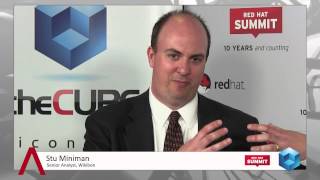
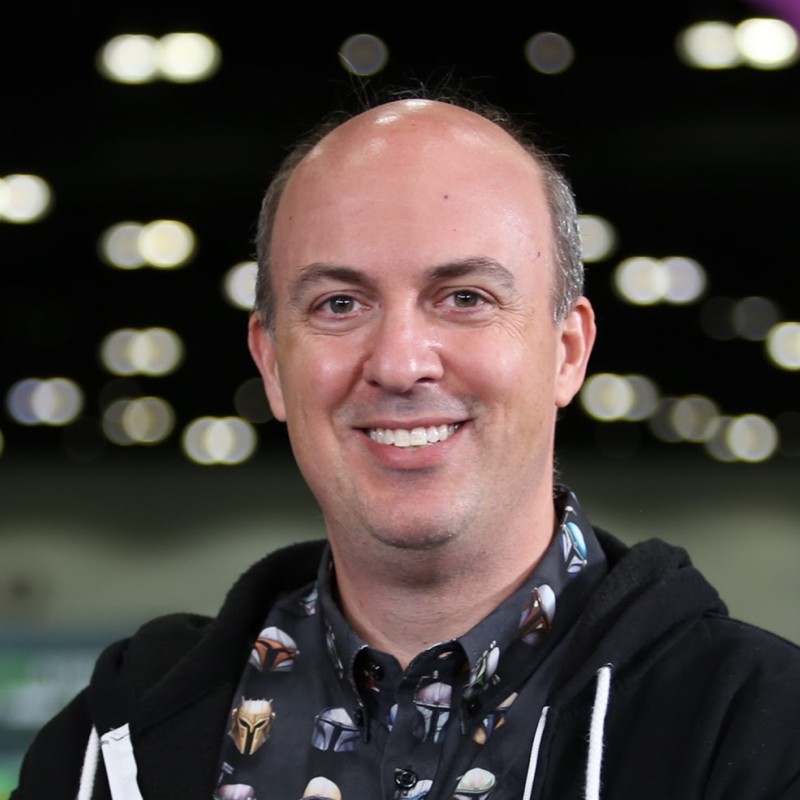
Solomon Hykes, Docker, at Red Hat Summit 2014 with John Furrier and Stu Miniman
@thecube
#RHSummit
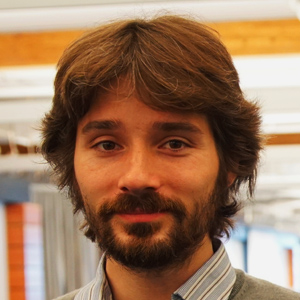
Solomon Hyke, Founder and CTO of Docker, discussed the company's latest developments and their collaboration with Red Hat with theCUBE co-hosts John Furrier and Stu Miniman, live from this year's Red Hat Summit. "Red Hat is committing to supporting Docker in the future," Hyke said, explaining how the company offered a jump start program to train some of their customers in deploying Docker services.
Docker currently has 30 employees. They changed their name from DotCloud six months ago and raised 1$5 million in a series B round, bringing their total raised amount to about $26 million. Docker used to be just a platform that hosts applications online and runs them, but has added container and deployment technology, which explains the need to change their name.
Asked why containers were so hot, Hyke explained that "it starts with the application."
"It does start with the software and what you want the software to do," said Hyke, noting this approach leads to building the architecture it needs. "I like to think of the container as the Lego brick that makes the architecture possible. A container is a unit of deployment," he said, defining the way you package your application for deployment.
"Our goal is for Docker to be available and ready to use on all major platforms," Hyke said. Docker came out from Platform-as-a-Service (PaaS), so it is very connected. According to Hyke, PaaS is a specialized way to use containers, explaining that "if you use containers, it allows you to be more flexible down the road."
Docker's market positioning & future
.
Asked about comment on Docker's market competition, Hyke said "Docker gets compared with a lot of tools in the DevOps world. The answer is the same for all: Docker is not a direct replacement for any of those, you can use them together. Docker does its own thing, it's a container engine."
Docker is currently at version 0.10 and releases a new version every month. It is not yet recommended for production use. "The next release will be the first release candidate. People are ignoring that and using it in production," some using it on thousands of servers, Hyke warned. He went on to note some of the remaining obstacles in open source development and enterprise cloud adoption.
"The applications that are built today are being built for a platform that no one can point to," Hyke said. "It's out there, it's not standardized. we're at the same phase for the cloud that personal computer programmers were at in the 70s. There's a frenzy for everyone to participate and build in it."
Describing the Docker culture, Hyke said "we like to build things, typically we're the kind of engineers that get obsessed about the tools. To build good software, you need to invest a bit of time into the tools. We want the tools to be awesome."
Forgot Password
Almost there!
We just sent you a verification email. Please verify your account to gain access to
Red Hat Summit 2014 | San Francisco. If you don’t think you received an email check your
spam folder.
In order to sign in, enter the email address you used to registered for the event. Once completed, you will receive an email with a verification link. Open this link to automatically sign into the site.
Register For Red Hat Summit 2014 | San Francisco
Please fill out the information below. You will recieve an email with a verification link confirming your registration. Click the link to automatically sign into the site.
You’re almost there!
We just sent you a verification email. Please click the verification button in the email. Once your email address is verified, you will have full access to all event content for Red Hat Summit 2014 | San Francisco.
I want my badge and interests to be visible to all attendees.
Checking this box will display your presense on the attendees list, view your profile and allow other attendees to contact you via 1-1 chat. Read the Privacy Policy. At any time, you can choose to disable this preference.
Select your Interests!
add
Upload your photo
Uploading..
OR
Connect via Twitter
Connect via Linkedin
EDIT PASSWORD
Share
Forgot Password
Almost there!
We just sent you a verification email. Please verify your account to gain access to
Red Hat Summit 2014 | San Francisco. If you don’t think you received an email check your
spam folder.
In order to sign in, enter the email address you used to registered for the event. Once completed, you will receive an email with a verification link. Open this link to automatically sign into the site.
Sign in to gain access to Red Hat Summit 2014 | San Francisco
Please sign in with LinkedIn to continue to Red Hat Summit 2014 | San Francisco. Signing in with LinkedIn ensures a professional environment.
Are you sure you want to remove access rights for this user?
Details
Manage Access
email address
Community Invitation
Solomon Hykes - Red Hat Summit 2014 - TheCUBE
Solomon Hykes, Docker, at Red Hat Summit 2014 with John Furrier and Stu Miniman
@thecube
#RHSummit
Solomon Hyke, Founder and CTO of Docker, discussed the company's latest developments and their collaboration with Red Hat with theCUBE co-hosts John Furrier and Stu Miniman, live from this year's Red Hat Summit. "Red Hat is committing to supporting Docker in the future," Hyke said, explaining how the company offered a jump start program to train some of their customers in deploying Docker services.
Docker currently has 30 employees. They changed their name from DotCloud six months ago and raised 1$5 million in a series B round, bringing their total raised amount to about $26 million. Docker used to be just a platform that hosts applications online and runs them, but has added container and deployment technology, which explains the need to change their name.
Asked why containers were so hot, Hyke explained that "it starts with the application."
"It does start with the software and what you want the software to do," said Hyke, noting this approach leads to building the architecture it needs. "I like to think of the container as the Lego brick that makes the architecture possible. A container is a unit of deployment," he said, defining the way you package your application for deployment.
"Our goal is for Docker to be available and ready to use on all major platforms," Hyke said. Docker came out from Platform-as-a-Service (PaaS), so it is very connected. According to Hyke, PaaS is a specialized way to use containers, explaining that "if you use containers, it allows you to be more flexible down the road."
Docker's market positioning & future
.
Asked about comment on Docker's market competition, Hyke said "Docker gets compared with a lot of tools in the DevOps world. The answer is the same for all: Docker is not a direct replacement for any of those, you can use them together. Docker does its own thing, it's a container engine."
Docker is currently at version 0.10 and releases a new version every month. It is not yet recommended for production use. "The next release will be the first release candidate. People are ignoring that and using it in production," some using it on thousands of servers, Hyke warned. He went on to note some of the remaining obstacles in open source development and enterprise cloud adoption.
"The applications that are built today are being built for a platform that no one can point to," Hyke said. "It's out there, it's not standardized. we're at the same phase for the cloud that personal computer programmers were at in the 70s. There's a frenzy for everyone to participate and build in it."
Describing the Docker culture, Hyke said "we like to build things, typically we're the kind of engineers that get obsessed about the tools. To build good software, you need to invest a bit of time into the tools. We want the tools to be awesome."