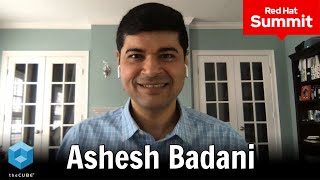
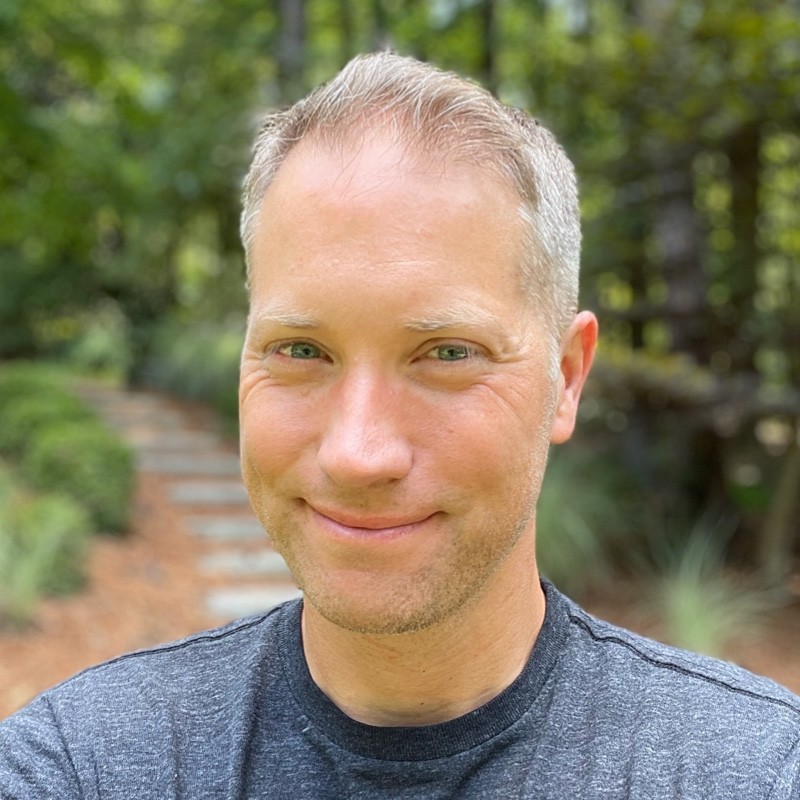
Clayton Coleman, OpenShift Chief Architect, Red Hat sits down with Stu Miniman for Red Hat Summit 2020.
#RHSummit #RedHat #theCUBE
https://siliconangle.com/2020/04/29/kubernetes-continued-maturity-drives-red-hats-openshift-strategy-rhsummit/
Kubernetes-continued maturity drives Red Hat’s OpenShift strategy
There is a line in a song written years ago by Bob Dylan that says: “You don’t need a weatherman to know which way the wind blows.” But to know which way the wind is blowing for Kubernetes, just ask Clayton Coleman.
As OpenShift chief architect at Red Hat Inc., Coleman (pictured) has become one of Kubernetes’ top resources. He was the container orchestration tool’s first external contributor and has been instrumental in OpenShift’s transformation of Kubernetes for the enterprise.
With enterprise adoption of 86%, Kubernetes is on a roll as it enters its sixth year in release.
“Kubernetes is moving into that phase where it is a mature open-source project,” Coleman said. “As Kubernetes becomes more of a bedrock technology for enterprises and individuals and startups, we’ve really seen a huge amount of innovation in this space. Every year it just gets bigger.”
Coleman spoke with Stu Miniman, host of theCUBE, SiliconANGLE Media’s mobile livestreaming studio, during the Red Hat Summit Virtual Experience. They discussed increased enterprise reliance on Kubernetes for critical workloads, OpenShift’s role in the hybrid cloud, and future developments for serverless computing. (* Disclosure below.)
Critical production workloads
Rapid adoption of Kubernetes by the enterprise world means that the stakes are higher now. Over 70% of global firms will be running two or more containerized applications in production by 2023, according to Gartner Inc.
“They’ve been running OpenShift for a while or Kubernetes for a while, and they’re getting ready to move a significant portion of their applications over,” Coleman said. “People are bringing substantial, important, critical production workloads, and they expect things to just work but also to be able to understand it.”
The “understanding” part is one of Kubernetes’ challenges, as the technology is not simple to use. Companies like Rancher Labs Inc. have been rolling out “lightweight” Kubernetes distributions to ease deployment in edge environments.
For its part, Red Hat has focused on a strategy to make OpenShift, the firm’s container application platform, the default choice for hybrid cloud, in much the same way that it has sought to make Red Hat Enterprise Linux the default for operating systems.
“We’ve really built around the idea that OpenShift running on a cloud should take advantage of that cloud to an extreme degree,” Coleman said. “That’s a key trend. We’re not using the cloud because our administration teams want us to; we’re using the cloud because it makes us more powerful as developers.”
Getting Knative ready
One area of interest in the Kubernetes community has been the Knative project, an open-source community initiative for deploying and managing serverless applications. Knative was originally started by Google LLC, with Red Hat, IBM Corp. and Pivotal Software Inc. contributing as well.
The goal has been to make vendor-agnostic serverless functions usable across public clouds or in data centers, and the hope is that Knative will be ready for prime time in 2020.
“There’s been this core community effort to get Knative to a general availability quality,” Coleman said. “Alongside that, the OpenShift serverless team has been trying to make it a dramatically simpler action if you have Kubernetes in OpenShift. I think Knative is still well positioned to capture the broadest possible audience, which for Kubernetes and containers was our mindset.”
Watch the complete video interview below, and be sure to check out more of SiliconANGLE’s and theCUBE’s coverage of the Red Hat Summit Virtual Experience. (* Disclosure: TheCUBE is a paid media partner for the Red Hat Summit Virtual Experience. Neither Red Hat Inc., the sponsor for theCUBE’s event coverage, nor other sponsors have editorial control over content on theCUBE or SiliconANGLE.)
Forgot Password
Almost there!
We just sent you a verification email. Please verify your account to gain access to
Red Hat Summit 2020 | Digital. If you don’t think you received an email check your
spam folder.
In order to sign in, enter the email address you used to registered for the event. Once completed, you will receive an email with a verification link. Open this link to automatically sign into the site.
Register For Red Hat Summit 2020 | Digital
Please fill out the information below. You will recieve an email with a verification link confirming your registration. Click the link to automatically sign into the site.
You’re almost there!
We just sent you a verification email. Please click the verification button in the email. Once your email address is verified, you will have full access to all event content for Red Hat Summit 2020 | Digital.
I want my badge and interests to be visible to all attendees.
Checking this box will display your presense on the attendees list, view your profile and allow other attendees to contact you via 1-1 chat. Read the Privacy Policy. At any time, you can choose to disable this preference.
Select your Interests!
add
Upload your photo
Uploading..
OR
Connect via Twitter
Connect via Linkedin
EDIT PASSWORD
Share
Forgot Password
Almost there!
We just sent you a verification email. Please verify your account to gain access to
Red Hat Summit 2020 | Digital. If you don’t think you received an email check your
spam folder.
In order to sign in, enter the email address you used to registered for the event. Once completed, you will receive an email with a verification link. Open this link to automatically sign into the site.
Sign in to gain access to Red Hat Summit 2020 | Digital
Please sign in with LinkedIn to continue to Red Hat Summit 2020 | Digital. Signing in with LinkedIn ensures a professional environment.
Are you sure you want to remove access rights for this user?
Details
Manage Access
email address
Community Invitation
Clayton Coleman, Red Hat | Red Hat Summit 2020
Clayton Coleman, OpenShift Chief Architect, Red Hat sits down with Stu Miniman for Red Hat Summit 2020.
#RHSummit #RedHat #theCUBE
https://siliconangle.com/2020/04/29/kubernetes-continued-maturity-drives-red-hats-openshift-strategy-rhsummit/
Kubernetes-continued maturity drives Red Hat’s OpenShift strategy
There is a line in a song written years ago by Bob Dylan that says: “You don’t need a weatherman to know which way the wind blows.” But to know which way the wind is blowing for Kubernetes, just ask Clayton Coleman.
As OpenShift chief architect at Red Hat Inc., Coleman (pictured) has become one of Kubernetes’ top resources. He was the container orchestration tool’s first external contributor and has been instrumental in OpenShift’s transformation of Kubernetes for the enterprise.
With enterprise adoption of 86%, Kubernetes is on a roll as it enters its sixth year in release.
“Kubernetes is moving into that phase where it is a mature open-source project,” Coleman said. “As Kubernetes becomes more of a bedrock technology for enterprises and individuals and startups, we’ve really seen a huge amount of innovation in this space. Every year it just gets bigger.”
Coleman spoke with Stu Miniman, host of theCUBE, SiliconANGLE Media’s mobile livestreaming studio, during the Red Hat Summit Virtual Experience. They discussed increased enterprise reliance on Kubernetes for critical workloads, OpenShift’s role in the hybrid cloud, and future developments for serverless computing. (* Disclosure below.)
Critical production workloads
Rapid adoption of Kubernetes by the enterprise world means that the stakes are higher now. Over 70% of global firms will be running two or more containerized applications in production by 2023, according to Gartner Inc.
“They’ve been running OpenShift for a while or Kubernetes for a while, and they’re getting ready to move a significant portion of their applications over,” Coleman said. “People are bringing substantial, important, critical production workloads, and they expect things to just work but also to be able to understand it.”
The “understanding” part is one of Kubernetes’ challenges, as the technology is not simple to use. Companies like Rancher Labs Inc. have been rolling out “lightweight” Kubernetes distributions to ease deployment in edge environments.
For its part, Red Hat has focused on a strategy to make OpenShift, the firm’s container application platform, the default choice for hybrid cloud, in much the same way that it has sought to make Red Hat Enterprise Linux the default for operating systems.
“We’ve really built around the idea that OpenShift running on a cloud should take advantage of that cloud to an extreme degree,” Coleman said. “That’s a key trend. We’re not using the cloud because our administration teams want us to; we’re using the cloud because it makes us more powerful as developers.”
Getting Knative ready
One area of interest in the Kubernetes community has been the Knative project, an open-source community initiative for deploying and managing serverless applications. Knative was originally started by Google LLC, with Red Hat, IBM Corp. and Pivotal Software Inc. contributing as well.
The goal has been to make vendor-agnostic serverless functions usable across public clouds or in data centers, and the hope is that Knative will be ready for prime time in 2020.
“There’s been this core community effort to get Knative to a general availability quality,” Coleman said. “Alongside that, the OpenShift serverless team has been trying to make it a dramatically simpler action if you have Kubernetes in OpenShift. I think Knative is still well positioned to capture the broadest possible audience, which for Kubernetes and containers was our mindset.”
Watch the complete video interview below, and be sure to check out more of SiliconANGLE’s and theCUBE’s coverage of the Red Hat Summit Virtual Experience. (* Disclosure: TheCUBE is a paid media partner for the Red Hat Summit Virtual Experience. Neither Red Hat Inc., the sponsor for theCUBE’s event coverage, nor other sponsors have editorial control over content on theCUBE or SiliconANGLE.)