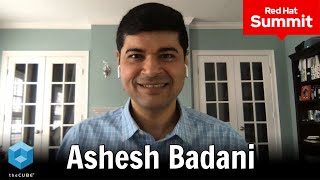
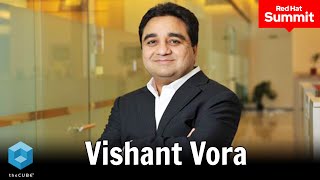
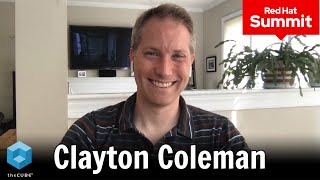
Chris Wright, Senior Vice President and Chief Technology Officer, Red Hat sits down with Stu Miniman for Red Hat Summit 2020.
#RHSummit #RedHat #theCUBE
https://siliconangle.com/2020/04/29/with-data-as-central-actor-red-hat-seeks-to-unite-enterprise-needs-in-common-platform-rhsummit/
With data as central actor, Red Hat aims to unite enterprise needs in common platform
In the theatrical world, a central actor might be the lead role in a film or play. In the enterprise, it’s the role technology can perform in bridging the gap between value creation and value capture.
“We think of it in terms of bringing data to applications,” said Chris Wright (pictured), senior vice president and chief technology officer at Red Hat Inc. “Bringing data sources and data processing and model development all onto a common platform is a really powerful thing that’s happening in the industry today. We’re bringing data to be a central actor.”
Wright spoke with Stu Miniman, host of theCUBE, SiliconANGLE Media’s mobile livestreaming studio, during the Red Hat Summit Virtual Experience this week. They discussed ways that data is transforming business, future technologies that will be affected, developer access to tooling and Red Hat’s role in bringing the open-source ecosystem together. (* Disclosure below.)
Industrywide effects
This theme of data being a central actor is at the core of Red Hat’s strategy. For the firm’s 37,000 Red Hat Enterprise Linux customers, data is about being able to pull meaningful insights out of information for business-critical decision making.
Red Hat wants its open-source platform to be a key participant in that process, and it’s part of a broader picture that Wright describes in a preview of his keynote remarks during the Red Hat Summit.
“What we’re trying to talk through is how data is really fundamentally changing business,” Wright said. “We see that the platforms we’re building are really helpful for our customers to harness the value of data and change their own business. In the context of doing that, we get to look at ways those changes are having industry wide affects.”
One of those industry-wide opportunities will undoubtedly involve the coming deployment of the new 5G wireless standard and its intersection with advances in edge computing.
“Technology evolution, consistently changing and moving forward, gives rise at points in time to really interesting convergence that can be disruptive,” Wright said. “4G, smart devices, and cloud computing gave rise to a set of disruptive businesses. 5G, device proliferation, and edge computing are the ingredients that will give rise to that same next wave of innovation where 10 years from now we can’t imagine businesses that we won’t be able to manage our lives without.”
Intelligent DevOps
Fueling this next generation of disruptive technology will be intelligence-infused software development combined with security and information-technology operations. Some might refer to this as DevOps, but Wright prefers to describe it more completely as AI DevSecOps.
“Developers are just trying to move rapidly,” Wright said. “Developers need access to tooling, to consistency from test environments through to production and data models. Bringing these things together is what’s really important, and it’s a big part of what we’re focused on.”
Much as the central actor in a play can unite disparate elements of a complex story, Red Hat envisions its role as leveraging partnerships and deep roots within the open-source ecosystem to gather the elements critical for running an enterprise business today.
“If you think of a set of components being brought together as curation, then we’re helping curate the content,” Wright explained. “It’s not just Linux. It’s not just Kubernetes. It’s Linux and Kubernetes engineered together with a set of supporting tooling for logging and monitoring and continuous integration pipelines. That kind of flexibility allows us to bring together some best of breed components that we’re finding in open-source communities.”
Here’s the complete video interview, part of SiliconANGLE’s and theCUBE’s coverage of the Red Hat Summit Virtual Experience. (* Disclosure: TheCUBE is a paid media partner for the Red Hat Summit Virtual Experience. Neither Red Hat, the sponsor for theCUBE’s event coverage, nor other sponsors have editorial control over content on theCUBE or SiliconANGLE.)
Forgot Password
Almost there!
We just sent you a verification email. Please verify your account to gain access to
Red Hat Summit 2020 | Digital. If you don’t think you received an email check your
spam folder.
In order to sign in, enter the email address you used to registered for the event. Once completed, you will receive an email with a verification link. Open this link to automatically sign into the site.
Register For Red Hat Summit 2020 | Digital
Please fill out the information below. You will recieve an email with a verification link confirming your registration. Click the link to automatically sign into the site.
You’re almost there!
We just sent you a verification email. Please click the verification button in the email. Once your email address is verified, you will have full access to all event content for Red Hat Summit 2020 | Digital.
I want my badge and interests to be visible to all attendees.
Checking this box will display your presense on the attendees list, view your profile and allow other attendees to contact you via 1-1 chat. Read the Privacy Policy. At any time, you can choose to disable this preference.
Select your Interests!
add
Upload your photo
Uploading..
OR
Connect via Twitter
Connect via Linkedin
EDIT PASSWORD
Share
Forgot Password
Almost there!
We just sent you a verification email. Please verify your account to gain access to
Red Hat Summit 2020 | Digital. If you don’t think you received an email check your
spam folder.
In order to sign in, enter the email address you used to registered for the event. Once completed, you will receive an email with a verification link. Open this link to automatically sign into the site.
Sign in to gain access to Red Hat Summit 2020 | Digital
Please sign in with LinkedIn to continue to Red Hat Summit 2020 | Digital. Signing in with LinkedIn ensures a professional environment.
Are you sure you want to remove access rights for this user?
Details
Manage Access
email address
Community Invitation
Chris Wright, Red Hat | Red Hat Summit 2020
Chris Wright, Senior Vice President and Chief Technology Officer, Red Hat sits down with Stu Miniman for Red Hat Summit 2020.
#RHSummit #RedHat #theCUBE
https://siliconangle.com/2020/04/29/with-data-as-central-actor-red-hat-seeks-to-unite-enterprise-needs-in-common-platform-rhsummit/
With data as central actor, Red Hat aims to unite enterprise needs in common platform
In the theatrical world, a central actor might be the lead role in a film or play. In the enterprise, it’s the role technology can perform in bridging the gap between value creation and value capture.
“We think of it in terms of bringing data to applications,” said Chris Wright (pictured), senior vice president and chief technology officer at Red Hat Inc. “Bringing data sources and data processing and model development all onto a common platform is a really powerful thing that’s happening in the industry today. We’re bringing data to be a central actor.”
Wright spoke with Stu Miniman, host of theCUBE, SiliconANGLE Media’s mobile livestreaming studio, during the Red Hat Summit Virtual Experience this week. They discussed ways that data is transforming business, future technologies that will be affected, developer access to tooling and Red Hat’s role in bringing the open-source ecosystem together. (* Disclosure below.)
Industrywide effects
This theme of data being a central actor is at the core of Red Hat’s strategy. For the firm’s 37,000 Red Hat Enterprise Linux customers, data is about being able to pull meaningful insights out of information for business-critical decision making.
Red Hat wants its open-source platform to be a key participant in that process, and it’s part of a broader picture that Wright describes in a preview of his keynote remarks during the Red Hat Summit.
“What we’re trying to talk through is how data is really fundamentally changing business,” Wright said. “We see that the platforms we’re building are really helpful for our customers to harness the value of data and change their own business. In the context of doing that, we get to look at ways those changes are having industry wide affects.”
One of those industry-wide opportunities will undoubtedly involve the coming deployment of the new 5G wireless standard and its intersection with advances in edge computing.
“Technology evolution, consistently changing and moving forward, gives rise at points in time to really interesting convergence that can be disruptive,” Wright said. “4G, smart devices, and cloud computing gave rise to a set of disruptive businesses. 5G, device proliferation, and edge computing are the ingredients that will give rise to that same next wave of innovation where 10 years from now we can’t imagine businesses that we won’t be able to manage our lives without.”
Intelligent DevOps
Fueling this next generation of disruptive technology will be intelligence-infused software development combined with security and information-technology operations. Some might refer to this as DevOps, but Wright prefers to describe it more completely as AI DevSecOps.
“Developers are just trying to move rapidly,” Wright said. “Developers need access to tooling, to consistency from test environments through to production and data models. Bringing these things together is what’s really important, and it’s a big part of what we’re focused on.”
Much as the central actor in a play can unite disparate elements of a complex story, Red Hat envisions its role as leveraging partnerships and deep roots within the open-source ecosystem to gather the elements critical for running an enterprise business today.
“If you think of a set of components being brought together as curation, then we’re helping curate the content,” Wright explained. “It’s not just Linux. It’s not just Kubernetes. It’s Linux and Kubernetes engineered together with a set of supporting tooling for logging and monitoring and continuous integration pipelines. That kind of flexibility allows us to bring together some best of breed components that we’re finding in open-source communities.”
Here’s the complete video interview, part of SiliconANGLE’s and theCUBE’s coverage of the Red Hat Summit Virtual Experience. (* Disclosure: TheCUBE is a paid media partner for the Red Hat Summit Virtual Experience. Neither Red Hat, the sponsor for theCUBE’s event coverage, nor other sponsors have editorial control over content on theCUBE or SiliconANGLE.)