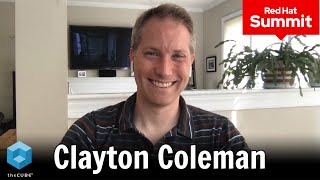
Rich Sharples, Senior Director, Product Management, Red Hat sits down with Stu Miniman for Red Hat Summit 2020.
#RHSummit #RedHat #theCUBE
https://siliconangle.com/2020/04/29/quarkus-makes-java-compatible-with-new-cloud-native-app-development-rhsummit-rhsummit/
Quarkus makes Java compatible with new cloud-native app development
No doubt, Java is one of the most popular programming languages used to create web applications and platforms. However, it is not necessarily the best fit for the new cloud-native development, with applications running in containers or in a type of serverless environment.
To solve this problem, the open-source project Quarkus offers a new Kubernetes-native framework crafted from best-of-breed Java libraries and standards. The goal is to make Java a leading platform in Kubernetes and serverless environments while offering developers a unified programming model to address a wider range of distributed application architectures.
“We are trying to provide the best of both worlds,” said Rich Sharples (pictured), senior director of product management at Red Hat Inc. “Stick with the language you already know and have lots of experience with, and still be able to get the benefits of running in our containerized environment.”
Sharples spoke with Stu Miniman (@stu), host of theCUBE, SiliconANGLE Media’s mobile livestreaming studio, during the Red Hat Summit Virtual Experience. They discussed how Quarkus helps bring Java into the future and why it matters for both developers and organizations. (* Disclosure below.)
Improving developer productivity and performance
Quarkus aims to make life easier for developers by taking some of their work away and letting them focused on their applications and microservices, according to Sharples. “And, hopefully, deliver some real significant improvements, both in development productivity and runtime resource utilization, as well to really lower costs,” he said.
Quarkus is currently focusing on RHEL x86, which is the dominant platform in the cloud, according to Sharples. As other architectures become important, it will certainly look at them as well.
“The reason why the underlying machine architecture is important is because one of the options you have with Quarkus is actually the ability to compile everything down to a binary executable,” Sharples explained. “That may give you some additional footprint reduction and performance enhancements.”
Quarkus is getting close to production, and one of the early stages of its development was the use of some Red Hat’s own products, according to Sharples.
While Quarkus is an open-source project, it has so far been an effort mainly by Red Hat with the support of IBM. “But we are now in a point where we have a Germany available product coming up and we’re ready to really expand the ecosystem,” Sharples concluded.
Watch the complete video interview below, and be sure to check out more of SiliconANGLE’s and theCUBE’s coverage of the Red Hat Summit Virtual Experience. (* Disclosure: TheCUBE is a paid media partner for the Red Hat Summit Virtual Experience. Neither Red Hat Inc., the sponsor for theCUBE’s event coverage, nor other sponsors have editorial control over content on theCUBE or SiliconANGLE.)
Forgot Password
Almost there!
We just sent you a verification email. Please verify your account to gain access to
Red Hat Summit 2020 | Digital. If you don’t think you received an email check your
spam folder.
In order to sign in, enter the email address you used to registered for the event. Once completed, you will receive an email with a verification link. Open this link to automatically sign into the site.
Register For Red Hat Summit 2020 | Digital
Please fill out the information below. You will recieve an email with a verification link confirming your registration. Click the link to automatically sign into the site.
You’re almost there!
We just sent you a verification email. Please click the verification button in the email. Once your email address is verified, you will have full access to all event content for Red Hat Summit 2020 | Digital.
I want my badge and interests to be visible to all attendees.
Checking this box will display your presense on the attendees list, view your profile and allow other attendees to contact you via 1-1 chat. Read the Privacy Policy. At any time, you can choose to disable this preference.
Select your Interests!
add
Upload your photo
Uploading..
OR
Connect via Twitter
Connect via Linkedin
EDIT PASSWORD
Share
Forgot Password
Almost there!
We just sent you a verification email. Please verify your account to gain access to
Red Hat Summit 2020 | Digital. If you don’t think you received an email check your
spam folder.
In order to sign in, enter the email address you used to registered for the event. Once completed, you will receive an email with a verification link. Open this link to automatically sign into the site.
Sign in to gain access to Red Hat Summit 2020 | Digital
Please sign in with LinkedIn to continue to Red Hat Summit 2020 | Digital. Signing in with LinkedIn ensures a professional environment.
Are you sure you want to remove access rights for this user?
Details
Manage Access
email address
Community Invitation
Rich Sharples, Red Hat | Red Hat Summit 2020
Rich Sharples, Senior Director, Product Management, Red Hat sits down with Stu Miniman for Red Hat Summit 2020.
#RHSummit #RedHat #theCUBE
https://siliconangle.com/2020/04/29/quarkus-makes-java-compatible-with-new-cloud-native-app-development-rhsummit-rhsummit/
Quarkus makes Java compatible with new cloud-native app development
No doubt, Java is one of the most popular programming languages used to create web applications and platforms. However, it is not necessarily the best fit for the new cloud-native development, with applications running in containers or in a type of serverless environment.
To solve this problem, the open-source project Quarkus offers a new Kubernetes-native framework crafted from best-of-breed Java libraries and standards. The goal is to make Java a leading platform in Kubernetes and serverless environments while offering developers a unified programming model to address a wider range of distributed application architectures.
“We are trying to provide the best of both worlds,” said Rich Sharples (pictured), senior director of product management at Red Hat Inc. “Stick with the language you already know and have lots of experience with, and still be able to get the benefits of running in our containerized environment.”
Sharples spoke with Stu Miniman (@stu), host of theCUBE, SiliconANGLE Media’s mobile livestreaming studio, during the Red Hat Summit Virtual Experience. They discussed how Quarkus helps bring Java into the future and why it matters for both developers and organizations. (* Disclosure below.)
Improving developer productivity and performance
Quarkus aims to make life easier for developers by taking some of their work away and letting them focused on their applications and microservices, according to Sharples. “And, hopefully, deliver some real significant improvements, both in development productivity and runtime resource utilization, as well to really lower costs,” he said.
Quarkus is currently focusing on RHEL x86, which is the dominant platform in the cloud, according to Sharples. As other architectures become important, it will certainly look at them as well.
“The reason why the underlying machine architecture is important is because one of the options you have with Quarkus is actually the ability to compile everything down to a binary executable,” Sharples explained. “That may give you some additional footprint reduction and performance enhancements.”
Quarkus is getting close to production, and one of the early stages of its development was the use of some Red Hat’s own products, according to Sharples.
While Quarkus is an open-source project, it has so far been an effort mainly by Red Hat with the support of IBM. “But we are now in a point where we have a Germany available product coming up and we’re ready to really expand the ecosystem,” Sharples concluded.
Watch the complete video interview below, and be sure to check out more of SiliconANGLE’s and theCUBE’s coverage of the Red Hat Summit Virtual Experience. (* Disclosure: TheCUBE is a paid media partner for the Red Hat Summit Virtual Experience. Neither Red Hat Inc., the sponsor for theCUBE’s event coverage, nor other sponsors have editorial control over content on theCUBE or SiliconANGLE.)