Malcolm Gladwell on the evolution of entrepreneurs, from wacky to inspirational |
by Gabriel Pesek | Oct 25, 2016
With modern technology accomplishing more than a few of the things that were believed to be the province of science fiction just years ago, drawing from opinions and analysis from forward-thinking journalists can serve as an informative glimpse into where the world will be heading in the near future.
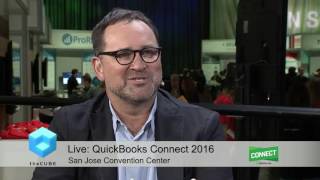
At this year’s QuickBooks Connect conference, Malcolm Gladwell (@Gladwell), best-selling author, journalist and global thinker, met with John Walls (@JohnWalls21) and Jeff Frick (@JeffFrick), co-hosts of theCUBE*, from the SiliconANGLE Media team, to discuss the drivers of business, the fun of decision-making and more.
Changing perspectives
With the event’s focus on entrepreneurs, Gladwell assessed their role in businesses and perceptions of entrepreneurship by society at large.
“Entrepreneurship has gone from something that people thought of as the realm of wackos and weirdos to something that kids aspire to,” he stated, feeling that this was a promising forecast for future innovation.
And in his estimation, the people who faced more challenges than average were more likely to become these entrepreneurs. “There’s a kind of learning called compensation learning, where you are learning out of weakness, not strength; where you’re learning from your failures. And that’s a lot harder to do. … But if you can pull it off, you’ll end up in a much stronger position,” Gladwell said.
Gladwell gave the example of several dyslexic entrepreneurs he’d met who’d told him they felt they did not succeed despite their disability; they succeeded because of it. In his view, “Lots of traits that we used to think of as just problematic have unexpected benefits. … This has been a lovely development in human understanding.”
No robot control
As the conversation moved on to the presence of automation in work and play, Gladwell voiced his doubt of the controlled future. “I think it’s important not to overstate how much of our lives we’ll be willing to let machines take over,” he said. Then he cited the continued popularity of physical books in the face of e-books as an example of how “the interactions and the activities that make up our lives are not just functional engagements, but opportunities for pleasure. It’s actually quite a pleasant thing to go and make decisions.”
Gladwell then proceeded to the idea of automated cars as a venue in which that kind of enjoyment in human decision-making can be retained even as automation is used. “Now, we have a world where a whole class of people drive their car to work in the morning. … What we’re going to move to is a world where people give up whatever kind of pleasure they took from driving a car for some other pleasure,” he said, citing the alternatives of reading, talking on the phone or even simply taking a nap.
What’s more important than computers winning chess tournaments or cars being able to outperform human athletes, Gladwell said, are the implications for deeper human interactions when the piles of simplistic busywork are eliminated. “We’re going to have much longer, deeper, more meaningful conversations with our doctors 15 years from now, when the computer has taken all the easy stuff off the table,” he predicted.
But no matter how convenient automation may be, Gladwell doubted that it would truly take over. “I don’t think we’re going to have a situation where everything’s done by the robot,” he stated.
https://siliconangle.com/2016/10/25/malcom-gladwell-on-the-evolution-of-entreprenuers-from-wacky-to-inspirational-qbconnect/
https://siliconangle.com/2016/10/28/in-a-world-where-robots-are-replacing-humans-one-global-thinker-sees-opportunity-guestoftheweek/
#QBConnect @QuickBooks @SiliconANGLE theCUBE
Forgot Password
Almost there!
We just sent you a verification email. Please verify your account to gain access to
QuickBooks Connect 2016 | San Jose. If you don’t think you received an email check your
spam folder.
In order to sign in, enter the email address you used to registered for the event. Once completed, you will receive an email with a verification link. Open this link to automatically sign into the site.
Register For QuickBooks Connect 2016 | San Jose
Please fill out the information below. You will recieve an email with a verification link confirming your registration. Click the link to automatically sign into the site.
You’re almost there!
We just sent you a verification email. Please click the verification button in the email. Once your email address is verified, you will have full access to all event content for QuickBooks Connect 2016 | San Jose.
I want my badge and interests to be visible to all attendees.
Checking this box will display your presense on the attendees list, view your profile and allow other attendees to contact you via 1-1 chat. Read the Privacy Policy. At any time, you can choose to disable this preference.
Select your Interests!
add
Upload your photo
Uploading..
OR
Connect via Twitter
Connect via Linkedin
EDIT PASSWORD
Share
Forgot Password
Almost there!
We just sent you a verification email. Please verify your account to gain access to
QuickBooks Connect 2016 | San Jose. If you don’t think you received an email check your
spam folder.
In order to sign in, enter the email address you used to registered for the event. Once completed, you will receive an email with a verification link. Open this link to automatically sign into the site.
Sign in to gain access to QuickBooks Connect 2016 | San Jose
Please sign in with LinkedIn to continue to QuickBooks Connect 2016 | San Jose. Signing in with LinkedIn ensures a professional environment.
Malcolm Gladwell on the evolution of entrepreneurs, from wacky to inspirational |
by Gabriel Pesek | Oct 25, 2016
With modern technology accomplishing more than a few of the things that were believed to be the province of science fiction just years ago, drawing from opinions and analysis from forward-thinking journalists can serve as an informative glimpse into where the world will be heading in the near future.
At this year’s QuickBooks Connect conference, Malcolm Gladwell (@Gladwell), best-selling author, journalist and global thinker, met with John Walls (@JohnWalls21) and Jeff Frick (@JeffFrick), co-hosts of theCUBE*, from the SiliconANGLE Media team, to discuss the drivers of business, the fun of decision-making and more.
Changing perspectives
With the event’s focus on entrepreneurs, Gladwell assessed their role in businesses and perceptions of entrepreneurship by society at large.
“Entrepreneurship has gone from something that people thought of as the realm of wackos and weirdos to something that kids aspire to,” he stated, feeling that this was a promising forecast for future innovation.
And in his estimation, the people who faced more challenges than average were more likely to become these entrepreneurs. “There’s a kind of learning called compensation learning, where you are learning out of weakness, not strength; where you’re learning from your failures. And that’s a lot harder to do. … But if you can pull it off, you’ll end up in a much stronger position,” Gladwell said.
Gladwell gave the example of several dyslexic entrepreneurs he’d met who��d told him they felt they did not succeed despite their disability; they succeeded because of it. In his view, “Lots of traits that we used to think of as just problematic have unexpected benefits. … This has been a lovely development in human understanding.”
No robot control
As the conversation moved on to the presence of automation in work and play, Gladwell voiced his doubt of the controlled future. “I think it’s important not to overstate how much of our lives we’ll be willing to let machines take over,” he said. Then he cited the continued popularity of physical books in the face of e-books as an example of how “the interactions and the activities that make up our lives are not just functional engagements, but opportunities for pleasure. It’s actually quite a pleasant thing to go and make decisions.”
Gladwell then proceeded to the idea of automated cars as a venue in which that kind of enjoyment in human decision-making can be retained even as automation is used. “Now, we have a world where a whole class of people drive their car to work in the morning. … What we’re going to move to is a world where people give up whatever kind of pleasure they took from driving a car for some other pleasure,” he said, citing the alternatives of reading, talking on the phone or even simply taking a nap.
What’s more important than computers winning chess tournaments or cars being able to outperform human athletes, Gladwell said, are the implications for deeper human interactions when the piles of simplistic busywork are eliminated. “We’re going to have much longer, deeper, more meaningful conversations with our doctors 15 years from now, when the computer has taken all the easy stuff off the table,” he predicted.
But no matter how convenient automation may be, Gladwell doubted that it would truly take over. “I don’t think we’re going to have a situation where everything’s done by the robot,” he stated.
https://siliconangle.com/2016/10/25/malcom-gladwell-on-the-evolution-of-entreprenuers-from-wacky-to-inspirational-qbconnect/
https://siliconangle.com/2016/10/28/in-a-world-where-robots-are-replacing-humans-one-global-thinker-sees-opportunity-guestoftheweek/
#QBConnect @QuickBooks @SiliconANGLE theCUBE