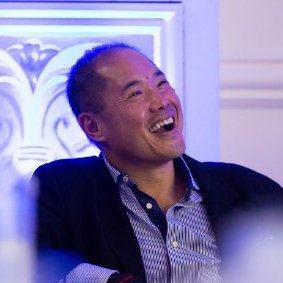
Bill Tai, Venture Capitalist, Educator & Athlete at Bitfury, sits down with John Furrier and Dave Vellante at Polycon 2018 at the Grand Hyatt Baha Mar in Nassau, Bahamas.
#POLYCON18 #theCUBE
https://siliconangle.com/2018/03/09/dollars-value-head-shake-crypto-fears-says-vc-polycon18-guestoftheweek/
A dollar’s value is all in your head, so shake those cryptocurrency fears, says VC
Let’s take stock of the state of technological advancement for a moment. We have self-driving cars, talking refrigerators and artificial intelligence better than doctors at predicting heart attacks. As for money? We have green paper bills with the faces of former presidents. Why hasn’t this changed? Many people feel money should be something physical that they can hold in their hands. But do those cherished bills represent anything more tangible than the cryptocurrency tokens that could replace them?
People’s ideas about a monolithic currency type — and the sanctity of the U.S. dollar, specifically — don’t stand up to scrutiny, according to Bill Tai (pictured), venture capitalist and board director at BitFury Group Ltd. “There have always been multiple currencies all the time. And very rarely have they ever become sort of, like, super dominating currencies,” he said.
If the public understood the history of currency in America and elsewhere, they’d realize that suspicions about cryptocurrency like bitcoin are largely baseless, according to Tai. For instance, in the 1800s, there were more than 200 currency types circulating in the States. The creation of different currencies for certain regions was a lot like today’s initial coin offerings, he pointed out.
Tai spoke with John Furrier (@furrier) and Dave Vellante (@dvellante), co-hosts of theCUBE, SiliconANGLE Media’s mobile livestreaming studio, at the Polycon18 event in the Bahamas. They discussed the winding history of currency, how value is established and why cryptocurrency is not so different from the dollar.
This week, theCUBE spotlights Bill Tai in our Guest of the Week feature.
A bit like a dollar
Tai has a special cameo in the history of what’s become the household cryptocurrency, if you will, bitcoin. “By 2010, I just thought is was really cool, but no one else had seen it. So I took to Twitter to say, ‘Is anyone out there using this P2P digital currency?'” he said. The tweet rippled through the tech community and elevated bitcoin’s profile.
“Back then, I didn’t know it would be maybe a seminal moment — I was just lonely,” Tai stated.
The thing many people don’t grasp about bitcoin and other crypto tokens is how non-exotic they are, Tai explained. In a sense, they are quite similar to a dollar. “They’re kind of the same thing. It’s something that people believe in as the embodiment of value exchange, whatever it is. So if it’s a green piece of paper, if it’s not, if it’s a shell, if it’s pebble … ,” he said.
An understanding of what value underlay currency is what makes it exchangeable. “Some people refer to bitcoin as digital gold,” Tai said. At one point, the value of the dollar was underpinned by the gold standard. It has since become referenced as petroleum, “because the U.S. forced everybody in the Middle East to accept dollars as payment,” he said.
But no one’s basic perception of a dollar ever changed. “You perceive a limited supply, and you perceive a storage of value. So that is where I think bitcoin sits,” Tai stated.
People — at least those in the 18- to 34-year-old demographic — are getting it. Thirty percent of Millennials would rather own $1,000 worth of bitcoin than $1,000 worth of government bonds (43 percent of male Millennials vs. 21 percent of female Millennials), according to a survey from venture capital firm Blockchain Capital LLC.
Crypto gets security checked
Bitcoin may the best known cryptocurrency, but this is changing as other types — such as Ethereum and Ripple — gain ground. Secured cryptocurrency tokens, for instance, are reeling in risk-averse investors.
There is a “tsunami of real-world financial aspects migrating to the blockchain,” Trevor Koverko, chief executive officer of Polymath Inc., recently told theCUBE. Securities tokens — unlike the much more common utilities tokens — are helping to legitimize cryptocurrency, he explained.
“If you look at the exciting sexiness of having these liquid tokens that kind of feel like stocks but also utilities in the sense that you can use them to do certain things with, that’s a big component of it,” Koverko said.
If anything can thwart crypto’s tumbling ahead, it will likely be government regulatory intervention. The Securities and Exchange Commission, for instance, is expressing concern over fraud in cryptocurrency exchanges and ICOs.
...
Here’s the complete video interview, and there’s much more SiliconANGLE and theCUBE coverage of Polycon18.
Forgot Password
Almost there!
We just sent you a verification email. Please verify your account to gain access to
Polycon 2018 | Nassau, Bahamas. If you don’t think you received an email check your
spam folder.
In order to sign in, enter the email address you used to registered for the event. Once completed, you will receive an email with a verification link. Open this link to automatically sign into the site.
Register For Polycon 2018 | Nassau, Bahamas
Please fill out the information below. You will recieve an email with a verification link confirming your registration. Click the link to automatically sign into the site.
You’re almost there!
We just sent you a verification email. Please click the verification button in the email. Once your email address is verified, you will have full access to all event content for Polycon 2018 | Nassau, Bahamas.
I want my badge and interests to be visible to all attendees.
Checking this box will display your presense on the attendees list, view your profile and allow other attendees to contact you via 1-1 chat. Read the Privacy Policy. At any time, you can choose to disable this preference.
Select your Interests!
add
Upload your photo
Uploading..
OR
Connect via Twitter
Connect via Linkedin
EDIT PASSWORD
Share
Forgot Password
Almost there!
We just sent you a verification email. Please verify your account to gain access to
Polycon 2018 | Nassau, Bahamas. If you don’t think you received an email check your
spam folder.
In order to sign in, enter the email address you used to registered for the event. Once completed, you will receive an email with a verification link. Open this link to automatically sign into the site.
Sign in to gain access to Polycon 2018 | Nassau, Bahamas
Please sign in with LinkedIn to continue to Polycon 2018 | Nassau, Bahamas. Signing in with LinkedIn ensures a professional environment.
Are you sure you want to remove access rights for this user?
Details
Manage Access
email address
Community Invitation
Bill Tai, Bitfury | Polycon 2018
Bill Tai, Venture Capitalist, Educator & Athlete at Bitfury, sits down with John Furrier and Dave Vellante at Polycon 2018 at the Grand Hyatt Baha Mar in Nassau, Bahamas.
#POLYCON18 #theCUBE
https://siliconangle.com/2018/03/09/dollars-value-head-shake-crypto-fears-says-vc-polycon18-guestoftheweek/
A dollar’s value is all in your head, so shake those cryptocurrency fears, says VC
Let’s take stock of the state of technological advancement for a moment. We have self-driving cars, talking refrigerators and artificial intelligence better than doctors at predicting heart attacks. As for money? We have green paper bills with the faces of former presidents. Why hasn’t this changed? Many people feel money should be something physical that they can hold in their hands. But do those cherished bills represent anything more tangible than the cryptocurrency tokens that could replace them?
People’s ideas about a monolithic currency type — and the sanctity of the U.S. dollar, specifically — don’t stand up to scrutiny, according to Bill Tai (pictured), venture capitalist and board director at BitFury Group Ltd. “There have always been multiple currencies all the time. And very rarely have they ever become sort of, like, super dominating currencies,” he said.
If the public understood the history of currency in America and elsewhere, they’d realize that suspicions about cryptocurrency like bitcoin are largely baseless, according to Tai. For instance, in the 1800s, there were more than 200 currency types circulating in the States. The creation of different currencies for certain regions was a lot like today’s initial coin offerings, he pointed out.
Tai spoke with John Furrier (@furrier) and Dave Vellante (@dvellante), co-hosts of theCUBE, SiliconANGLE Media’s mobile livestreaming studio, at the Polycon18 event in the Bahamas. They discussed the winding history of currency, how value is established and why cryptocurrency is not so different from the dollar.
This week, theCUBE spotlights Bill Tai in our Guest of the Week feature.
A bit like a dollar
Tai has a special cameo in the history of what’s become the household cryptocurrency, if you will, bitcoin. “By 2010, I just thought is was really cool, but no one else had seen it. So I took to Twitter to say, ‘Is anyone out there using this P2P digital currency?'” he said. The tweet rippled through the tech community and elevated bitcoin’s profile.
“Back then, I didn’t know it would be maybe a seminal moment — I was just lonely,” Tai stated.
The thing many people don’t grasp about bitcoin and other crypto tokens is how non-exotic they are, Tai explained. In a sense, they are quite similar to a dollar. “They’re kind of the same thing. It’s something that people believe in as the embodiment of value exchange, whatever it is. So if it’s a green piece of paper, if it’s not, if it’s a shell, if it’s pebble … ,” he said.
An understanding of what value underlay currency is what makes it exchangeable. “Some people refer to bitcoin as digital gold,” Tai said. At one point, the value of the dollar was underpinned by the gold standard. It has since become referenced as petroleum, “because the U.S. forced everybody in the Middle East to accept dollars as payment,” he said.
But no one’s basic perception of a dollar ever changed. “You perceive a limited supply, and you perceive a storage of value. So that is where I think bitcoin sits,” Tai stated.
People — at least those in the 18- to 34-year-old demographic — are getting it. Thirty percent of Millennials would rather own $1,000 worth of bitcoin than $1,000 worth of government bonds (43 percent of male Millennials vs. 21 percent of female Millennials), according to a survey from venture capital firm Blockchain Capital LLC.
Crypto gets security checked
Bitcoin may the best known cryptocurrency, but this is changing as other types — such as Ethereum and Ripple — gain ground. Secured cryptocurrency tokens, for instance, are reeling in risk-averse investors.
There is a “tsunami of real-world financial aspects migrating to the blockchain,” Trevor Koverko, chief executive officer of Polymath Inc., recently told theCUBE. Securities tokens — unlike the much more common utilities tokens — are helping to legitimize cryptocurrency, he explained.
“If you look at the exciting sexiness of having these liquid tokens that kind of feel like stocks but also utilities in the sense that you can use them to do certain things with, that’s a big component of it,” Koverko said.
If anything can thwart crypto’s tumbling ahead, it will likely be government regulatory intervention. The Securities and Exchange Commission, for instance, is expressing concern over fraud in cryptocurrency exchanges and ICOs.
...
Here’s the complete video interview, and there’s much more SiliconANGLE and theCUBE coverage of Polycon18.