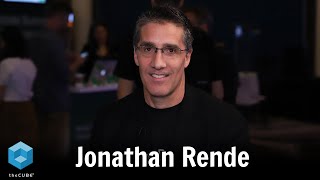
Alex Solomon, CTO & Co Founder, PagerDuty sat down with Jeff Frick at PagerDuty Summit 2019 in San Francisco
https://siliconangle.com/2019/10/01/goodbye-call-bridge-how-pagerduty-used-intelligent-tools-and-partnerships-to-transform-it-ops-pdsummit19-guestoftheweek/
Goodbye call bridge: How PagerDuty used intelligent tools and partnerships to transform IT ops
As is often the case in the technology world, the catalyst for forming PagerDuty Inc. originated from the experience of one engineer working many years ago at a wholly different company. In this case, that company was Amazon.com.
Alex Solomon (pictured) started his career as a software engineer for Amazon in 2006. At the time, Amazon was transitioning from a monolithic code base to a microservices architecture that also necessitated a major shift in how the company approached engineering support.
Large information technology departments working on software and services were out; smaller teams were in. That meant that Amazon software engineers like Solomon were now empowered to write, test and deploy their code. It also meant they were responsible if their code blew up, so they carried pagers for such emergencies, a part of the Amazon culture that became known as having “pager duty.”
The system worked well for Amazon, but what about other companies that were increasingly confronted with a shifting landscape toward DevOps and the need for small, agile teams of engineers to make information technology work? That was the inspiration for Solomon and his two co-founders to launch PagerDuty in 2009, part of what proved to be a successful quest to reshape incident response for the IT world.
“The old way of sending the alert to everyone and having 100 people on a call bridge, that just doesn’t work anymore,” said Solomon, PagerDuty’s co-founder and chief technology officer. “There’s the issue of not having the right ownership. We have to be a lot more targeted to understand who owned what and which systems were being impacted.”
Solomon spoke with Jeff Frick, host of theCUBE, SiliconANGLE Media’s mobile livestreaming studio, during the PagerDuty Summit in San Francisco. They discussed the company’s recent release of new products and services, the important role of integration in PagerDuty’s business strategy, stress created by unplanned work in an IT environment and the journey that led to Solomon’s firm becoming publicly held (see the full interview with transcript here). (* Disclosure below.)
This week, theCUBE features Alex Solomon as its Guest of the Week.
Intelligent tools analyze impact
To help its clients gain a more complete picture of system problems, PagerDuty has turned to machine learning. In September, the company announced a new service for its Event Intelligence product called Intelligent Triage. The new enhancement uses historical data matched against a current issue to smartly analyze what’s happening and which company teams or networks could be affected.
“If you’re debugging a problem and you have an incident that you’re looking at, the question you’re going to ask is: ‘Is it just my service, or is there a bigger widespread problem happening at the same time?’” Solomon said. “We’ll show you that very quickly. We’ll show you if there are other teams impacted by the same issue, and we leverage machine learning to draw those relationships between ongoing incidents.”
The company also rolled out a new solution to empower customer service agents in faster issue resolution and ways for teams to proactively share information. PagerDuty for Customer Service is driven by new partnerships with Zendesk Inc. and Salesforce Service Cloud.
Value of integration
The new customer service product highlights a key hallmark of PagerDuty’s core business strategy: The company simply wants to work with everyone.
“From the early days, we called PagerDuty the ‘Switzerland’ of monitoring, because we’re friends of everyone, we’re partners of everyone, and we sit on top,” Solomon said. “We’re really strong in terms of integrating with monitoring tools.”
In addition to recent partnerships with Salesforce and Zendesk, PagerDuty has built a suite of integrations around ticketing systems, such as ServiceNow, Jira and BMC Remedy, according to Solomon. The company’s integrations page lists over 300 partners, including Amazon Web Services Inc., Cisco Systems Inc, Microsoft Corp. and VMware Inc.
In Solomon’s view of the competitive tech world, various companies offer specific strengths that can benefit IT customers, including those who use PagerDuty, so it’s better to have them inside the fold than out.
.........................
(* Disclosure: TheCUBE is a paid media partner for the PagerDuty Summit. Neither PagerDuty Inc., the sponsor for theCUBE’s event coverage, nor other sponsors have editorial control over content on theCUBE or SiliconANGLE.)
Forgot Password
Almost there!
We just sent you a verification email. Please verify your account to gain access to
PagerDuty Summit 2019 | San Francisco. If you don’t think you received an email check your
spam folder.
In order to sign in, enter the email address you used to registered for the event. Once completed, you will receive an email with a verification link. Open this link to automatically sign into the site.
Register For PagerDuty Summit 2019 | San Francisco
Please fill out the information below. You will recieve an email with a verification link confirming your registration. Click the link to automatically sign into the site.
You’re almost there!
We just sent you a verification email. Please click the verification button in the email. Once your email address is verified, you will have full access to all event content for PagerDuty Summit 2019 | San Francisco.
I want my badge and interests to be visible to all attendees.
Checking this box will display your presense on the attendees list, view your profile and allow other attendees to contact you via 1-1 chat. Read the Privacy Policy. At any time, you can choose to disable this preference.
Select your Interests!
add
Upload your photo
Uploading..
OR
Connect via Twitter
Connect via Linkedin
EDIT PASSWORD
Share
Forgot Password
Almost there!
We just sent you a verification email. Please verify your account to gain access to
PagerDuty Summit 2019 | San Francisco. If you don’t think you received an email check your
spam folder.
In order to sign in, enter the email address you used to registered for the event. Once completed, you will receive an email with a verification link. Open this link to automatically sign into the site.
Sign in to gain access to PagerDuty Summit 2019 | San Francisco
Please sign in with LinkedIn to continue to PagerDuty Summit 2019 | San Francisco. Signing in with LinkedIn ensures a professional environment.
Are you sure you want to remove access rights for this user?
Details
Manage Access
email address
Community Invitation
Alex Solomon, PagerDuty | PagerDuty Summit 2019
Alex Solomon, CTO & Co Founder, PagerDuty sat down with Jeff Frick at PagerDuty Summit 2019 in San Francisco
https://siliconangle.com/2019/10/01/goodbye-call-bridge-how-pagerduty-used-intelligent-tools-and-partnerships-to-transform-it-ops-pdsummit19-guestoftheweek/
Goodbye call bridge: How PagerDuty used intelligent tools and partnerships to transform IT ops
As is often the case in the technology world, the catalyst for forming PagerDuty Inc. originated from the experience of one engineer working many years ago at a wholly different company. In this case, that company was Amazon.com.
Alex Solomon (pictured) started his career as a software engineer for Amazon in 2006. At the time, Amazon was transitioning from a monolithic code base to a microservices architecture that also necessitated a major shift in how the company approached engineering support.
Large information technology departments working on software and services were out; smaller teams were in. That meant that Amazon software engineers like Solomon were now empowered to write, test and deploy their code. It also meant they were responsible if their code blew up, so they carried pagers for such emergencies, a part of the Amazon culture that became known as having “pager duty.”
The system worked well for Amazon, but what about other companies that were increasingly confronted with a shifting landscape toward DevOps and the need for small, agile teams of engineers to make information technology work? That was the inspiration for Solomon and his two co-founders to launch PagerDuty in 2009, part of what proved to be a successful quest to reshape incident response for the IT world.
“The old way of sending the alert to everyone and having 100 people on a call bridge, that just doesn’t work anymore,” said Solomon, PagerDuty’s co-founder and chief technology officer. “There’s the issue of not having the right ownership. We have to be a lot more targeted to understand who owned what and which systems were being impacted.”
Solomon spoke with Jeff Frick, host of theCUBE, SiliconANGLE Media’s mobile livestreaming studio, during the PagerDuty Summit in San Francisco. They discussed the company’s recent release of new products and services, the important role of integration in PagerDuty’s business strategy, stress created by unplanned work in an IT environment and the journey that led to Solomon’s firm becoming publicly held (see the full interview with transcript here). (* Disclosure below.)
This week, theCUBE features Alex Solomon as its Guest of the Week.
Intelligent tools analyze impact
To help its clients gain a more complete picture of system problems, PagerDuty has turned to machine learning. In September, the company announced a new service for its Event Intelligence product called Intelligent Triage. The new enhancement uses historical data matched against a current issue to smartly analyze what’s happening and which company teams or networks could be affected.
“If you’re debugging a problem and you have an incident that you’re looking at, the question you’re going to ask is: ‘Is it just my service, or is there a bigger widespread problem happening at the same time?’” Solomon said. “We’ll show you that very quickly. We’ll show you if there are other teams impacted by the same issue, and we leverage machine learning to draw those relationships between ongoing incidents.”
The company also rolled out a new solution to empower customer service agents in faster issue resolution and ways for teams to proactively share information. PagerDuty for Customer Service is driven by new partnerships with Zendesk Inc. and Salesforce Service Cloud.
Value of integration
The new customer service product highlights a key hallmark of PagerDuty’s core business strategy: The company simply wants to work with everyone.
“From the early days, we called PagerDuty the ‘Switzerland’ of monitoring, because we’re friends of everyone, we’re partners of everyone, and we sit on top,” Solomon said. “We’re really strong in terms of integrating with monitoring tools.”
In addition to recent partnerships with Salesforce and Zendesk, PagerDuty has built a suite of integrations around ticketing systems, such as ServiceNow, Jira and BMC Remedy, according to Solomon. The company’s integrations page lists over 300 partners, including Amazon Web Services Inc., Cisco Systems Inc, Microsoft Corp. and VMware Inc.
In Solomon’s view of the competitive tech world, various companies offer specific strengths that can benefit IT customers, including those who use PagerDuty, so it’s better to have them inside the fold than out.
.........................
(* Disclosure: TheCUBE is a paid media partner for the PagerDuty Summit. Neither PagerDuty Inc., the sponsor for theCUBE’s event coverage, nor other sponsors have editorial control over content on theCUBE or SiliconANGLE.)