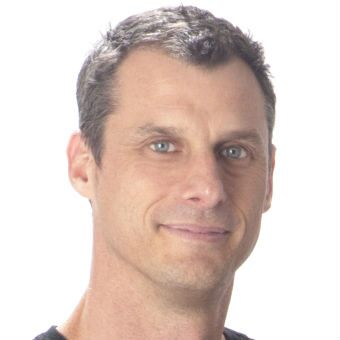
Stephen Lundin, Akamai Technologies, at O'Reilly Velocity Conference 2013, with John Furrier and Dave Vellante
Stephen Ludin, Chief Architect at Akamai Technologies, discussed the company's content delivery challenges in the age of mobile, Big Data, and the Internet of Things, as well as the company's future plans with theCUBE co-hosts Dave Vellante and John Furrier, live at the O'Reilly Velocity Conference in Santa Clara.
Ludin said that Akamai has to deal with two very different aspects of content delivery: the performance aspect of dealing with media, video, large files in general, and web delivery and small object delivery. "My goal has been on working on figuring out how to get the bar to go faster and farther when it comes to small object delivery," he explained.
Ludin didn't share many details on the company's announcement scheduled for June 20th, but said that there will be an announcement involving Mobitest, "something that we're giving back to the community to help with web page test and performance in general."
Complexity in growth, expectations
Asked why web performance was getting more complex, Ludin explained that while bandwidth was getting bigger, so are people's expectations. "In order to produce the experience people expect, the technology needs are so huge. We have to deliver more and deliver faster." The variety of devices accessing web content is also a major issue. Challenges come from addressing those situations. "Technology helps deal with the ever changing Internet."
When it comes to diversity of content delivery and the company's two areas of interest, Ludin said that "in the end, it's a lot of the same software and infrastructure delivering both." For example, for video files you want to figure out how to have constant bandwidth over a period of time. With websites, there are huge burst of traffic that have to be handled instantly. "The edges of the Internet are exploding in size, congestion is getting worse," the growth is not at pace. "Real time experience is critical," everyone expects it these days.
There are two different schools in the content delivery space, Ludin explained. The old school way of thinking is "give us your objects, we'll deliver them for you". The new school focuses on "how to get data from one place to another faster without any caching through acceleration." IT and ops professionals have to deliver fast, rapid, real time content, and also deal with cost configurations. "Despite all dynamic content out there, there is still a huge amount of stuff that's cacheable, that is why you have to have a cacheable solution," not just pure acceleration.
Internet of Things presents new challenges in content delivery
Asked how the Internet of Things and the generated machine data will alter Akamai's challenges, Ludin said that "first off, everyone of these things needs an address, we're out of addresses. Moving to IV6 is critical to making the Internet of Things a reality. We are rushing in this directions without a net to catch us."
There is also a pure connectivity aspect, a lot of the things are connected via mobile, thus "the networks themselves are going to get more robust, solid and reliable."
In Akamai's pipeline
Commenting on Akamai's future challenges, Ludin said that scale was probably the biggest challenge, but actually the challenges they don't know about yet are even tougher to handle. Surprises are what makes it so interesting and fun to be in the field.
Asked to give an example of such a surprised, Ludin said he was "surprised by the explosion of TLS/SSL and people using the encrypted Internet. It was hard to do that and do it well. There's a lot of cost in it." There has been a :huge growth that I personally did not expect." The challenge is in negotiating a TLS connection, "you go back and fourth a lot", he said, explaining the round trips involved. The solution for such connections is to either lower the number of round trips or make them shorter. Akamai adapted by making them shorter, allowing "to zip through them very fast."
Forgot Password
Almost there!
We just sent you a verification email. Please verify your account to gain access to
O'Reilly Velocity Conference 2013 | Santa Clara. If you don’t think you received an email check your
spam folder.
Sign in to O'Reilly Velocity Conference 2013 | Santa Clara.
In order to sign in, enter the email address you used to registered for the event. Once completed, you will receive an email with a verification link. Open this link to automatically sign into the site.
Register For O'Reilly Velocity Conference 2013 | Santa Clara
Please fill out the information below. You will recieve an email with a verification link confirming your registration. Click the link to automatically sign into the site.
You’re almost there!
We just sent you a verification email. Please click the verification button in the email. Once your email address is verified, you will have full access to all event content for O'Reilly Velocity Conference 2013 | Santa Clara.
I want my badge and interests to be visible to all attendees.
Checking this box will display your presense on the attendees list, view your profile and allow other attendees to contact you via 1-1 chat. Read the Privacy Policy. At any time, you can choose to disable this preference.
Select your Interests!
add
Upload your photo
Uploading..
OR
Connect via Twitter
Connect via Linkedin
EDIT PASSWORD
Share
Forgot Password
Almost there!
We just sent you a verification email. Please verify your account to gain access to
O'Reilly Velocity Conference 2013 | Santa Clara. If you don’t think you received an email check your
spam folder.
Sign in to O'Reilly Velocity Conference 2013 | Santa Clara.
In order to sign in, enter the email address you used to registered for the event. Once completed, you will receive an email with a verification link. Open this link to automatically sign into the site.
Sign in to gain access to O'Reilly Velocity Conference 2013 | Santa Clara
Please sign in with LinkedIn to continue to O'Reilly Velocity Conference 2013 | Santa Clara. Signing in with LinkedIn ensures a professional environment.
Are you sure you want to remove access rights for this user?
Details
Manage Access
email address
Community Invitation
Stephen Ludin | O'Reilly Velocity Conference 2013
Stephen Lundin, Akamai Technologies, at O'Reilly Velocity Conference 2013, with John Furrier and Dave Vellante
Stephen Ludin, Chief Architect at Akamai Technologies, discussed the company's content delivery challenges in the age of mobile, Big Data, and the Internet of Things, as well as the company's future plans with theCUBE co-hosts Dave Vellante and John Furrier, live at the O'Reilly Velocity Conference in Santa Clara.
Ludin said that Akamai has to deal with two very different aspects of content delivery: the performance aspect of dealing with media, video, large files in general, and web delivery and small object delivery. "My goal has been on working on figuring out how to get the bar to go faster and farther when it comes to small object delivery," he explained.
Ludin didn't share many details on the company's announcement scheduled for June 20th, but said that there will be an announcement involving Mobitest, "something that we're giving back to the community to help with web page test and performance in general."
Complexity in growth, expectations
Asked why web performance was getting more complex, Ludin explained that while bandwidth was getting bigger, so are people's expectations. "In order to produce the experience people expect, the technology needs are so huge. We have to deliver more and deliver faster." The variety of devices accessing web content is also a major issue. Challenges come from addressing those situations. "Technology helps deal with the ever changing Internet."
When it comes to diversity of content delivery and the company's two areas of interest, Ludin said that "in the end, it's a lot of the same software and infrastructure delivering both." For example, for video files you want to figure out how to have constant bandwidth over a period of time. With websites, there are huge burst of traffic that have to be handled instantly. "The edges of the Internet are exploding in size, congestion is getting worse," the growth is not at pace. "Real time experience is critical," everyone expects it these days.
There are two different schools in the content delivery space, Ludin explained. The old school way of thinking is "give us your objects, we'll deliver them for you". The new school focuses on "how to get data from one place to another faster without any caching through acceleration." IT and ops professionals have to deliver fast, rapid, real time content, and also deal with cost configurations. "Despite all dynamic content out there, there is still a huge amount of stuff that's cacheable, that is why you have to have a cacheable solution," not just pure acceleration.
Internet of Things presents new challenges in content delivery
Asked how the Internet of Things and the generated machine data will alter Akamai's challenges, Ludin said that "first off, everyone of these things needs an address, we're out of addresses. Moving to IV6 is critical to making the Internet of Things a reality. We are rushing in this directions without a net to catch us."
There is also a pure connectivity aspect, a lot of the things are connected via mobile, thus "the networks themselves are going to get more robust, solid and reliable."
In Akamai's pipeline
Commenting on Akamai's future challenges, Ludin said that scale was probably the biggest challenge, but actually the challenges they don't know about yet are even tougher to handle. Surprises are what makes it so interesting and fun to be in the field.
Asked to give an example of such a surprised, Ludin said he was "surprised by the explosion of TLS/SSL and people using the encrypted Internet. It was hard to do that and do it well. There's a lot of cost in it." There has been a :huge growth that I personally did not expect." The challenge is in negotiating a TLS connection, "you go back and fourth a lot", he said, explaining the round trips involved. The solution for such connections is to either lower the number of round trips or make them shorter. Akamai adapted by making them shorter, allowing "to zip through them very fast."