In a blog post earlier this year Greg Borenstein contrasted the enthusiasm for big data at O'Reilly Foo Camp 2011 with the way the very human way that O'Reilly actually operates as a company:
O'Reilly's process relies almost exclusively on human traits that aren't represented in data or reproduced in a model: the trust between two peers that allows them to talk about a crazy idea that one of them is thinking about taking on outside of work, the ability to tell who's highly respected in a field by the tone of voice people use when mentioning a name, the gut instinct of an experienced industry visionary for what will happen next, etc.
Sites like Technorati and Klout attempt to quantify these sorts of relationships and turn them into something that can be processed and analyzed, but human relationships remain difficult to quantify and categorize. Another difficulty here is the "decline effect," which Jonah Lehrer wrote about here and here. Simply stated, there's a tendency for support for scientific claims to decrease over time. Behavioral science tends to be particularly vulnerable. This is likely due in part to publication bias, but also in part to the inability to anticipate and control for all variables that relate to human behavior. And this same inability to anticipate variables makes quantification and modeling of human behavior very difficult.
Conclusion
There is seemingly no area in which we can't benefit from analyzing data: law enforcement, business, politics, economics, sports, even sex... and yet there is a real risk in overestimating our ability to use data to make accurate predictions. Big data is constrained by human limitations. One thing to watch in 2012 is the expectations of everyone from CEOs to politicians to individuals to produce results for big data. Big data can solve big problems, but we must always remember not to put too much trust in our ability to predict the future.
Forgot Password
Almost there!
We just sent you a verification email. Please verify your account to gain access to
O'Reilly Strata Conference + Hadoop World 2012 | San Jose. If you don’t think you received an email check your
spam folder.
Sign in to O'Reilly Strata Conference + Hadoop World 2012 | San Jose.
In order to sign in, enter the email address you used to registered for the event. Once completed, you will receive an email with a verification link. Open this link to automatically sign into the site.
Register For O'Reilly Strata Conference + Hadoop World 2012 | San Jose
Please fill out the information below. You will recieve an email with a verification link confirming your registration. Click the link to automatically sign into the site.
You’re almost there!
We just sent you a verification email. Please click the verification button in the email. Once your email address is verified, you will have full access to all event content for O'Reilly Strata Conference + Hadoop World 2012 | San Jose.
I want my badge and interests to be visible to all attendees.
Checking this box will display your presense on the attendees list, view your profile and allow other attendees to contact you via 1-1 chat. Read the Privacy Policy. At any time, you can choose to disable this preference.
Select your Interests!
add
Upload your photo
Uploading..
OR
Connect via Twitter
Connect via Linkedin
EDIT PASSWORD
Share
Forgot Password
Almost there!
We just sent you a verification email. Please verify your account to gain access to
O'Reilly Strata Conference + Hadoop World 2012 | San Jose. If you don’t think you received an email check your
spam folder.
Sign in to O'Reilly Strata Conference + Hadoop World 2012 | San Jose.
In order to sign in, enter the email address you used to registered for the event. Once completed, you will receive an email with a verification link. Open this link to automatically sign into the site.
Sign in to gain access to O'Reilly Strata Conference + Hadoop World 2012 | San Jose
Please sign in with LinkedIn to continue to O'Reilly Strata Conference + Hadoop World 2012 | San Jose. Signing in with LinkedIn ensures a professional environment.
Are you sure you want to remove access rights for this user?
Details
Manage Access
email address
Community Invitation
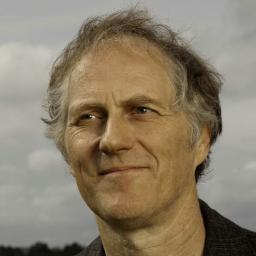
Tim O'Reilly | Strata Data Conference 2012
In a blog post earlier this year Greg Borenstein contrasted the enthusiasm for big data at O'Reilly Foo Camp 2011 with the way the very human way that O'Reilly actually operates as a company:
O'Reilly's process relies almost exclusively on human traits that aren't represented in data or reproduced in a model: the trust between two peers that allows them to talk about a crazy idea that one of them is thinking about taking on outside of work, the ability to tell who's highly respected in a field by the tone of voice people use when mentioning a name, the gut instinct of an experienced industry visionary for what will happen next, etc.
Sites like Technorati and Klout attempt to quantify these sorts of relationships and turn them into something that can be processed and analyzed, but human relationships remain difficult to quantify and categorize. Another difficulty here is the "decline effect," which Jonah Lehrer wrote about here and here. Simply stated, there's a tendency for support for scientific claims to decrease over time. Behavioral science tends to be particularly vulnerable. This is likely due in part to publication bias, but also in part to the inability to anticipate and control for all variables that relate to human behavior. And this same inability to anticipate variables makes quantification and modeling of human behavior very difficult.
Conclusion
There is seemingly no area in which we can't benefit from analyzing data: law enforcement, business, politics, economics, sports, even sex... and yet there is a real risk in overestimating our ability to use data to make accurate predictions. Big data is constrained by human limitations. One thing to watch in 2012 is the expectations of everyone from CEOs to politicians to individuals to produce results for big data. Big data can solve big problems, but we must always remember not to put too much trust in our ability to predict the future.