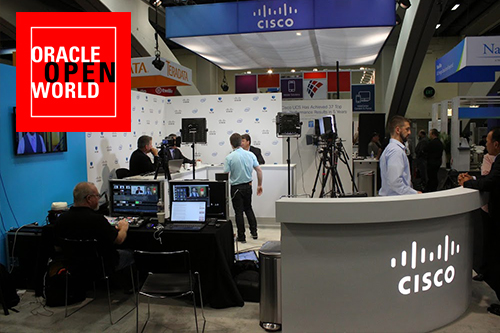
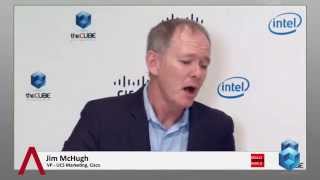
Aaron Newcomb, NetApp, at Oracle OpenWorld 2014 with John Furrier and Jeff Frick
@theCUBE
#*OOW14*
*CiscoUCS*
Looking to help customers move to the cloud at their own comfortable pace is Oracle Corp. and storage partner NetApp, Inc. A business outcome-focused approach has helped NetApp maintain it’s vendor-agnostic policies while encouraging the company to work with Oracle to innovate useful new products. NetApp’s Aaron Newcomb, Manager of Solutions Product Marketing, stopped by theCUBE at Oracle’s Open World 2014 conference to talk with Jeff Frick and John Furrier about the Oracle-NetApp relationship.
With the newly launched FlexPod, which functions specifically for Oracle Database workloads, NetApp is “delivering a million for customers for customers that want to deploy Oracle Database, specifically,” he added, “on top of Oracle Rack.” The FlexPod will be available at the end of October.
Newcomb observed that customers for which the FlexPod is in highest demand are those looking for high performance and low latency when processing online transaction workloads. The sub-second latency, he said, would help prevent customers from abandoning their cart due to wait times. This FlexPod solution, he said, is mainly “around IT and the datacenter, because it is for the specific workload that you’re probably not going to be running in the cloud.”
As Oracle moves towards cloud, so do customers
As Oracle reinvents itself, Newcomb pointed out that many customers are able to undergo a similar transformation. Some businesses have yet to take advantage of the economies of scale that come with migrating the datacenter the cloud offers, sometimes because customers don’t put much stock in cloud security. New products like NetApp’s Nano-private storage product enables apprehensive companies to keep their data in their private datacenter. Then, Newcomb explained, customers “mask that out, and then migrate that seamlessly to a cloud environment,” so they can still take advantage of cloud functionality.
NetApp’s philosophy involves “moving the data to where the resources are,” which, Newcomb pointed out, eliminates the risks of having Amazon.com Inc.’s Amazon Web Services (AWS) connect directly to the customer’s data center.
Why it’s “nice being agnostic”
Newcomb explained that for NetApp, customer choice comes first: it’s why they “work with everybody” to enable customer data. Yesterday, he added, NetApp announced increased support for Oracle and Database via an Oracle-VM plugin for Storage Connect, a management layer that “rides above the hypervisors.”
Making Database Administrators lives easier
As database administrators (DBAs) become more like “air traffic controllers,” Newcomb said that NetApp tries to “simplify all the complexity.” For Oracle, NetApp integrates plugins into the existing network. Their newest plugin is the Oracle Enterprise Manager, which enables DBAs to “look at infrastructure from the database standpoint.”
Forgot Password
Almost there!
We just sent you a verification email. Please verify your account to gain access to
Oracle OpenWorld 2014 - Studio Cisco | San Francisco. If you don’t think you received an email check your
spam folder.
Sign in to Oracle OpenWorld 2014 - Studio Cisco | San Francisco.
In order to sign in, enter the email address you used to registered for the event. Once completed, you will receive an email with a verification link. Open this link to automatically sign into the site.
Register For Oracle OpenWorld 2014 - Studio Cisco | San Francisco
Please fill out the information below. You will recieve an email with a verification link confirming your registration. Click the link to automatically sign into the site.
You’re almost there!
We just sent you a verification email. Please click the verification button in the email. Once your email address is verified, you will have full access to all event content for Oracle OpenWorld 2014 - Studio Cisco | San Francisco.
I want my badge and interests to be visible to all attendees.
Checking this box will display your presense on the attendees list, view your profile and allow other attendees to contact you via 1-1 chat. Read the Privacy Policy. At any time, you can choose to disable this preference.
Select your Interests!
add
Upload your photo
Uploading..
OR
Connect via Twitter
Connect via Linkedin
EDIT PASSWORD
Share
Forgot Password
Almost there!
We just sent you a verification email. Please verify your account to gain access to
Oracle OpenWorld 2014 - Studio Cisco | San Francisco. If you don’t think you received an email check your
spam folder.
Sign in to Oracle OpenWorld 2014 - Studio Cisco | San Francisco.
In order to sign in, enter the email address you used to registered for the event. Once completed, you will receive an email with a verification link. Open this link to automatically sign into the site.
Sign in to gain access to Oracle OpenWorld 2014 - Studio Cisco | San Francisco
Please sign in with LinkedIn to continue to Oracle OpenWorld 2014 - Studio Cisco | San Francisco. Signing in with LinkedIn ensures a professional environment.
Are you sure you want to remove access rights for this user?
Details
Manage Access
email address
Community Invitation
Aaron Newcomb - Oracle OpenWorld 2014 - theCUBE Studio Cisco
Aaron Newcomb, NetApp, at Oracle OpenWorld 2014 with John Furrier and Jeff Frick
@theCUBE
#*OOW14*
*CiscoUCS*
Looking to help customers move to the cloud at their own comfortable pace is Oracle Corp. and storage partner NetApp, Inc. A business outcome-focused approach has helped NetApp maintain it’s vendor-agnostic policies while encouraging the company to work with Oracle to innovate useful new products. NetApp’s Aaron Newcomb, Manager of Solutions Product Marketing, stopped by theCUBE at Oracle’s Open World 2014 conference to talk with Jeff Frick and John Furrier about the Oracle-NetApp relationship.
With the newly launched FlexPod, which functions specifically for Oracle Database workloads, NetApp is “delivering a million for customers for customers that want to deploy Oracle Database, specifically,” he added, “on top of Oracle Rack.” The FlexPod will be available at the end of October.
Newcomb observed that customers for which the FlexPod is in highest demand are those looking for high performance and low latency when processing online transaction workloads. The sub-second latency, he said, would help prevent customers from abandoning their cart due to wait times. This FlexPod solution, he said, is mainly “around IT and the datacenter, because it is for the specific workload that you’re probably not going to be running in the cloud.”
As Oracle moves towards cloud, so do customers
As Oracle reinvents itself, Newcomb pointed out that many customers are able to undergo a similar transformation. Some businesses have yet to take advantage of the economies of scale that come with migrating the datacenter the cloud offers, sometimes because customers don’t put much stock in cloud security. New products like NetApp’s Nano-private storage product enables apprehensive companies to keep their data in their private datacenter. Then, Newcomb explained, customers “mask that out, and then migrate that seamlessly to a cloud environment,” so they can still take advantage of cloud functionality.
NetApp’s philosophy involves “moving the data to where the resources are,” which, Newcomb pointed out, eliminates the risks of having Amazon.com Inc.’s Amazon Web Services (AWS) connect directly to the customer’s data center.
Why it’s “nice being agnostic”
Newcomb explained that for NetApp, customer choice comes first: it’s why they “work with everybody” to enable customer data. Yesterday, he added, NetApp announced increased support for Oracle and Database via an Oracle-VM plugin for Storage Connect, a management layer that “rides above the hypervisors.”
Making Database Administrators lives easier
As database administrators (DBAs) become more like “air traffic controllers,” Newcomb said that NetApp tries to “simplify all the complexity.” For Oracle, NetApp integrates plugins into the existing network. Their newest plugin is the Oracle Enterprise Manager, which enables DBAs to “look at infrastructure from the database standpoint.”