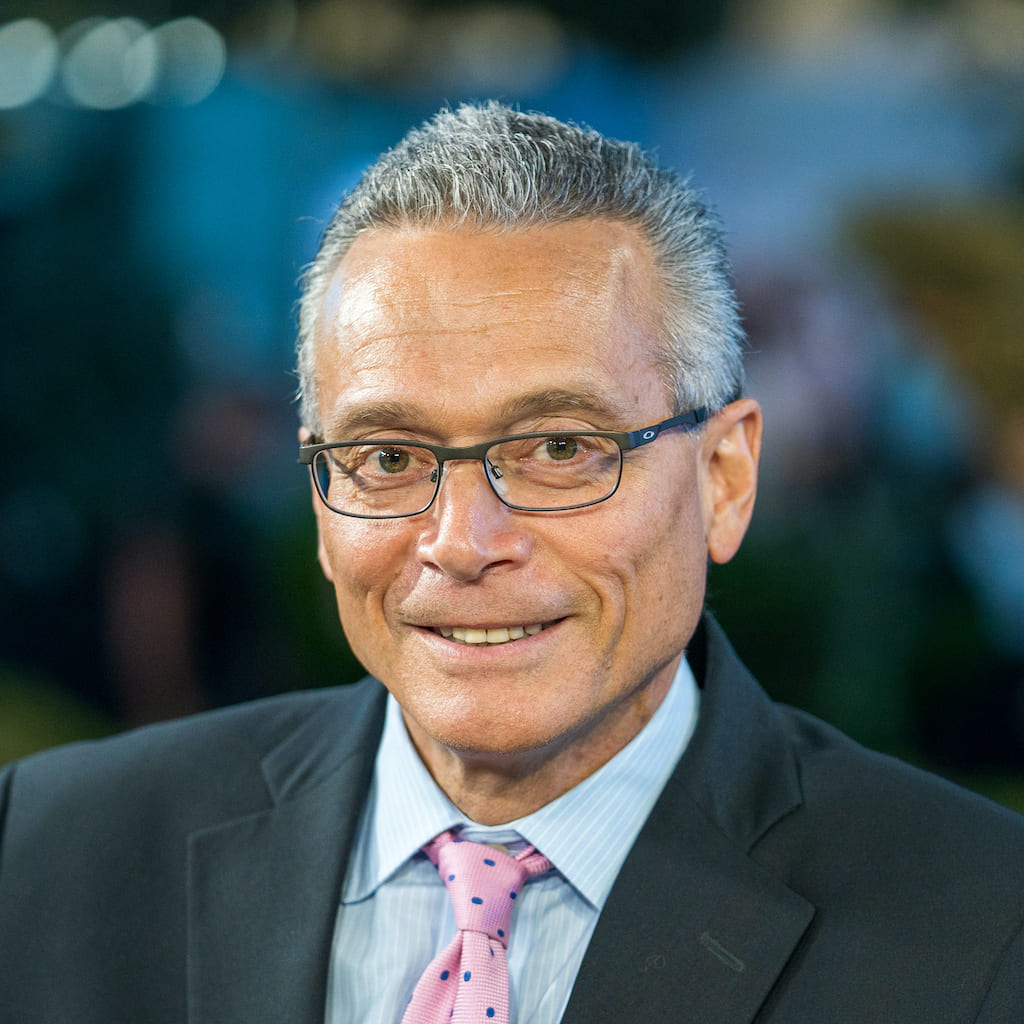
Dave Vellante and Jeff Kelly, theCUBE co-hosts, welcomed Robin Schumacher, VP of Products with DataStax. The interview took place at the famed Moscone Center in San Francisco, for the Oracle OpenWorld 2013 Conference.
DataStax has been around for about three years, "we drive Cassandra from the open source stack standpoint, and we also create, develop and offer commercial products based on Cassandra," said Schumacher.
The discussion between Schumacher and theCUBE co-hosts Dave Vellante and Jeff Kelly revolved, for a while, around Oracle's policy, and the poing time when the company released a white paper stating "Why you should not trust NoSQL for your data" was mentioned, especially that months later they came out with their own version of the NoSQL database.
Replacing a conventional Oracle database
"We see this over and over again with our customers, whether they are big or small. For example, eBay replaced a lot of Oracle with us," Schumacher explained. "They have around 200 TB of data running through data centers of Cassandra data, they see something in the neighborhood of nine billion writes a day and five billion reads a day.
"The reason they are implementing us in so many use cases, whether it's messaging, or showing likes and wants on the page, or customer recommendations, is simply because the relational engine (Oracle, MySQL) is not built to scale out to be able to go across multiple geography [points], to be able to handle multiple data types in a way that the NoSQL model can. It's not so much that it's bad, but it's not suited for these use cases."
Using NoSQL to make money
In one of the sessions of the Conference, a speaker said he viewed Big Data as the next generation of data warehouse. Schumacher begs to differ.
"For us it's line of business applications," he starts. "All the things I've described with eBay, that's not data warehouse; that's their line of business applications, functioning for the websites and everything else to make them money. Our customers are using NoSQL to make money; it is presenting product recommendations, user behavior pattern analysis and exploring ways to reach more customers and make more money," said Schumacher.
Citing Oracle President Mark Hurd's keynote, Schumacher stated that "the average application is 20 years old now, and they are not built for mobile. We're seeing complete app replacements, where apps are completely overhauled. They know that a relational database is not going to cut the mustard and they know that they are going to have to go to a different data management engine to be able to handle the types of things we're seeing: flexible data model, data coming in very, very quickly, lots of different data types, dispersing of data to multiple locations, the ability to read and write in those locations, syncing. The Relational database is lousy at that," explained Robin Schumacher.
On Oracle's approach to Big Data
Kelly asked Schumacher how he viewed Oracle's approach to Big Data. Kelly himself suspects that Oracle would love to see the open source community go away. They made some minor investments in NoSQL databases, but they are making money with traditional databases. Kelly asked if Schumacher sees Oracle investing in any kind of innovative use cases of NoSQL database.
"They are making enhancements in NoSQL databases," purported Schumacher. "Watch their architecture, their market share graphics, and watch the way the arrows go; they go from NoSQL to the exolitics machine. They recognize that a relational database is not geared for quickly ingesting the type of data we see all the time. They also want to move their data into their big data appliances, and that's the endgame. They are beginning to introduce SQL extensions that they'd like to think will obsolete Hadoop."
DataStax prides itself as a commodity hardware type of player, where one doesn't need expensive hardware connectors to make things happen. "In terms of simplicity, that's the beauty of NoSQL and Cassandra. We have a number of our customers who have over 200 nodes of our cluster running, and no dedicated headcount because they don't need to."
Robin Schumacher, DataStax, at Oracle OpenWorld 2013 with Dave Vellante and Jeff Kelly
@thecube
#oow13
Forgot Password
Almost there!
We just sent you a verification email. Please verify your account to gain access to
Oracle OpenWorld 2013 | San Francisco. If you don’t think you received an email check your
spam folder.
In order to sign in, enter the email address you used to registered for the event. Once completed, you will receive an email with a verification link. Open this link to automatically sign into the site.
Register For Oracle OpenWorld 2013 | San Francisco
Please fill out the information below. You will recieve an email with a verification link confirming your registration. Click the link to automatically sign into the site.
You’re almost there!
We just sent you a verification email. Please click the verification button in the email. Once your email address is verified, you will have full access to all event content for Oracle OpenWorld 2013 | San Francisco.
I want my badge and interests to be visible to all attendees.
Checking this box will display your presense on the attendees list, view your profile and allow other attendees to contact you via 1-1 chat. Read the Privacy Policy. At any time, you can choose to disable this preference.
Select your Interests!
add
Upload your photo
Uploading..
OR
Connect via Twitter
Connect via Linkedin
EDIT PASSWORD
Share
Forgot Password
Almost there!
We just sent you a verification email. Please verify your account to gain access to
Oracle OpenWorld 2013 | San Francisco. If you don’t think you received an email check your
spam folder.
In order to sign in, enter the email address you used to registered for the event. Once completed, you will receive an email with a verification link. Open this link to automatically sign into the site.
Sign in to gain access to Oracle OpenWorld 2013 | San Francisco
Please sign in with LinkedIn to continue to Oracle OpenWorld 2013 | San Francisco. Signing in with LinkedIn ensures a professional environment.
Are you sure you want to remove access rights for this user?
Details
Manage Access
email address
Community Invitation
Robin Schumacher | Oracle OpenWorld 2013
Dave Vellante and Jeff Kelly, theCUBE co-hosts, welcomed Robin Schumacher, VP of Products with DataStax. The interview took place at the famed Moscone Center in San Francisco, for the Oracle OpenWorld 2013 Conference.
DataStax has been around for about three years, "we drive Cassandra from the open source stack standpoint, and we also create, develop and offer commercial products based on Cassandra," said Schumacher.
The discussion between Schumacher and theCUBE co-hosts Dave Vellante and Jeff Kelly revolved, for a while, around Oracle's policy, and the poing time when the company released a white paper stating "Why you should not trust NoSQL for your data" was mentioned, especially that months later they came out with their own version of the NoSQL database.
Replacing a conventional Oracle database
"We see this over and over again with our customers, whether they are big or small. For example, eBay replaced a lot of Oracle with us," Schumacher explained. "They have around 200 TB of data running through data centers of Cassandra data, they see something in the neighborhood of nine billion writes a day and five billion reads a day.
"The reason they are implementing us in so many use cases, whether it's messaging, or showing likes and wants on the page, or customer recommendations, is simply because the relational engine (Oracle, MySQL) is not built to scale out to be able to go across multiple geography [points], to be able to handle multiple data types in a way that the NoSQL model can. It's not so much that it's bad, but it's not suited for these use cases."
Using NoSQL to make money
In one of the sessions of the Conference, a speaker said he viewed Big Data as the next generation of data warehouse. Schumacher begs to differ.
"For us it's line of business applications," he starts. "All the things I've described with eBay, that's not data warehouse; that's their line of business applications, functioning for the websites and everything else to make them money. Our customers are using NoSQL to make money; it is presenting product recommendations, user behavior pattern analysis and exploring ways to reach more customers and make more money," said Schumacher.
Citing Oracle President Mark Hurd's keynote, Schumacher stated that "the average application is 20 years old now, and they are not built for mobile. We're seeing complete app replacements, where apps are completely overhauled. They know that a relational database is not going to cut the mustard and they know that they are going to have to go to a different data management engine to be able to handle the types of things we're seeing: flexible data model, data coming in very, very quickly, lots of different data types, dispersing of data to multiple locations, the ability to read and write in those locations, syncing. The Relational database is lousy at that," explained Robin Schumacher.
On Oracle's approach to Big Data
Kelly asked Schumacher how he viewed Oracle's approach to Big Data. Kelly himself suspects that Oracle would love to see the open source community go away. They made some minor investments in NoSQL databases, but they are making money with traditional databases. Kelly asked if Schumacher sees Oracle investing in any kind of innovative use cases of NoSQL database.
"They are making enhancements in NoSQL databases," purported Schumacher. "Watch their architecture, their market share graphics, and watch the way the arrows go; they go from NoSQL to the exolitics machine. They recognize that a relational database is not geared for quickly ingesting the type of data we see all the time. They also want to move their data into their big data appliances, and that's the endgame. They are beginning to introduce SQL extensions that they'd like to think will obsolete Hadoop."
DataStax prides itself as a commodity hardware type of player, where one doesn't need expensive hardware connectors to make things happen. "In terms of simplicity, that's the beauty of NoSQL and Cassandra. We have a number of our customers who have over 200 nodes of our cluster running, and no dedicated headcount because they don't need to."
Robin Schumacher, DataStax, at Oracle OpenWorld 2013 with Dave Vellante and Jeff Kelly
@thecube
#oow13