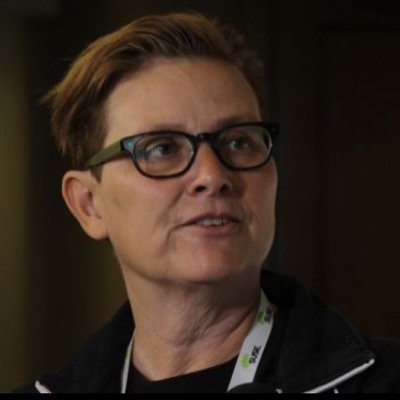
Diane Mueller, RedHat, at OpenStack SV 2014 with John Furrier and Jeff Frick
@theCUBE
#OpenStackSV
he OpenStack Summit in May painted the platform as a work in progress with momentum and investment by vendors led by Red Hat, IBM, Hewlett-Packard and Rackspace. “OpenStack is real,” said John Furrier on theCUBE at the end of the Summit, earlier this month (see embedded video below).
A series of developers interviewed in theCUBE discussed holes that need to be filled in OpenStack’s code, in particular the need for a strong user interface. Their message was that companies seeking to use it today will need to invest considerable programming in the project. In the day three wrap up, Stu Miniman said that at least half of the people he had talked to were developers who “had been at [the OpenStack summit six months ago in] Hong Kong and will be at [the Summit six months from now in] Paris,” implying that the Summit is still a developers’ meeting.
He said he did talk to a few users. Brocade CTO and Chief Scientist David Meyer said in theCUBE that Comcast, the largest U.S. TV cable and last-mile home Internet provider, is configuring all its set-top boxes with OpenStack. So early adopters are realizing business benefit from the platform. Miniman and Furrier characterized the conference as “dev/ops” rather than pure development and Furrier said it is an opportunity for early adopters and potential users to discuss their needs with the developers.
One measure of growing market success will be a shift in the attendees of future Summits to include more users, and in the Summit programs to meet user needs. Red Hat OpenShift Community Manager Diane Mueller discussed the need for user education programs to support OpenStack adoption.
Huge momentum
x
OpenStack Summit 2014 logoOpenStack clearly has strong momentum, however. HP, IBM, Red Hat and Rackspace each had 300-plus mostly technical employees at the conference. Miniman said both Brocade and Cisco also where committing to OpenStack, and Brocade and Red Hat sponsored theCUBE at the conference.
Miniman talked about the large number of projects being built on and around OpenStack, including NOVA, a cloud computing management fabric; SWIFT, the first storage management solution, and Heat, the first OpenStack orchestration tool. Beyond these established pieces, the conference boiled with excitement over new projects, to the point that Miniman said the question is which of them will prosper long term.
Hints of friction
x
Miniman also expressed surprise at the lack of contention at the conference. On the surface, at least, all the players are working together, in part perhaps because they have a common enemy in Amazon, which is dominating the new-development (as opposed to the colocation) segment of the cloud business market.
However, some hints of possible underlying tensions emerged. The Summit came just after HP announced its Heleon Managed Private Cloud built on OpenStack, and some industry members had tweeted concern that HP might be creating a fork. In his interview on theCUBE, HP Cloud SVP and COO Saar Gillai said HP is “not touching” the core OpenStack code, and no forking is happening. Its development is focused on building tools that run on top of the platform.
Rackspace, which had created the initial core of the platform and donated it to the open source community, also has come in for criticism in the last year for trying to contdrol OpenStack too tightly. Possibly as a result, it has been decreasing its presence in the community in recent months. Rackspace CTO John Engates emphasized in theCUBE that the company was not walking away from OpenStack but added “this wouldn’t be a strong community today if we had tried to smother it and hold it for ourselves.”
The third day of the conference opened with a bang in the form of a Wall Street Journal article under the headline “Red Hat Plays Hardball on Openstack Software”. The article accused Red Hat of refusing to provide support in Linux for an OpenStack version from startup Mirantis Inc. The article describes Mirantis as a competitor to Red Hat and quotes one customer as saying that it dropped consideration of the Mirantis product because of Red Hat’s refusal to guarantee that it would run on top of Red Hat Linux.
Red Hat General Manager for Cloud Management Joe Fitzgerald defended the company’s record in supporting competing platforms on theCUBE, saying that, for instance, Red Hat supports Amazon Web Services (AWS), a much larger competitor than Mirantis. He said the company cannot guarantee compatibility with products it has not had time to certify.
Forgot Password
Almost there!
We just sent you a verification email. Please verify your account to gain access to
OpenStack Silicon Valley 2014 | Mountain View. If you don’t think you received an email check your
spam folder.
Sign in to OpenStack Silicon Valley 2014 | Mountain View.
In order to sign in, enter the email address you used to registered for the event. Once completed, you will receive an email with a verification link. Open this link to automatically sign into the site.
Register For OpenStack Silicon Valley 2014 | Mountain View
Please fill out the information below. You will recieve an email with a verification link confirming your registration. Click the link to automatically sign into the site.
You’re almost there!
We just sent you a verification email. Please click the verification button in the email. Once your email address is verified, you will have full access to all event content for OpenStack Silicon Valley 2014 | Mountain View.
I want my badge and interests to be visible to all attendees.
Checking this box will display your presense on the attendees list, view your profile and allow other attendees to contact you via 1-1 chat. Read the Privacy Policy. At any time, you can choose to disable this preference.
Select your Interests!
add
Upload your photo
Uploading..
OR
Connect via Twitter
Connect via Linkedin
EDIT PASSWORD
Share
Forgot Password
Almost there!
We just sent you a verification email. Please verify your account to gain access to
OpenStack Silicon Valley 2014 | Mountain View. If you don’t think you received an email check your
spam folder.
Sign in to OpenStack Silicon Valley 2014 | Mountain View.
In order to sign in, enter the email address you used to registered for the event. Once completed, you will receive an email with a verification link. Open this link to automatically sign into the site.
Sign in to gain access to OpenStack Silicon Valley 2014 | Mountain View
Please sign in with LinkedIn to continue to OpenStack Silicon Valley 2014 | Mountain View. Signing in with LinkedIn ensures a professional environment.
Are you sure you want to remove access rights for this user?
Details
Manage Access
email address
Community Invitation
Diane Mueller | OpenStack Silicon Valley 2014
Diane Mueller, RedHat, at OpenStack SV 2014 with John Furrier and Jeff Frick
@theCUBE
#OpenStackSV
he OpenStack Summit in May painted the platform as a work in progress with momentum and investment by vendors led by Red Hat, IBM, Hewlett-Packard and Rackspace. “OpenStack is real,” said John Furrier on theCUBE at the end of the Summit, earlier this month (see embedded video below).
A series of developers interviewed in theCUBE discussed holes that need to be filled in OpenStack’s code, in particular the need for a strong user interface. Their message was that companies seeking to use it today will need to invest considerable programming in the project. In the day three wrap up, Stu Miniman said that at least half of the people he had talked to were developers who “had been at [the OpenStack summit six months ago in] Hong Kong and will be at [the Summit six months from now in] Paris,” implying that the Summit is still a developers’ meeting.
He said he did talk to a few users. Brocade CTO and Chief Scientist David Meyer said in theCUBE that Comcast, the largest U.S. TV cable and last-mile home Internet provider, is configuring all its set-top boxes with OpenStack. So early adopters are realizing business benefit from the platform. Miniman and Furrier characterized the conference as “dev/ops” rather than pure development and Furrier said it is an opportunity for early adopters and potential users to discuss their needs with the developers.
One measure of growing market success will be a shift in the attendees of future Summits to include more users, and in the Summit programs to meet user needs. Red Hat OpenShift Community Manager Diane Mueller discussed the need for user education programs to support OpenStack adoption.
Huge momentum
x
OpenStack Summit 2014 logoOpenStack clearly has strong momentum, however. HP, IBM, Red Hat and Rackspace each had 300-plus mostly technical employees at the conference. Miniman said both Brocade and Cisco also where committing to OpenStack, and Brocade and Red Hat sponsored theCUBE at the conference.
Miniman talked about the large number of projects being built on and around OpenStack, including NOVA, a cloud computing management fabric; SWIFT, the first storage management solution, and Heat, the first OpenStack orchestration tool. Beyond these established pieces, the conference boiled with excitement over new projects, to the point that Miniman said the question is which of them will prosper long term.
Hints of friction
x
Miniman also expressed surprise at the lack of contention at the conference. On the surface, at least, all the players are working together, in part perhaps because they have a common enemy in Amazon, which is dominating the new-development (as opposed to the colocation) segment of the cloud business market.
However, some hints of possible underlying tensions emerged. The Summit came just after HP announced its Heleon Managed Private Cloud built on OpenStack, and some industry members had tweeted concern that HP might be creating a fork. In his interview on theCUBE, HP Cloud SVP and COO Saar Gillai said HP is “not touching” the core OpenStack code, and no forking is happening. Its development is focused on building tools that run on top of the platform.
Rackspace, which had created the initial core of the platform and donated it to the open source community, also has come in for criticism in the last year for trying to contdrol OpenStack too tightly. Possibly as a result, it has been decreasing its presence in the community in recent months. Rackspace CTO John Engates emphasized in theCUBE that the company was not walking away from OpenStack but added “this wouldn’t be a strong community today if we had tried to smother it and hold it for ourselves.”
The third day of the conference opened with a bang in the form of a Wall Street Journal article under the headline “Red Hat Plays Hardball on Openstack Software”. The article accused Red Hat of refusing to provide support in Linux for an OpenStack version from startup Mirantis Inc. The article describes Mirantis as a competitor to Red Hat and quotes one customer as saying that it dropped consideration of the Mirantis product because of Red Hat’s refusal to guarantee that it would run on top of Red Hat Linux.
Red Hat General Manager for Cloud Management Joe Fitzgerald defended the company’s record in supporting competing platforms on theCUBE, saying that, for instance, Red Hat supports Amazon Web Services (AWS), a much larger competitor than Mirantis. He said the company cannot guarantee compatibility with products it has not had time to certify.