Cisco and Red Hat: CRUSHing innovation | #openstack
by Elizabeth Kays | Jun 2, 2015
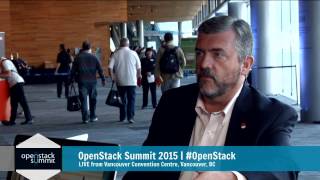
Ranga Rangachari, VP & GM of Red Hat, Inc., and Duane Decapite, the Director of OpenStack Product Management at Cisco Systems, Inc., have established a unique partnership between their respective companies under the OpenStack banner, based on the current trajectory of their shared technology.
According to Rangachari in an interview with theCUBE during the OpenStack Summit, “We’ve seen this trend shift over the last two or three years, where it’s no longer about scale up, but scale out. Whether it’s files or objects or blocks, it’s about how horizontal scaling happens without any degradation in performance or capacity.”
He continued: “We are absolutely seeing the trend where customers are moving to as software-defined everything. But a fundamental part of the software-defined architecture is you need to have real, I guess, enterprise-ready hardware that innovation happens on a daily, weekly basis to take advantage of that. So that’s where the Cisco relationship really comes in.”
A complete scale-out storage solution
On the technical side, Decapite said the two companies are also a good match.
“With this storage architecture … you overlay something like RedHat Ceph on top of it, and you have a complete scale-out storage solution … because the CRUSH algorithm allows the location of the storage to be computed rather than stored, there’s no single point of failure. There’s no controller, there’s no metadata server, and you combine that with UCS with the Active/Active Fabric pass and the high scalability, it’s a really nice scale-out storage solution.”
Rangachari explained further: “So an intrinsic part of the Ceph architecture is something called the CRUSH algorithm … CRUSH essentially stands for Controlled Redundant Under Scalable Hashing … When you’re talking about billions of objects and millions of objects, you need to have a hashing algorithm that’s not direct rebound. So the algorithm essentially is smart enough … that it knows where storage is placed, and then there’s no single point of failure.”
@theCUBE
#OpenStack
Forgot Password
Almost there!
We just sent you a verification email. Please verify your account to gain access to
OpenStack Summit 2015 | Vancouver. If you don’t think you received an email check your
spam folder.
In order to sign in, enter the email address you used to registered for the event. Once completed, you will receive an email with a verification link. Open this link to automatically sign into the site.
Register For OpenStack Summit 2015 | Vancouver
Please fill out the information below. You will recieve an email with a verification link confirming your registration. Click the link to automatically sign into the site.
You’re almost there!
We just sent you a verification email. Please click the verification button in the email. Once your email address is verified, you will have full access to all event content for OpenStack Summit 2015 | Vancouver.
I want my badge and interests to be visible to all attendees.
Checking this box will display your presense on the attendees list, view your profile and allow other attendees to contact you via 1-1 chat. Read the Privacy Policy. At any time, you can choose to disable this preference.
Select your Interests!
add
Upload your photo
Uploading..
OR
Connect via Twitter
Connect via Linkedin
EDIT PASSWORD
Share
Forgot Password
Almost there!
We just sent you a verification email. Please verify your account to gain access to
OpenStack Summit 2015 | Vancouver. If you don’t think you received an email check your
spam folder.
In order to sign in, enter the email address you used to registered for the event. Once completed, you will receive an email with a verification link. Open this link to automatically sign into the site.
Sign in to gain access to OpenStack Summit 2015 | Vancouver
Please sign in with LinkedIn to continue to OpenStack Summit 2015 | Vancouver. Signing in with LinkedIn ensures a professional environment.
Cisco and Red Hat: CRUSHing innovation | #openstack
by Elizabeth Kays | Jun 2, 2015
Ranga Rangachari, VP & GM of Red Hat, Inc., and Duane Decapite, the Director of OpenStack Product Management at Cisco Systems, Inc., have established a unique partnership between their respective companies under the OpenStack banner, based on the current trajectory of their shared technology.
According to Rangachari in an interview with theCUBE during the OpenStack Summit, “We’ve seen this trend shift over the last two or three years, where it’s no longer about scale up, but scale out. Whether it’s files or objects or blocks, it’s about how horizontal scaling happens without any degradation in performance or capacity.”
He continued: “We are absolutely seeing the trend where customers are moving to as software-defined everything. But a fundamental part of the software-defined architecture is you need to have real, I guess, enterprise-ready hardware that innovation happens on a daily, weekly basis to take advantage of that. So that’s where the Cisco relationship really comes in.”
A complete scale-out storage solution
On the technical side, Decapite said the two companies are also a good match.
“With this storage architecture … you overlay something like RedHat Ceph on top of it, and you have a complete scale-out storage solution … because the CRUSH algorithm allows the location of the storage to be computed rather than stored, there’s no single point of failure. There’s no controller, there’s no metadata server, and you combine that with UCS with the Active/Active Fabric pass and the high scalability, it’s a really nice scale-out storage solution.”
Rangachari explained further: “So an intrinsic part of the Ceph architecture is something called the CRUSH algorithm … CRUSH essentially stands for Controlled Redundant Under Scalable Hashing … When you’re talking about billions of objects and millions of objects, you need to have a hashing algorithm that’s not direct rebound. So the algorithm essentially is smart enough … that it knows where storage is placed, and then there’s no single point of failure.”
@theCUBE
#OpenStack