Kismatic center-stage on Kubernetes project | #OpenStack
by Heather Johnson | Aug 17, 2015
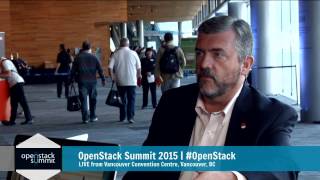
As open-source initiatives continue to grow, an increasing number of enterprises are taking part in the movement. Kismatic, Inc., the startup that provides enterprise support for Docker and Kubernetes, has put itself at the center of the emerging Kubernetes open-source project. Kismatic CEO Patrick Reilly caught up theCUBE, a SiliconANGLE Media production, during OpenStack Summit 2015 to discuss Kubernetes, Google and microservices.
“With the recent hype of containers because of the good work that Docker has done, people need a way to orchestrate those containers,” Reilly explained. “With mesas you’re able to treat your cluster of machines like a single compute resource and schedule Docker containers to come up and down, set up a service discovery, and use something like Marathon or Aurora to manage that cluster. With Kubernetes, it’s a similar approach, but some of the things are opinionated, so you don’t have to worry so much about service discovery and you can trust that it’s done the same way. There’s a lot less tooling that you need.”
Microservices becoming hot
Google, of course, is the reason why Kubernetes has gained so much traction. “Google wants to open source the project and get it in front of everyone,” said Reilly. “Google currently launches about 2 billion containers a week. Most of its workload is containers. I’m going to trust them.”
Reilly also explained the reason why “microservices” has become such a buzzword of late. “Many organizations have these old applications that have hot spots — they’re all cobbled together and very brittle,” he said. “I think of microservices as a way to make sure that each individual piece of an infrastructure can scale independently of each other, and that I can decouple those hot spots. If I were going to start a new project now, I’d go the microservices route, but I would also make sure I have a development stack that’s going to make sense. That’s where containers are exciting.”
@theCUBE
#OpenStack
Forgot Password
Almost there!
We just sent you a verification email. Please verify your account to gain access to
OpenStack Summit 2015 | Vancouver. If you don’t think you received an email check your
spam folder.
In order to sign in, enter the email address you used to registered for the event. Once completed, you will receive an email with a verification link. Open this link to automatically sign into the site.
Register For OpenStack Summit 2015 | Vancouver
Please fill out the information below. You will recieve an email with a verification link confirming your registration. Click the link to automatically sign into the site.
You’re almost there!
We just sent you a verification email. Please click the verification button in the email. Once your email address is verified, you will have full access to all event content for OpenStack Summit 2015 | Vancouver.
I want my badge and interests to be visible to all attendees.
Checking this box will display your presense on the attendees list, view your profile and allow other attendees to contact you via 1-1 chat. Read the Privacy Policy. At any time, you can choose to disable this preference.
Select your Interests!
add
Upload your photo
Uploading..
OR
Connect via Twitter
Connect via Linkedin
EDIT PASSWORD
Share
Forgot Password
Almost there!
We just sent you a verification email. Please verify your account to gain access to
OpenStack Summit 2015 | Vancouver. If you don’t think you received an email check your
spam folder.
In order to sign in, enter the email address you used to registered for the event. Once completed, you will receive an email with a verification link. Open this link to automatically sign into the site.
Sign in to gain access to OpenStack Summit 2015 | Vancouver
Please sign in with LinkedIn to continue to OpenStack Summit 2015 | Vancouver. Signing in with LinkedIn ensures a professional environment.
Are you sure you want to remove access rights for this user?
Details
Manage Access
email address
Community Invitation
Patrick Reilly - OpenStack Summit 2015 - theCUBE
Kismatic center-stage on Kubernetes project | #OpenStack
by Heather Johnson | Aug 17, 2015
As open-source initiatives continue to grow, an increasing number of enterprises are taking part in the movement. Kismatic, Inc., the startup that provides enterprise support for Docker and Kubernetes, has put itself at the center of the emerging Kubernetes open-source project. Kismatic CEO Patrick Reilly caught up theCUBE, a SiliconANGLE Media production, during OpenStack Summit 2015 to discuss Kubernetes, Google and microservices.
“With the recent hype of containers because of the good work that Docker has done, people need a way to orchestrate those containers,” Reilly explained. “With mesas you’re able to treat your cluster of machines like a single compute resource and schedule Docker containers to come up and down, set up a service discovery, and use something like Marathon or Aurora to manage that cluster. With Kubernetes, it’s a similar approach, but some of the things are opinionated, so you don’t have to worry so much about service discovery and you can trust that it’s done the same way. There’s a lot less tooling that you need.”
Microservices becoming hot
Google, of course, is the reason why Kubernetes has gained so much traction. “Google wants to open source the project and get it in front of everyone,” said Reilly. “Google currently launches about 2 billion containers a week. Most of its workload is containers. I’m going to trust them.”
Reilly also explained the reason why “microservices” has become such a buzzword of late. “Many organizations have these old applications that have hot spots — they’re all cobbled together and very brittle,” he said. “I think of microservices as a way to make sure that each individual piece of an infrastructure can scale independently of each other, and that I can decouple those hot spots. If I were going to start a new project now, I’d go the microservices route, but I would also make sure I have a development stack that’s going to make sense. That’s where containers are exciting.”
@theCUBE
#OpenStack