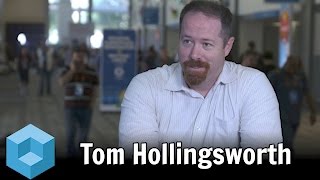
01. Chris Wright, Red Hat, Visits #theCUBE!. (00:21)
02. What Are Some Of Your Take Aways From The Keynote This Morning. (00:42)
03. How Is Red Hat Fitting In Here. (01:29)
04. Tell Us About Some Of The Partnerships Of Red Hat. (02:52)
05. How Much Does The Red Hat Stack Give You An Advantage. (04:09)
06. Where Should OpenStack Be As An Integration Engine. (06:010)
07. Are We Past Some Of The Big Blocks. (07:56)
08. Can You Unpack The Carrier Grade Policies. (08:58)
09. What Is A Problem That Verison Is Looking At That Wasn't There Five Years Ago. (10:50)
10. Telco Companies Are Really Opening Up A Lot Of Possibilities. (12:40)
11. How Do You Think About What The Future Might Look Like. (13:59)
12. How Does Red Hat Look At Their Aquisitions. (15:39)
13. How Have Things Changed Inside Red Hat Over The Years. (16:57)
Track List created with http://www.vinjavideo.com.
--- ---
OpenStack begins the long journey from maturity to ubiquity | #OpenStack
by Nelson Williams | Apr 25, 2016
In the past few years, open-source software has gone from a buzzword to a bedrock. Many businesses rely on open source to run their technology solutions, and the number of vendors providing that software is only increasing. Nowhere is this more evident than with OpenStack, an open-source solution for Cloud computing.
To gain insight on this new stage of OpenStack’s development, Stu Miniman (@stu) and Brian Gracely (@bgracely), cohosts of theCUBE, from the SiliconANGLE Media team, joined Chris Wright at the OpenStack Summit — Austin convention. Wright is the VP and chief technologist of the Office of Technology at Red Hat, Inc.
The long road
The conversation opened with a look at OpenStack itself. Wright stated that OpenStack was moving to the next stage of maturity, with large companies bringing in OpenStack to solve major business problems. This was only one part of how OpenStack would continue its journey.
Wright then explained that for OpenStack to see long-term success, it needs the community to come together and collaborate on new use cases for the software. To help with this, he said, Red Hat is partnering with the people who have the expertise to work on these use cases.
The next stage
OpenStack is a critical component, Wright said, but the real story is the applications and problems they’re trying to solve. OpenStack needs to see ubiquity, he continued, to be in all those places they weren’t even thinking about before. It has to solve a variety of use cases, and if one part of the community can’t do that, someone else can.
One of those use cases involves the next technology platform, smartphones. What kind of applications, Wright asked, can one run with that kind of computing power and a short hop into the network? This will be part of building the next-generation network.
“We’re not day zero, anymore,” he said.
Forgot Password
Almost there!
We just sent you a verification email. Please verify your account to gain access to
OpenStack Summit 2016 | Austin, TX. If you don’t think you received an email check your
spam folder.
In order to sign in, enter the email address you used to registered for the event. Once completed, you will receive an email with a verification link. Open this link to automatically sign into the site.
Register For OpenStack Summit 2016 | Austin, TX
Please fill out the information below. You will recieve an email with a verification link confirming your registration. Click the link to automatically sign into the site.
You’re almost there!
We just sent you a verification email. Please click the verification button in the email. Once your email address is verified, you will have full access to all event content for OpenStack Summit 2016 | Austin, TX.
I want my badge and interests to be visible to all attendees.
Checking this box will display your presense on the attendees list, view your profile and allow other attendees to contact you via 1-1 chat. Read the Privacy Policy. At any time, you can choose to disable this preference.
Select your Interests!
add
Upload your photo
Uploading..
OR
Connect via Twitter
Connect via Linkedin
EDIT PASSWORD
Share
Forgot Password
Almost there!
We just sent you a verification email. Please verify your account to gain access to
OpenStack Summit 2016 | Austin, TX. If you don’t think you received an email check your
spam folder.
In order to sign in, enter the email address you used to registered for the event. Once completed, you will receive an email with a verification link. Open this link to automatically sign into the site.
Sign in to gain access to OpenStack Summit 2016 | Austin, TX
Please sign in with LinkedIn to continue to OpenStack Summit 2016 | Austin, TX. Signing in with LinkedIn ensures a professional environment.
Are you sure you want to remove access rights for this user?
Details
Manage Access
email address
Community Invitation
Chris Wright, Red Hat - #OpenStack Summit 2016 - #theCUBE
01. Chris Wright, Red Hat, Visits #theCUBE!. (00:21)
02. What Are Some Of Your Take Aways From The Keynote This Morning. (00:42)
03. How Is Red Hat Fitting In Here. (01:29)
04. Tell Us About Some Of The Partnerships Of Red Hat. (02:52)
05. How Much Does The Red Hat Stack Give You An Advantage. (04:09)
06. Where Should OpenStack Be As An Integration Engine. (06:010)
07. Are We Past Some Of The Big Blocks. (07:56)
08. Can You Unpack The Carrier Grade Policies. (08:58)
09. What Is A Problem That Verison Is Looking At That Wasn't There Five Years Ago. (10:50)
10. Telco Companies Are Really Opening Up A Lot Of Possibilities. (12:40)
11. How Do You Think About What The Future Might Look Like. (13:59)
12. How Does Red Hat Look At Their Aquisitions. (15:39)
13. How Have Things Changed Inside Red Hat Over The Years. (16:57)
Track List created with http://www.vinjavideo.com.
--- ---
OpenStack begins the long journey from maturity to ubiquity | #OpenStack
by Nelson Williams | Apr 25, 2016
In the past few years, open-source software has gone from a buzzword to a bedrock. Many businesses rely on open source to run their technology solutions, and the number of vendors providing that software is only increasing. Nowhere is this more evident than with OpenStack, an open-source solution for Cloud computing.
To gain insight on this new stage of OpenStack’s development, Stu Miniman (@stu) and Brian Gracely (@bgracely), cohosts of theCUBE, from the SiliconANGLE Media team, joined Chris Wright at the OpenStack Summit — Austin convention. Wright is the VP and chief technologist of the Office of Technology at Red Hat, Inc.
The long road
The conversation opened with a look at OpenStack itself. Wright stated that OpenStack was moving to the next stage of maturity, with large companies bringing in OpenStack to solve major business problems. This was only one part of how OpenStack would continue its journey.
Wright then explained that for OpenStack to see long-term success, it needs the community to come together and collaborate on new use cases for the software. To help with this, he said, Red Hat is partnering with the people who have the expertise to work on these use cases.
The next stage
OpenStack is a critical component, Wright said, but the real story is the applications and problems they’re trying to solve. OpenStack needs to see ubiquity, he continued, to be in all those places they weren’t even thinking about before. It has to solve a variety of use cases, and if one part of the community can’t do that, someone else can.
One of those use cases involves the next technology platform, smartphones. What kind of applications, Wright asked, can one run with that kind of computing power and a short hop into the network? This will be part of building the next-generation network.
“We’re not day zero, anymore,” he said.