The blessing and curse of OpenStack updates | #OpenStack
by R. Danes | Apr 27, 2016
There is a lot of talk about the complexity of OpenStack and the difficulty of mastering it for developers. On the one hand, according to Balaji Sivasubramanian, director of product management at Cisco Systems, Inc., “Customers are trying to build custom solutions more and more, and that works, but that’s not sustainable.”
And on the other, according to Vish Jakka, product manager of Cloud solutions at Cisco Systems, Inc., “It’s not one size fits all. That’s not the case with OpenStack.”
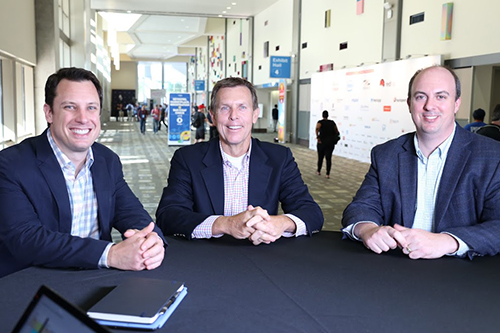
The crux of the problem lies in OpenStack’s rapid cycle of updates, which is both great news to developers waiting on a particular addition and bad news to those happy with the way things are. Sivasubramanian and Jakka told Stu Miniman (@stu) and Brian Gracely (@bgracely), cohosts of theCUBE, from the SiliconANGLE Media team, it’s crucial for users to determine the right balance of customization and updatabilty for their OpenStack operation.
“What we’re trying to do is figure out, obviously, what cadence you want to have in terms of upgrades,” Sivasubramanian said. “Do we go to the next one, or do we go to the following one?”
Containers and OpenStack
Few areas in application development are hotter than containers right now. Sivasubramanian acknowledged that OpenStack is going to have to be container-friendly if it is going to thrive.
“Container technology is fairly immature right now. People are looking at containers, and now they’ve deployed OpenStack or are trying to deploy OpenStack — and how does that work together?” he said, admitting that this is a challenging area for OpenStack developers.
Forgot Password
Almost there!
We just sent you a verification email. Please verify your account to gain access to
OpenStack Summit 2016 | Austin, TX. If you don’t think you received an email check your
spam folder.
In order to sign in, enter the email address you used to registered for the event. Once completed, you will receive an email with a verification link. Open this link to automatically sign into the site.
Register For OpenStack Summit 2016 | Austin, TX
Please fill out the information below. You will recieve an email with a verification link confirming your registration. Click the link to automatically sign into the site.
You’re almost there!
We just sent you a verification email. Please click the verification button in the email. Once your email address is verified, you will have full access to all event content for OpenStack Summit 2016 | Austin, TX.
I want my badge and interests to be visible to all attendees.
Checking this box will display your presense on the attendees list, view your profile and allow other attendees to contact you via 1-1 chat. Read the Privacy Policy. At any time, you can choose to disable this preference.
Select your Interests!
add
Upload your photo
Uploading..
OR
Connect via Twitter
Connect via Linkedin
EDIT PASSWORD
Share
Forgot Password
Almost there!
We just sent you a verification email. Please verify your account to gain access to
OpenStack Summit 2016 | Austin, TX. If you don’t think you received an email check your
spam folder.
In order to sign in, enter the email address you used to registered for the event. Once completed, you will receive an email with a verification link. Open this link to automatically sign into the site.
Sign in to gain access to OpenStack Summit 2016 | Austin, TX
Please sign in with LinkedIn to continue to OpenStack Summit 2016 | Austin, TX. Signing in with LinkedIn ensures a professional environment.
The blessing and curse of OpenStack updates | #OpenStack
by R. Danes | Apr 27, 2016
There is a lot of talk about the complexity of OpenStack and the difficulty of mastering it for developers. On the one hand, according to Balaji Sivasubramanian, director of product management at Cisco Systems, Inc., “Customers are trying to build custom solutions more and more, and that works, but that’s not sustainable.”
And on the other, according to Vish Jakka, product manager of Cloud solutions at Cisco Systems, Inc., “It’s not one size fits all. That’s not the case with OpenStack.”
The crux of the problem lies in OpenStack’s rapid cycle of updates, which is both great news to developers waiting on a particular addition and bad news to those happy with the way things are. Sivasubramanian and Jakka told Stu Miniman (@stu) and Brian Gracely (@bgracely), cohosts of theCUBE, from the SiliconANGLE Media team, it’s crucial for users to determine the right balance of customization and updatabilty for their OpenStack operation.
“What we’re trying to do is figure out, obviously, what cadence you want to have in terms of upgrades,” Sivasubramanian said. “Do we go to the next one, or do we go to the following one?”
Containers and OpenStack
Few areas in application development are hotter than containers right now. Sivasubramanian acknowledged that OpenStack is going to have to be container-friendly if it is going to thrive.
“Container technology is fairly immature right now. People are looking at containers, and now they’ve deployed OpenStack or are trying to deploy OpenStack — and how does that work together?” he said, admitting that this is a challenging area for OpenStack developers.