01. Ryan Floyd, Storm Ventures, visits #theCUBE!. (00:19)
02. How Things Are Looking in the OpenStack Community. (01:00)
03. Finding the Money in OpenStack. (01:46)
04. The Communities Building Around OpenStack. (03:01)
05. Thoughts on OpenSource Business Models. (04:11)
06. The "Stack Fallacy" and Building for Growth. (05:58)
07. Exciting Investment Opportunities Outside of OpenStack. (07:23)
08. The Vertical SAAS World. (08:52)
09. Services Companies: The Next Wave. (11:40)
Track List created with http://www.vinjavideo.com.
--- ---
Investor notes for OpenStack, and the surprising role of AI | #OpenStack
by Gabriel Pesek | Apr 26, 2016
At the OpenStack Summit taking place this week in Austin, TX, industry insiders and startup financiers are mingling freely while examining the continued growth and development of open-source technologies and services, finding ways to benefit their respective interests while doing so.
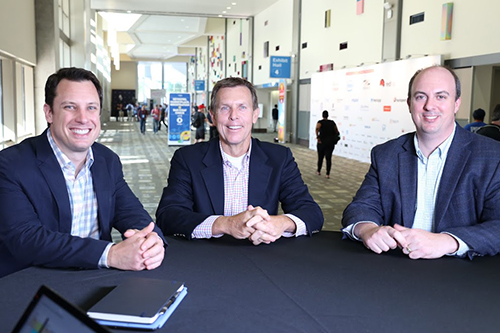
Ryan Floyd, founding managing director of Storm Ventures LLC, joined Stu Miniman (@stu) and Brian Gracely (@bgracely), cohosts of theCUBE, from the SiliconANGLE Media team, to talk about how he sees these branches of tech developing and to discuss some of the biggest hazards for investors.
Growth for OpenStack
Though he laughed about the increasing number of event attendees dressed in blazers, Floyd was serious in noting, “Things are definitely more mature [in the OpenStack community].” With that maturation, though, he noted that companies looking to enter the field were encountering corollary difficulties: “I think what I find challenging … is that it’s matured to the point where it’s not as clear a medium as an investor where the white space is for new startups.”
Floyd also touched on the higher difficulty for companies to be fully self-reliant in terms of service development these days, but he had a glowing assessment of the overall state of things, saying, “It is the most amazing time in IT infrastructure with all that’s happening.”
Caution for companies
Floyd expanded some of the issues falling under the convention’s purvey: “The crush of open-source, and the pull of the public clouds, is just changing so many dynamics that I know there are going to be places to invest. But with that rapid change, it can be hard, because what you invest against today may not be the case or be relevant two years from now.”
In discussing possible pitfalls for both established companies and startups, overconfidence was highlighted as a major danger, particularly for those enterprises that fall victim to the current trend of hype for open source at large.
“I think generally speaking you cannot make money selling open-source. There are clearly exceptions … but for 99.9 percent of companies out there, that’s a completely flawed strategy,” said Floyd. “What makes more sense is if you can deliver value.”
Another aspect of this overconfidence was contrasted with Google’s command of the many layers of the stack, and companies that were following Google’s lead encountering difficulties that are minor for the titanic conglomerate but considerable for normal-sized enterprises.
“I think companies always underestimate how easy it is to build that next layer up [the stack],” Floyd stated, though he did note that for startups that have artificial intelligence capabilities at their disposal, there can be some surprising results.
Looking forward
Summing up his views on the event and its related markets, Floyd surmised: “Security’s big, vertical SaaS [Software-as-a-Service] is big, IoT [Internet of Things] is another thing that’s going to expand.”
He also cautioned against letting apps grow too entrenched in discrete forms, predicting that “applications, unless they add core value internally to your organization, are going to ultimately move to SaaS.”
Forgot Password
Almost there!
We just sent you a verification email. Please verify your account to gain access to
OpenStack Summit 2016 | Austin, TX. If you don’t think you received an email check your
spam folder.
In order to sign in, enter the email address you used to registered for the event. Once completed, you will receive an email with a verification link. Open this link to automatically sign into the site.
Register For OpenStack Summit 2016 | Austin, TX
Please fill out the information below. You will recieve an email with a verification link confirming your registration. Click the link to automatically sign into the site.
You’re almost there!
We just sent you a verification email. Please click the verification button in the email. Once your email address is verified, you will have full access to all event content for OpenStack Summit 2016 | Austin, TX.
I want my badge and interests to be visible to all attendees.
Checking this box will display your presense on the attendees list, view your profile and allow other attendees to contact you via 1-1 chat. Read the Privacy Policy. At any time, you can choose to disable this preference.
Select your Interests!
add
Upload your photo
Uploading..
OR
Connect via Twitter
Connect via Linkedin
EDIT PASSWORD
Share
Forgot Password
Almost there!
We just sent you a verification email. Please verify your account to gain access to
OpenStack Summit 2016 | Austin, TX. If you don’t think you received an email check your
spam folder.
In order to sign in, enter the email address you used to registered for the event. Once completed, you will receive an email with a verification link. Open this link to automatically sign into the site.
Sign in to gain access to OpenStack Summit 2016 | Austin, TX
Please sign in with LinkedIn to continue to OpenStack Summit 2016 | Austin, TX. Signing in with LinkedIn ensures a professional environment.
Are you sure you want to remove access rights for this user?
Details
Manage Access
email address
Community Invitation
Ryan Floyd, Storm Ventures - #OpenStack Summit 2016 - #theCUBE
01. Ryan Floyd, Storm Ventures, visits #theCUBE!. (00:19)
02. How Things Are Looking in the OpenStack Community. (01:00)
03. Finding the Money in OpenStack. (01:46)
04. The Communities Building Around OpenStack. (03:01)
05. Thoughts on OpenSource Business Models. (04:11)
06. The "Stack Fallacy" and Building for Growth. (05:58)
07. Exciting Investment Opportunities Outside of OpenStack. (07:23)
08. The Vertical SAAS World. (08:52)
09. Services Companies: The Next Wave. (11:40)
Track List created with http://www.vinjavideo.com.
--- ---
Investor notes for OpenStack, and the surprising role of AI | #OpenStack
by Gabriel Pesek | Apr 26, 2016
At the OpenStack Summit taking place this week in Austin, TX, industry insiders and startup financiers are mingling freely while examining the continued growth and development of open-source technologies and services, finding ways to benefit their respective interests while doing so.
Ryan Floyd, founding managing director of Storm Ventures LLC, joined Stu Miniman (@stu) and Brian Gracely (@bgracely), cohosts of theCUBE, from the SiliconANGLE Media team, to talk about how he sees these branches of tech developing and to discuss some of the biggest hazards for investors.
Growth for OpenStack
Though he laughed about the increasing number of event attendees dressed in blazers, Floyd was serious in noting, “Things are definitely more mature [in the OpenStack community].” With that maturation, though, he noted that companies looking to enter the field were encountering corollary difficulties: “I think what I find challenging … is that it’s matured to the point where it’s not as clear a medium as an investor where the white space is for new startups.”
Floyd also touched on the higher difficulty for companies to be fully self-reliant in terms of service development these days, but he had a glowing assessment of the overall state of things, saying, “It is the most amazing time in IT infrastructure with all that’s happening.”
Caution for companies
Floyd expanded some of the issues falling under the convention’s purvey: “The crush of open-source, and the pull of the public clouds, is just changing so many dynamics that I know there are going to be places to invest. But with that rapid change, it can be hard, because what you invest against today may not be the case or be relevant two years from now.”
In discussing possible pitfalls for both established companies and startups, overconfidence was highlighted as a major danger, particularly for those enterprises that fall victim to the current trend of hype for open source at large.
“I think generally speaking you cannot make money selling open-source. There are clearly exceptions … but for 99.9 percent of companies out there, that’s a completely flawed strategy,” said Floyd. “What makes more sense is if you can deliver value.”
Another aspect of this overconfidence was contrasted with Google’s command of the many layers of the stack, and companies that were following Google’s lead encountering difficulties that are minor for the titanic conglomerate but considerable for normal-sized enterprises.
“I think companies always underestimate how easy it is to build that next layer up [the stack],” Floyd stated, though he did note that for startups that have artificial intelligence capabilities at their disposal, there can be some surprising results.
Looking forward
Summing up his views on the event and its related markets, Floyd surmised: “Security’s big, vertical SaaS [Software-as-a-Service] is big, IoT [Internet of Things] is another thing that’s going to expand.”
He also cautioned against letting apps grow too entrenched in discrete forms, predicting that “applications, unless they add core value internally to your organization, are going to ultimately move to SaaS.”