01. Craig McLuckie, Google, visits #theCUBE!. (00:20)
02. Google's Keynote: OpenStack Running on Cubernetes. (00:51)
03. The Cubernetes + OpenStack Integration. (01:40)
04. Is the Future OpenStack on the Google Cloud?. (04:43)
05. Google's Learning Curve and Focus on the End User. (06:05)
06. Cool Applications Relating to Cubernetes. (08:35)
07. How Google Thinks About the Open Source Community. (10:33)
08. Feedback from the GCB Conference. (13:60)
Track List created with http://www.vinjavideo.com.
--- ---
Google all in on cloud: Kubernetes’ latest impact on open source | #OpenStack
by Nelson Williams | Apr 26, 2016
Those who prowl the dark alleys of OpenStack deployments know the word on the street is “containers.” Containers have many advantages for Cloud computing, but the trick is keeping them under control. Like any other part of a complex system, containers must be managed. This task quickly becomes exponentially difficult.
An effective container-management solution is valuable to anyone who runs Cloud computing, and Google has itself contributed to the open playing field with Kubernetes (an open-source system for automating deployment, operations, and scaling of containerized application).
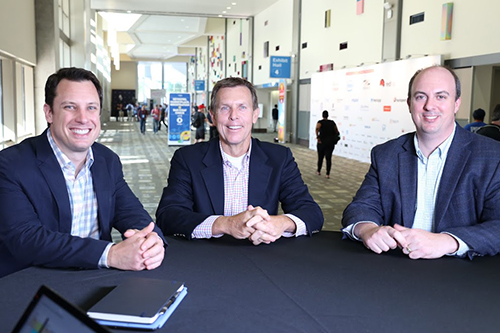
Stu Miniman (@stu) and Brian Gracely (@bgracely), cohosts of theCUBE, from the SiliconANGLE Media team, talked with Craig McLuckie, product manager at Google, during the OpenStack Summit in Austin, TX, to explore Google’s outlook on and contributions to open source.
Management at scale
The conversation opened with a look at why Kubernetes exists. OpenStack is great at integrating network and storage, McLuckie said, but it can benefit from a way to manage things at scale. People who run OpenStack deployments are starting to see problems with that. Kubernetes, he said, can improve the efficiency of those systems.
McLuckie continued, saying a lot of work has to be done to make Kubernetes accessible to everyone. They’re starting to think about more scalable clusters and building around stable workloads. He stressed that support for stable workloads was an immediate priority.
Joining the community
Kubernetes, McLuckie said, was the first post-Cloud product Google created in the open with the help of the community. He pointed out that when running open source, feedback from the community was instantaneous. They get a lot of acceleration from the community, he said, which creates a stronger technology base.
The biggest signal he’s seen, though, is how people react when they realize Google is all-in on the Cloud. The reception, he said, has been really good. Now that Google is a Cloud company, going open has become a competitive advantage.
Forgot Password
Almost there!
We just sent you a verification email. Please verify your account to gain access to
OpenStack Summit 2016 | Austin, TX. If you don’t think you received an email check your
spam folder.
In order to sign in, enter the email address you used to registered for the event. Once completed, you will receive an email with a verification link. Open this link to automatically sign into the site.
Register For OpenStack Summit 2016 | Austin, TX
Please fill out the information below. You will recieve an email with a verification link confirming your registration. Click the link to automatically sign into the site.
You’re almost there!
We just sent you a verification email. Please click the verification button in the email. Once your email address is verified, you will have full access to all event content for OpenStack Summit 2016 | Austin, TX.
I want my badge and interests to be visible to all attendees.
Checking this box will display your presense on the attendees list, view your profile and allow other attendees to contact you via 1-1 chat. Read the Privacy Policy. At any time, you can choose to disable this preference.
Select your Interests!
add
Upload your photo
Uploading..
OR
Connect via Twitter
Connect via Linkedin
EDIT PASSWORD
Share
Forgot Password
Almost there!
We just sent you a verification email. Please verify your account to gain access to
OpenStack Summit 2016 | Austin, TX. If you don’t think you received an email check your
spam folder.
In order to sign in, enter the email address you used to registered for the event. Once completed, you will receive an email with a verification link. Open this link to automatically sign into the site.
Sign in to gain access to OpenStack Summit 2016 | Austin, TX
Please sign in with LinkedIn to continue to OpenStack Summit 2016 | Austin, TX. Signing in with LinkedIn ensures a professional environment.
Are you sure you want to remove access rights for this user?
Details
Manage Access
email address
Community Invitation
Craig McLuckie, Google | OpenStack Summit 2016
01. Craig McLuckie, Google, visits #theCUBE!. (00:20)
02. Google's Keynote: OpenStack Running on Cubernetes. (00:51)
03. The Cubernetes + OpenStack Integration. (01:40)
04. Is the Future OpenStack on the Google Cloud?. (04:43)
05. Google's Learning Curve and Focus on the End User. (06:05)
06. Cool Applications Relating to Cubernetes. (08:35)
07. How Google Thinks About the Open Source Community. (10:33)
08. Feedback from the GCB Conference. (13:60)
Track List created with http://www.vinjavideo.com.
--- ---
Google all in on cloud: Kubernetes’ latest impact on open source | #OpenStack
by Nelson Williams | Apr 26, 2016
Those who prowl the dark alleys of OpenStack deployments know the word on the street is “containers.” Containers have many advantages for Cloud computing, but the trick is keeping them under control. Like any other part of a complex system, containers must be managed. This task quickly becomes exponentially difficult.
An effective container-management solution is valuable to anyone who runs Cloud computing, and Google has itself contributed to the open playing field with Kubernetes (an open-source system for automating deployment, operations, and scaling of containerized application).
Stu Miniman (@stu) and Brian Gracely (@bgracely), cohosts of theCUBE, from the SiliconANGLE Media team, talked with Craig McLuckie, product manager at Google, during the OpenStack Summit in Austin, TX, to explore Google’s outlook on and contributions to open source.
Management at scale
The conversation opened with a look at why Kubernetes exists. OpenStack is great at integrating network and storage, McLuckie said, but it can benefit from a way to manage things at scale. People who run OpenStack deployments are starting to see problems with that. Kubernetes, he said, can improve the efficiency of those systems.
McLuckie continued, saying a lot of work has to be done to make Kubernetes accessible to everyone. They’re starting to think about more scalable clusters and building around stable workloads. He stressed that support for stable workloads was an immediate priority.
Joining the community
Kubernetes, McLuckie said, was the first post-Cloud product Google created in the open with the help of the community. He pointed out that when running open source, feedback from the community was instantaneous. They get a lot of acceleration from the community, he said, which creates a stronger technology base.
The biggest signal he’s seen, though, is how people react when they realize Google is all-in on the Cloud. The reception, he said, has been really good. Now that Google is a Cloud company, going open has become a competitive advantage.