Containers: A reality check | #OSSV15
by Teryn O'Brien | Aug 27, 2015
OpenStack Silicon Valley 2015 continues to engage in meaningful dialogue about Cloud computing and its place in our world today. The keynote panel for Day 2 of the conference sparked debate about the hype around containers and what that means for our future. The panel included
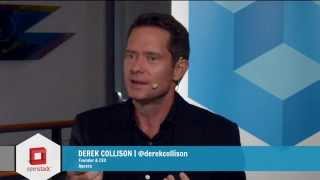
Derek Collison, CEO of Apcera, Inc.; Sheng Liang, CloudStack pioneer and Rancher Labs, Inc. founder; James Watters, VP & GM, Cloud Platforms of Pivotal Software, Inc.; and Adrian Otto, principal architect at Rackspace, Inc. and Magnum Project technical lead.
Reality check around containers
A raise of hands in the room during the keynote panel showed that hardly anyone attending the session is using containers right now, but they might be planning to use them in the near future. There’s a lot of hype in the container world, but vendors and customers have questions and concerns.
Changes in IT
Collison began the conversation by saying that a lot of the questions people have about container security, networking orchestration, etc., will get resolved. Everything IT has been doing over the past 20 years is to make IT faster and better. IT continues on that cycle.
“Eventually, you go so fast that you’re changing the way you do things,” said Collison. So containers might be fundamentally changing how people are architecting things. Otto added that containers are definitely at the point of a breakthrough, and people are getting excited.
Are containers a breakthrough?
But are containers a true breakthrough? Panel members discussed this question. Watters said that the biggest changes are really more organizational and architectural. His example was Netflix, Inc., which changed its whole architecture with Virtual Machines (VMs). Netflix focused on culture and architecture, implementing with VMs in the right way. It seemed to Watters that big companies aren’t going to containers.
Collison added that “the container tech itself has been around a long, long time.” Right now, it’s the fact that containers are getting more lighter-weight and faster that is so exciting. Now, people can build faster and build less.
Liang agreed that containers are extremely revolutionary. “I get really excited when I see a lot of the early innovations that companies like Google and Netflix created around micro services,” Liang said.
The end of VMs
Almost everyone on the panel agreed that VMs are not going anywhere anytime soon. As Otto pointed out, containers aren’t really trying to solve infrastructure problems. They have nothing to do with what VMs are good at. “VMs and containers will be working together in combination for a long time,” Otto said. The industry does need big, distributive systems. It needs an answer on how to do that well. “Containers offer a glimpse of hope to be able to do that.”
“I just use Google’s public Cloud as the bar,” added Watters. “If you could go 100% container, they woud’ve done it.”
The future is unpredictable
After more discussion over implementation of VMs, containers and systems. Collison summed up the future this way: “In 2020, all I can promise is everything we think is happening could be wrong.” In 2020, all the rules that the industry thinks are going to exist might not be there. It’s always an unpredictable future.”
Forgot Password
Almost there!
We just sent you a verification email. Please verify your account to gain access to
OpenStack Silicon Valley 2015 | Mountain View. If you don’t think you received an email check your
spam folder.
Sign in to OpenStack Silicon Valley 2015 | Mountain View.
In order to sign in, enter the email address you used to registered for the event. Once completed, you will receive an email with a verification link. Open this link to automatically sign into the site.
Register For OpenStack Silicon Valley 2015 | Mountain View
Please fill out the information below. You will recieve an email with a verification link confirming your registration. Click the link to automatically sign into the site.
You’re almost there!
We just sent you a verification email. Please click the verification button in the email. Once your email address is verified, you will have full access to all event content for OpenStack Silicon Valley 2015 | Mountain View.
I want my badge and interests to be visible to all attendees.
Checking this box will display your presense on the attendees list, view your profile and allow other attendees to contact you via 1-1 chat. Read the Privacy Policy. At any time, you can choose to disable this preference.
Select your Interests!
add
Upload your photo
Uploading..
OR
Connect via Twitter
Connect via Linkedin
EDIT PASSWORD
Share
Forgot Password
Almost there!
We just sent you a verification email. Please verify your account to gain access to
OpenStack Silicon Valley 2015 | Mountain View. If you don’t think you received an email check your
spam folder.
Sign in to OpenStack Silicon Valley 2015 | Mountain View.
In order to sign in, enter the email address you used to registered for the event. Once completed, you will receive an email with a verification link. Open this link to automatically sign into the site.
Sign in to gain access to OpenStack Silicon Valley 2015 | Mountain View
Please sign in with LinkedIn to continue to OpenStack Silicon Valley 2015 | Mountain View. Signing in with LinkedIn ensures a professional environment.
Are you sure you want to remove access rights for this user?
Details
Manage Access
email address
Community Invitation
Keynote Day 2 - #OpenStackSV 2015 #theCUBE
Containers: A reality check | #OSSV15
by Teryn O'Brien | Aug 27, 2015
OpenStack Silicon Valley 2015 continues to engage in meaningful dialogue about Cloud computing and its place in our world today. The keynote panel for Day 2 of the conference sparked debate about the hype around containers and what that means for our future. The panel included
Derek Collison, CEO of Apcera, Inc.; Sheng Liang, CloudStack pioneer and Rancher Labs, Inc. founder; James Watters, VP & GM, Cloud Platforms of Pivotal Software, Inc.; and Adrian Otto, principal architect at Rackspace, Inc. and Magnum Project technical lead.
Reality check around containers
A raise of hands in the room during the keynote panel showed that hardly anyone attending the session is using containers right now, but they might be planning to use them in the near future. There’s a lot of hype in the container world, but vendors and customers have questions and concerns.
Changes in IT
Collison began the conversation by saying that a lot of the questions people have about container security, networking orchestration, etc., will get resolved. Everything IT has been doing over the past 20 years is to make IT faster and better. IT continues on that cycle.
“Eventually, you go so fast that you’re changing the way you do things,” said Collison. So containers might be fundamentally changing how people are architecting things. Otto added that containers are definitely at the point of a breakthrough, and people are getting excited.
Are containers a breakthrough?
But are containers a true breakthrough? Panel members discussed this question. Watters said that the biggest changes are really more organizational and architectural. His example was Netflix, Inc., which changed its whole architecture with Virtual Machines (VMs). Netflix focused on culture and architecture, implementing with VMs in the right way. It seemed to Watters that big companies aren’t going to containers.
Collison added that “the container tech itself has been around a long, long time.” Right now, it’s the fact that containers are getting more lighter-weight and faster that is so exciting. Now, people can build faster and build less.
Liang agreed that containers are extremely revolutionary. “I get really excited when I see a lot of the early innovations that companies like Google and Netflix created around micro services,” Liang said.
The end of VMs
Almost everyone on the panel agreed that VMs are not going anywhere anytime soon. As Otto pointed out, containers aren’t really trying to solve infrastructure problems. They have nothing to do with what VMs are good at. “VMs and containers will be working together in combination for a long time,” Otto said. The industry does need big, distributive systems. It needs an answer on how to do that well. “Containers offer a glimpse of hope to be able to do that.”
“I just use Google’s public Cloud as the bar,” added Watters. “If you could go 100% container, they woud’ve done it.”
The future is unpredictable
After more discussion over implementation of VMs, containers and systems. Collison summed up the future this way: “In 2020, all I can promise is everything we think is happening could be wrong.” In 2020, all the rules that the industry thinks are going to exist might not be there. It’s always an unpredictable future.”