Bridging the open-source networking gap | #OpenStackSV
by Nelson Williams | Aug 9, 2016
Open source has made great strides in the networking space. However, difficult issues still remain. Almost every business uses legacy processes, and bringing those older systems to work with open source is a challenge. Also, companies often build their systems with products from multiple vendors, leading to a lack of standardization. This has created an opening for a number of companies to help bridge the gap between open-source networking and the real world.
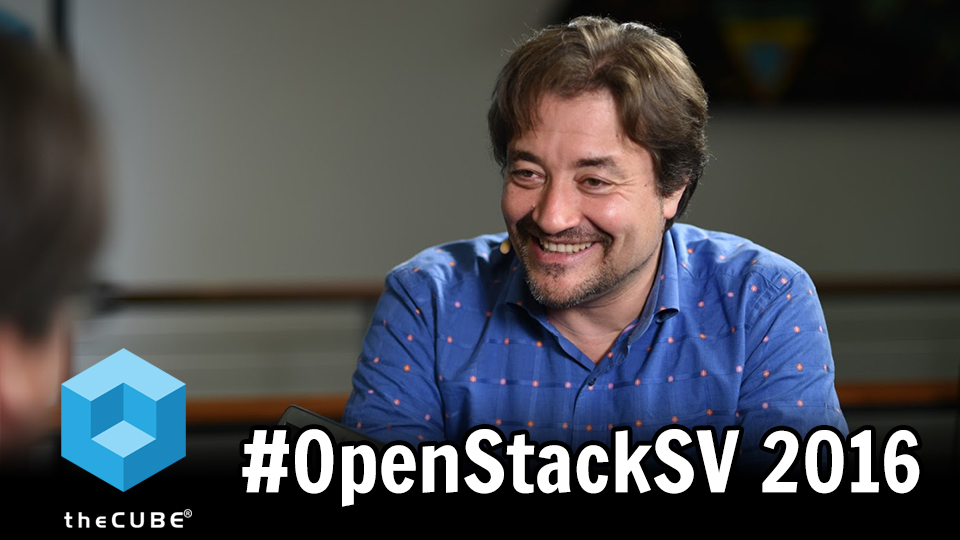
To gain a better understanding of the open-source perspective, John Furrier (@furrier) and Lisa Martin (@Luccazara), cohosts of theCUBE, from the SiliconANGLE Media team, broadcast live from the OpenStack Days: Silicon Valley 2016 conference in Mountain View, California. There, they spoke to Gershon Diner, executive VP of Strategic Alliances, Customer Services and Technical Support at GigaSpaces Technologies Ltd.
Breaking silos
The discussion opened up with a look at the challenges companies face. Diner explained that a business could have many silos and their tools, and now OpenStack as well. He felt that if OpenStack wants to go to the next level and mature even more, it needs to have something to break those silos. He then pointed out that most enterprise businesses use at least two Cloud providers and six Clouds. These need to be managed.
Diner described how GigaSpaces was contributing to the open-source effort with training and OpenStack sessions. The idea is to collaborate, bring people together, and contribute back, otherwise it’s silos again, he said.
Collaboration and future-proofing
Diner next took a moment to talk about using open-source solutions. He said the idea was to create a standard by collaborating and extending. He advised that the real power of open source wasn’t buying-in on the cheap, but being able to collaborate and extend the technology. Find a successful use case and replicate it, he said.
On the subject of future-proof systems, Diner mentioned that every customer today wants to avoid being locked into one vendor. It’s vital for businesses today to remain open to new technologies to make sure they’re ready for the future.
“It’s not a marketing thing; you really have to future-proof,” he said.
Forgot Password
Almost there!
We just sent you a verification email. Please verify your account to gain access to
OpenStack Days Silicon Valley 2016 | Mountain View. If you don’t think you received an email check your
spam folder.
Sign in to OpenStack Days Silicon Valley 2016 | Mountain View.
In order to sign in, enter the email address you used to registered for the event. Once completed, you will receive an email with a verification link. Open this link to automatically sign into the site.
Register For OpenStack Days Silicon Valley 2016 | Mountain View
Please fill out the information below. You will recieve an email with a verification link confirming your registration. Click the link to automatically sign into the site.
You’re almost there!
We just sent you a verification email. Please click the verification button in the email. Once your email address is verified, you will have full access to all event content for OpenStack Days Silicon Valley 2016 | Mountain View.
I want my badge and interests to be visible to all attendees.
Checking this box will display your presense on the attendees list, view your profile and allow other attendees to contact you via 1-1 chat. Read the Privacy Policy. At any time, you can choose to disable this preference.
Select your Interests!
add
Upload your photo
Uploading..
OR
Connect via Twitter
Connect via Linkedin
EDIT PASSWORD
Share
Forgot Password
Almost there!
We just sent you a verification email. Please verify your account to gain access to
OpenStack Days Silicon Valley 2016 | Mountain View. If you don’t think you received an email check your
spam folder.
Sign in to OpenStack Days Silicon Valley 2016 | Mountain View.
In order to sign in, enter the email address you used to registered for the event. Once completed, you will receive an email with a verification link. Open this link to automatically sign into the site.
Sign in to gain access to OpenStack Days Silicon Valley 2016 | Mountain View
Please sign in with LinkedIn to continue to OpenStack Days Silicon Valley 2016 | Mountain View. Signing in with LinkedIn ensures a professional environment.
Are you sure you want to remove access rights for this user?
Details
Manage Access
email address
Community Invitation
Gershon Diner, GigaSpaces | OpenStack SV 2016
Bridging the open-source networking gap | #OpenStackSV
by Nelson Williams | Aug 9, 2016
Open source has made great strides in the networking space. However, difficult issues still remain. Almost every business uses legacy processes, and bringing those older systems to work with open source is a challenge. Also, companies often build their systems with products from multiple vendors, leading to a lack of standardization. This has created an opening for a number of companies to help bridge the gap between open-source networking and the real world.
To gain a better understanding of the open-source perspective, John Furrier (@furrier) and Lisa Martin (@Luccazara), cohosts of theCUBE, from the SiliconANGLE Media team, broadcast live from the OpenStack Days: Silicon Valley 2016 conference in Mountain View, California. There, they spoke to Gershon Diner, executive VP of Strategic Alliances, Customer Services and Technical Support at GigaSpaces Technologies Ltd.
Breaking silos
The discussion opened up with a look at the challenges companies face. Diner explained that a business could have many silos and their tools, and now OpenStack as well. He felt that if OpenStack wants to go to the next level and mature even more, it needs to have something to break those silos. He then pointed out that most enterprise businesses use at least two Cloud providers and six Clouds. These need to be managed.
Diner described how GigaSpaces was contributing to the open-source effort with training and OpenStack sessions. The idea is to collaborate, bring people together, and contribute back, otherwise it’s silos again, he said.
Collaboration and future-proofing
Diner next took a moment to talk about using open-source solutions. He said the idea was to create a standard by collaborating and extending. He advised that the real power of open source wasn’t buying-in on the cheap, but being able to collaborate and extend the technology. Find a successful use case and replicate it, he said.
On the subject of future-proof systems, Diner mentioned that every customer today wants to avoid being locked into one vendor. It’s vital for businesses today to remain open to new technologies to make sure they’re ready for the future.
“It’s not a marketing thing; you really have to future-proof,” he said.