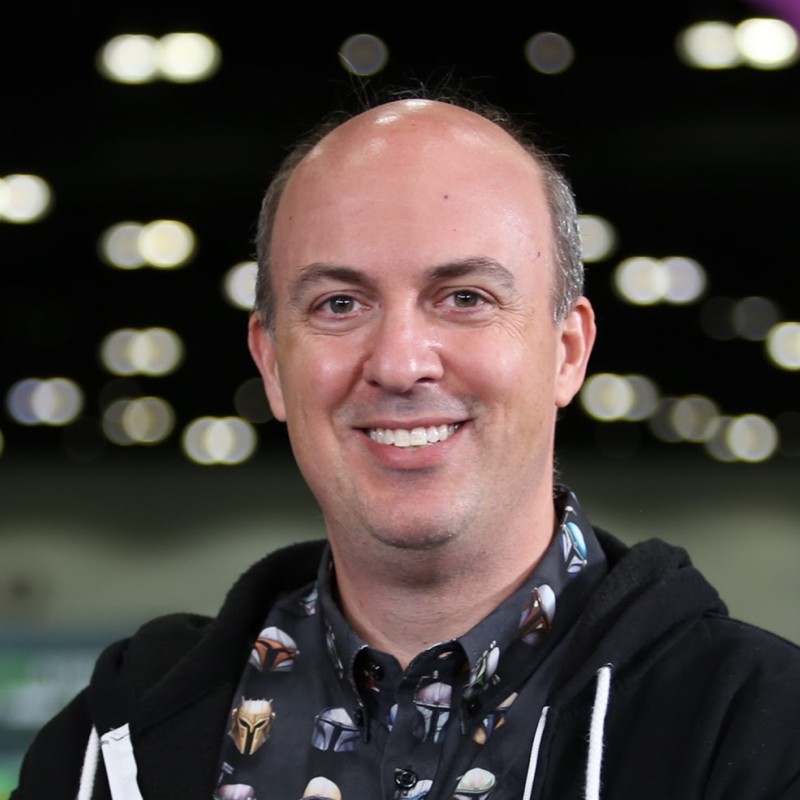
Martin Casado, VMware, at Open Networking Summit 2014 with John Furrier and Stu Miniman
@thecube
#ONS2014
Straight off his rather animated presentation on stage of the Open Networking Summit 2014 in Santa Clara, Martin Casado, Chief Architect of Networking with VMware, joined John Furrier and Stu Miniman in theCUBE, to debate the DevOps culture, the creativity, new dawn and the infancy of the 'revolution' in the modern data center.
Referring to his keynote, where he tried to summarize a very complex topic in a very short amount of time, Casado confessed: "It's an exciting topic for me. Over the last year we've moved from theoretical discussion around software and openness to products that people are actually using. I enjoy talking about network virtualization; I couldn't cover all but the core message was there."
"What is the real deal of what happens in virtualization and SDN that has traction check?" asked Furrier.
"If you look at the SDN space, you have two drivers: one is the customer use-case driven driver, which relates to the business accomplishments one is trying to achieve and the fact the business is driving requirements in the infrastructure, pressing the vendors to build stuff that allows the customers to do their business. That is the less creative, very practical, money driven aspect," said Casado. "At the same time, there's a very exciting, creative chaos, generated by people trying to come up with something elegant that solves problem no one thought about. It's the best of both worlds."
There are three sets of players on the market, in Furrier's opinion: the old incumbents, like Cisco, Juniper and HP, the new incumbents like VMware and some series D funded start-ups that may or may not make it, as well as the start-up community that is still innovating. "Who is going to be disrupted and who is going to disrupt? Who is at risk?" asked Furrier.
"I've pulled myself out of the prediction game. A lot of the movement in the SDN space over the last 10 years has been about decoupling layers to provide horizontal integration: you have more competition at every level -- at the hypervizor space, at the physical hardware space, etc. As you disaggregate, you get optionality, prices drop and things become more generous. We're going to have a food fight, but I do not know who is going to win. It will be exciting to watch," commented Casado.
"How you build something is actually more important than what you build," said Furrier, quoting the chief scientist of Brocade from an earlier interview. "In the old days it was the product itself. Do you agree with that statement?"
The trouble with open source
"Open source is such a complicated topic for me. You can get in as much trouble with open source as you can with closed source. Whoever adopts it, doesn't have the developers or the domain expertise to evolve it; you have to go through a community to solve business problems. Open source is great from a community perspective but it has its own issues. We should all make sure that we are horizontally composable," thinks Casado. "You should be able to mix and match parts of the system."
After Casado stated that open source should be evaluated on a case-by case basis, Miniman reminded him of the interview he gave straight after the Nicira acquisition, when he was adamant that open source was going to "completely transform networking" and change the game. "You sound like you're pulling back," Miniman noted. "Can you talk more about VMware's commitment to the open source community?"
"We've doubled the number of developers on every open source project," said Casado. "We started a new open source project and I believe open source is very important and a catalyst. But it's the composability that gives us freedom. With open source I can still lock you down in a support model. We have to make sure that everybody sticks to open interfaces."
Furrier then asked Casado to comment on "what's changed in the landscape."
Martin believes "the battle is no longer about networking architectures. It's not a battle between products or start-ups; it's a battle between three IT architectures. The entire discourse has up-leveled to IT, there are three distinct visions:
1. all of IT networking should have a hardware basis and be vertically integrated
2. IT should have a software basis and be horizontal composed
3. IT should only be consumed as a service."
Forgot Password
Almost there!
We just sent you a verification email. Please verify your account to gain access to
Open Networking Summit (ONS) 2014 | Santa Clara. If you don’t think you received an email check your
spam folder.
Sign in to Open Networking Summit (ONS) 2014 | Santa Clara.
In order to sign in, enter the email address you used to registered for the event. Once completed, you will receive an email with a verification link. Open this link to automatically sign into the site.
Register For Open Networking Summit (ONS) 2014 | Santa Clara
Please fill out the information below. You will recieve an email with a verification link confirming your registration. Click the link to automatically sign into the site.
You’re almost there!
We just sent you a verification email. Please click the verification button in the email. Once your email address is verified, you will have full access to all event content for Open Networking Summit (ONS) 2014 | Santa Clara.
I want my badge and interests to be visible to all attendees.
Checking this box will display your presense on the attendees list, view your profile and allow other attendees to contact you via 1-1 chat. Read the Privacy Policy. At any time, you can choose to disable this preference.
Select your Interests!
add
Upload your photo
Uploading..
OR
Connect via Twitter
Connect via Linkedin
EDIT PASSWORD
Share
Forgot Password
Almost there!
We just sent you a verification email. Please verify your account to gain access to
Open Networking Summit (ONS) 2014 | Santa Clara. If you don’t think you received an email check your
spam folder.
Sign in to Open Networking Summit (ONS) 2014 | Santa Clara.
In order to sign in, enter the email address you used to registered for the event. Once completed, you will receive an email with a verification link. Open this link to automatically sign into the site.
Sign in to gain access to Open Networking Summit (ONS) 2014 | Santa Clara
Please sign in with LinkedIn to continue to Open Networking Summit (ONS) 2014 | Santa Clara. Signing in with LinkedIn ensures a professional environment.
Are you sure you want to remove access rights for this user?
Details
Manage Access
email address
Community Invitation
Martin Casado | Open Networking Summit 2014
Martin Casado, VMware, at Open Networking Summit 2014 with John Furrier and Stu Miniman
@thecube
#ONS2014
Straight off his rather animated presentation on stage of the Open Networking Summit 2014 in Santa Clara, Martin Casado, Chief Architect of Networking with VMware, joined John Furrier and Stu Miniman in theCUBE, to debate the DevOps culture, the creativity, new dawn and the infancy of the 'revolution' in the modern data center.
Referring to his keynote, where he tried to summarize a very complex topic in a very short amount of time, Casado confessed: "It's an exciting topic for me. Over the last year we've moved from theoretical discussion around software and openness to products that people are actually using. I enjoy talking about network virtualization; I couldn't cover all but the core message was there."
"What is the real deal of what happens in virtualization and SDN that has traction check?" asked Furrier.
"If you look at the SDN space, you have two drivers: one is the customer use-case driven driver, which relates to the business accomplishments one is trying to achieve and the fact the business is driving requirements in the infrastructure, pressing the vendors to build stuff that allows the customers to do their business. That is the less creative, very practical, money driven aspect," said Casado. "At the same time, there's a very exciting, creative chaos, generated by people trying to come up with something elegant that solves problem no one thought about. It's the best of both worlds."
There are three sets of players on the market, in Furrier's opinion: the old incumbents, like Cisco, Juniper and HP, the new incumbents like VMware and some series D funded start-ups that may or may not make it, as well as the start-up community that is still innovating. "Who is going to be disrupted and who is going to disrupt? Who is at risk?" asked Furrier.
"I've pulled myself out of the prediction game. A lot of the movement in the SDN space over the last 10 years has been about decoupling layers to provide horizontal integration: you have more competition at every level -- at the hypervizor space, at the physical hardware space, etc. As you disaggregate, you get optionality, prices drop and things become more generous. We're going to have a food fight, but I do not know who is going to win. It will be exciting to watch," commented Casado.
"How you build something is actually more important than what you build," said Furrier, quoting the chief scientist of Brocade from an earlier interview. "In the old days it was the product itself. Do you agree with that statement?"
The trouble with open source
"Open source is such a complicated topic for me. You can get in as much trouble with open source as you can with closed source. Whoever adopts it, doesn't have the developers or the domain expertise to evolve it; you have to go through a community to solve business problems. Open source is great from a community perspective but it has its own issues. We should all make sure that we are horizontally composable," thinks Casado. "You should be able to mix and match parts of the system."
After Casado stated that open source should be evaluated on a case-by case basis, Miniman reminded him of the interview he gave straight after the Nicira acquisition, when he was adamant that open source was going to "completely transform networking" and change the game. "You sound like you're pulling back," Miniman noted. "Can you talk more about VMware's commitment to the open source community?"
"We've doubled the number of developers on every open source project," said Casado. "We started a new open source project and I believe open source is very important and a catalyst. But it's the composability that gives us freedom. With open source I can still lock you down in a support model. We have to make sure that everybody sticks to open interfaces."
Furrier then asked Casado to comment on "what's changed in the landscape."
Martin believes "the battle is no longer about networking architectures. It's not a battle between products or start-ups; it's a battle between three IT architectures. The entire discourse has up-leveled to IT, there are three distinct visions:
1. all of IT networking should have a hardware basis and be vertically integrated
2. IT should have a software basis and be horizontal composed
3. IT should only be consumed as a service."