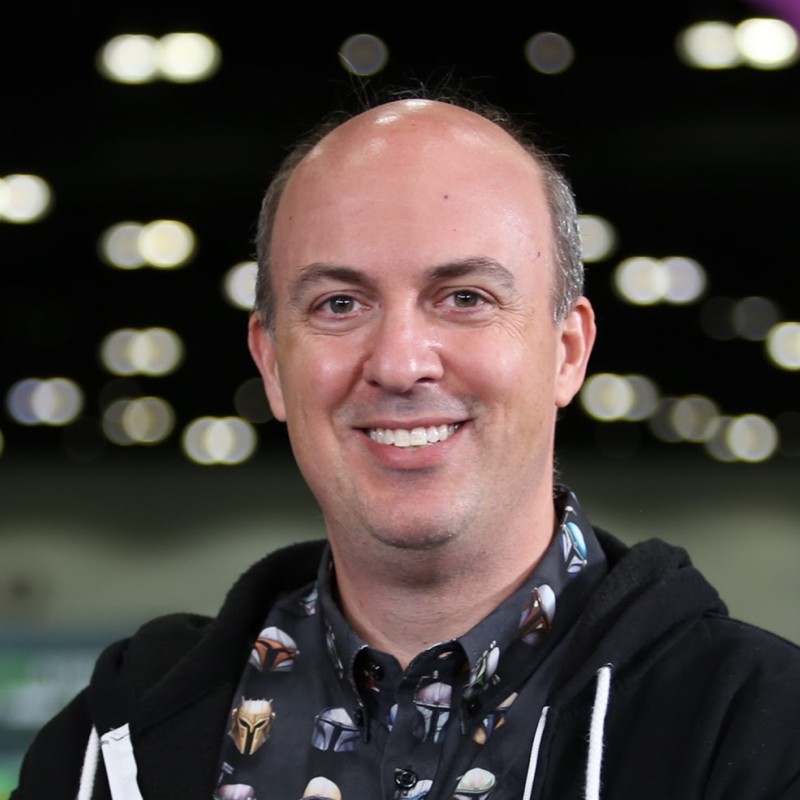
Nav Chander & Brad Casemore, IDC, at Open Networking Summit 2014 with Stu Miniman
@thecube
#ONS2014
Open Networking Summit 2014 (#ONS2014) was quite a successful event for an often overlooked sector of a rapidly evolving industry. The landmark show for software-defined networking (SDN), #ONS2014 is definitely underrated, and the amount of attention squarely focused on networking proves an exciting time for technology. SDN is an architectural model above all, and ONS2014 was the melting pot. From IDC, theCUBE welcomed Nav Chander, Research Manager and Brad Casemore, Research Director, joining Stu Miniman to share their analyst views on the event, current happenings and projections in the networking space.
Telcos in particular was a hot topic. The large telco companies are being forced into massive mindset changes and are being forced to rethink operations because of the SDN. NTT and AT&T are two of the large telcos that are early adopters in completely reworking their operational expenditures (opex). AT&T for example, is going to revamp their entire procurement process, which is a $20 billion a year capital expenditure (capex).
Chander had this to say about capex and opex for telcos:
"We'll probably see next year, even 5 percent of that capex ($20B) really get impacted. One of the things that a lot of people don't realize is the biggest cost is really in their opex. What John pointed out from AT&T and NTT are both focusing a lot on also opex so trying to do everything at once isn't going to happen over night."
For most telcos, opex is between 60-80 percent of overall budget, according to Chander. The first change to capex savings is going to come from virtualizing the network. Building virtual appliance x86s is where the industry wants to go, and how network functions virtualization (NFV) will disrupt telcos operating budgets. The transition will happen in small steps though. Chander and Casemore agreed that overall impact to telcos capex isn't going to get big until we see innovations from the companies that were attending or presenting at #ONS2014. Open source, programmability, SDN, and NFV are the enablers.
To steal words from Chander, It's all about programmable networks and open APIs.
A big question posed by Miniman to the two guests from the IDC is, what happens in the enterprise as workloads move to the cloud? They believe that silos will persist for years, as vendors are slow to change. However with more applications that are built the more workloads will be moved to the cloud.
Casemore offered some context, saying, "As enterprise move to the private cloud they have to rethink how they deliver their applications they move to things like orchestration and then they look at how their infrastructure aligns with that. Once that happens the silos break down. In some enterprises that will take a long time."
Google, Facebook, Microsoft, Amazon ... they're all data centers. Telco's are going to have to learn to fail like a start-up, and fail fast. They have a lot of catching up to do, as they're far behind the other players. Service providers are going to have to change their cultures, and Chander even gave an example how AT&T's Senior Executive Vice President John Donovan made multiple recruiting pitches at Mobile World Congress 2014 #MWC2014 just prior to #ONS2014.
Miniman got both gentlemen to give some market expectations for the next year. Casemore lead off by saying that we'll continue to see network professionals expand their skill sets. From virtualization to server side automation tools and even architectural skills in the cloud ... software might not be eating the world, but it's certainly recasting it.
Chander focused on telcos every-changing role in technology. There isn't a silver bullet for telcos either. Some, like Verizon, are building out data centers. Others are wanting to be over-the-top (OTT) and use existing infrastructure. In both cases, Chander says we're going to see lots of partnering between content providers. He gave some examples too: Comcast and Netflix, Deutsche Telekom and Spotify in Europe, and Cisco with Amazon Web Services (AWS) for virtual private networks (VPNs).
A good indicator for the network market is to follow the customer acquisition rate of those involved, both big and small. The size of the company, what they do, how many different vertical markets are they in — again, there is no silver bullet. The IDC, by way of Casemore and Chander, doesn't expect this to be an eventful year, but more like a bridge year. Bigger developments are coming, so hold onto your horses.
Forgot Password
Almost there!
We just sent you a verification email. Please verify your account to gain access to
Open Networking Summit (ONS) 2014 | Santa Clara. If you don’t think you received an email check your
spam folder.
Sign in to Open Networking Summit (ONS) 2014 | Santa Clara.
In order to sign in, enter the email address you used to registered for the event. Once completed, you will receive an email with a verification link. Open this link to automatically sign into the site.
Register For Open Networking Summit (ONS) 2014 | Santa Clara
Please fill out the information below. You will recieve an email with a verification link confirming your registration. Click the link to automatically sign into the site.
You’re almost there!
We just sent you a verification email. Please click the verification button in the email. Once your email address is verified, you will have full access to all event content for Open Networking Summit (ONS) 2014 | Santa Clara.
I want my badge and interests to be visible to all attendees.
Checking this box will display your presense on the attendees list, view your profile and allow other attendees to contact you via 1-1 chat. Read the Privacy Policy. At any time, you can choose to disable this preference.
Select your Interests!
add
Upload your photo
Uploading..
OR
Connect via Twitter
Connect via Linkedin
EDIT PASSWORD
Share
Forgot Password
Almost there!
We just sent you a verification email. Please verify your account to gain access to
Open Networking Summit (ONS) 2014 | Santa Clara. If you don’t think you received an email check your
spam folder.
Sign in to Open Networking Summit (ONS) 2014 | Santa Clara.
In order to sign in, enter the email address you used to registered for the event. Once completed, you will receive an email with a verification link. Open this link to automatically sign into the site.
Sign in to gain access to Open Networking Summit (ONS) 2014 | Santa Clara
Please sign in with LinkedIn to continue to Open Networking Summit (ONS) 2014 | Santa Clara. Signing in with LinkedIn ensures a professional environment.
Are you sure you want to remove access rights for this user?
Details
Manage Access
email address
Community Invitation
Nav Chander & Brad Casemore | Open Networking Summit 2014
Nav Chander & Brad Casemore, IDC, at Open Networking Summit 2014 with Stu Miniman
@thecube
#ONS2014
Open Networking Summit 2014 (#ONS2014) was quite a successful event for an often overlooked sector of a rapidly evolving industry. The landmark show for software-defined networking (SDN), #ONS2014 is definitely underrated, and the amount of attention squarely focused on networking proves an exciting time for technology. SDN is an architectural model above all, and ONS2014 was the melting pot. From IDC, theCUBE welcomed Nav Chander, Research Manager and Brad Casemore, Research Director, joining Stu Miniman to share their analyst views on the event, current happenings and projections in the networking space.
Telcos in particular was a hot topic. The large telco companies are being forced into massive mindset changes and are being forced to rethink operations because of the SDN. NTT and AT&T are two of the large telcos that are early adopters in completely reworking their operational expenditures (opex). AT&T for example, is going to revamp their entire procurement process, which is a $20 billion a year capital expenditure (capex).
Chander had this to say about capex and opex for telcos:
"We'll probably see next year, even 5 percent of that capex ($20B) really get impacted. One of the things that a lot of people don't realize is the biggest cost is really in their opex. What John pointed out from AT&T and NTT are both focusing a lot on also opex so trying to do everything at once isn't going to happen over night."
For most telcos, opex is between 60-80 percent of overall budget, according to Chander. The first change to capex savings is going to come from virtualizing the network. Building virtual appliance x86s is where the industry wants to go, and how network functions virtualization (NFV) will disrupt telcos operating budgets. The transition will happen in small steps though. Chander and Casemore agreed that overall impact to telcos capex isn't going to get big until we see innovations from the companies that were attending or presenting at #ONS2014. Open source, programmability, SDN, and NFV are the enablers.
To steal words from Chander, It's all about programmable networks and open APIs.
A big question posed by Miniman to the two guests from the IDC is, what happens in the enterprise as workloads move to the cloud? They believe that silos will persist for years, as vendors are slow to change. However with more applications that are built the more workloads will be moved to the cloud.
Casemore offered some context, saying, "As enterprise move to the private cloud they have to rethink how they deliver their applications they move to things like orchestration and then they look at how their infrastructure aligns with that. Once that happens the silos break down. In some enterprises that will take a long time."
Google, Facebook, Microsoft, Amazon ... they're all data centers. Telco's are going to have to learn to fail like a start-up, and fail fast. They have a lot of catching up to do, as they're far behind the other players. Service providers are going to have to change their cultures, and Chander even gave an example how AT&T's Senior Executive Vice President John Donovan made multiple recruiting pitches at Mobile World Congress 2014 #MWC2014 just prior to #ONS2014.
Miniman got both gentlemen to give some market expectations for the next year. Casemore lead off by saying that we'll continue to see network professionals expand their skill sets. From virtualization to server side automation tools and even architectural skills in the cloud ... software might not be eating the world, but it's certainly recasting it.
Chander focused on telcos every-changing role in technology. There isn't a silver bullet for telcos either. Some, like Verizon, are building out data centers. Others are wanting to be over-the-top (OTT) and use existing infrastructure. In both cases, Chander says we're going to see lots of partnering between content providers. He gave some examples too: Comcast and Netflix, Deutsche Telekom and Spotify in Europe, and Cisco with Amazon Web Services (AWS) for virtual private networks (VPNs).
A good indicator for the network market is to follow the customer acquisition rate of those involved, both big and small. The size of the company, what they do, how many different vertical markets are they in — again, there is no silver bullet. The IDC, by way of Casemore and Chander, doesn't expect this to be an eventful year, but more like a bridge year. Bigger developments are coming, so hold onto your horses.